How Do Scientists Track Humpback Whales 5 Research Methods Explained
Humpback whales travel across enormous stretches of ocean, often moving between tropical breeding areas and distant feeding grounds. Because they spend much of their lives underwater, studying their movements is a significant challenge for marine scientists.
So, how do researchers know where humpback whales go, whether the same whales return to Samaná Bay, and how different populations use the ocean?
Scientists combine several research methods, including photographs, satellite tags, underwater sound recordings, genetic analysis, and observations collected by researchers and trained citizen scientists. Each method reveals different information about whale movements, population patterns, and conservation needs.
For visitors interested in Samaná whale watching, these techniques provide a fascinating look at the research behind what we know about these remarkable animals.
1. Photo Identification: Recognizing Individual Whales
One of the most widely used methods for studying humpback whales is photo identification.
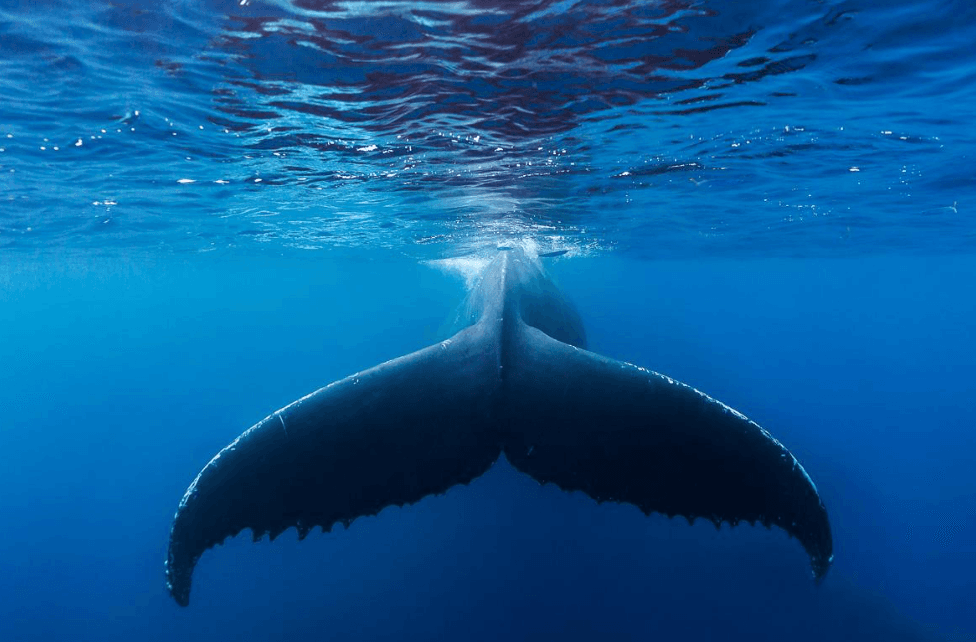
A humpback whale's tail flukes often have distinctive patterns of pigmentation, scars, and edges. Researchers photograph the underside of the flukes when a whale raises its tail above the water. They then compare the images with photographs collected during other encounters.
Over time, these comparisons can help scientists recognize individual whales.
What can whale photographs reveal?
Photo-identification records can help researchers investigate:
- Whether an individual returns to a known breeding area.
- Which feeding and breeding regions may be connected.
- How long a whale has been observed by researchers.
- Whether individuals are sighted in multiple locations.
- How patterns of whale sightings change over time.
Researchers may also photograph dorsal fins and other identifying features when suitable images are available.
However, a photograph does not automatically reveal a whale's full journey. Scientists need reliable records from multiple sightings to establish where an individual has been observed.
Why it matters in Samaná: Photographs collected during the breeding season can contribute to long-term research into North Atlantic humpback whales and their connections to other regions.
2. Satellite Tags: Following Whale Movements
Satellite telemetry allows researchers to investigate whale movements beyond the places where boats can regularly observe them.
Depending on the study, a specialized tag may be attached temporarily to a whale using a carefully controlled research procedure. The tag collects location information and transmits data through satellite systems when conditions allow.
Scientists can use these records to estimate routes, movement speeds, travel timing, and the areas whales use during different parts of the year.
What can satellite tracking show?
Satellite tags may help researchers identify:
- Broad migration routes between seasonal habitats.
- How long whales remain in particular areas.
- Areas where whales repeatedly travel or spend time.
- Possible connections between breeding and feeding grounds.
- Potential interactions with shipping routes or other human activities.
Tracking data have limitations. Tags may stop transmitting, detach, or provide incomplete records. Researchers also need to consider how many animals were tagged and whether those individuals represent the wider population.
Tagging is specialized scientific work, not something that ordinary whale-watching operators or visitors should attempt.
3. Acoustic Monitoring: Studying Whales Through Sound
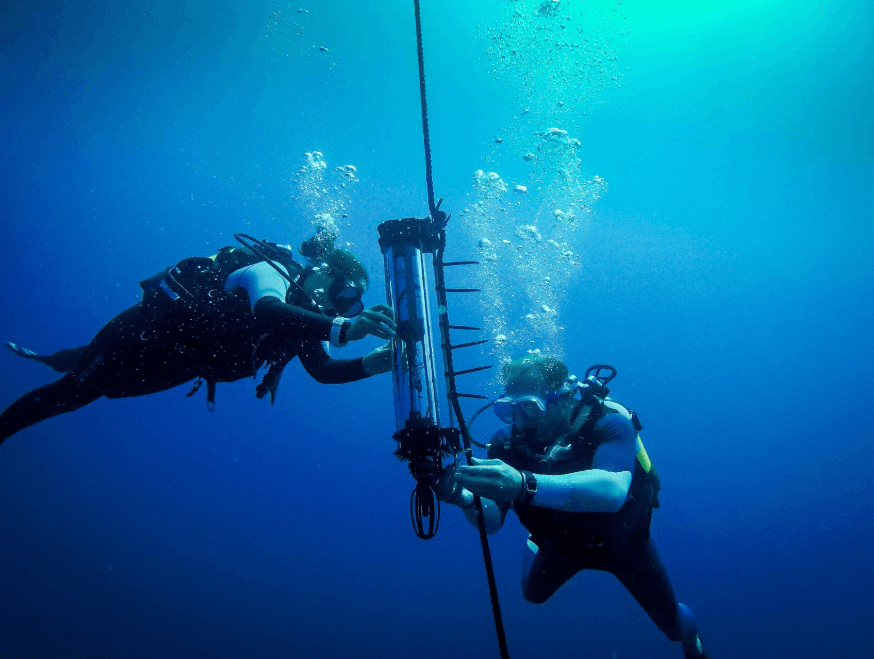
Humpback whales produce a range of sounds, and scientists can study these sounds using underwater microphones called hydrophones.
Hydrophones may be deployed from research vessels, anchored instruments, or other suitable monitoring systems. Recordings allow researchers to examine when and where whale sounds occur.
Acoustic monitoring is particularly useful because researchers can collect information even when whales are difficult to see at the surface.
What can underwater recordings tell scientists?
Depending on the research design, acoustic recordings can help scientists:
- Detect whale vocalizations in a monitored area.
- Study seasonal changes in calling activity.
- Compare sound patterns between locations.
- Investigate how underwater noise overlaps with whale vocal activity.
- Explore how whale vocal behavior changes under different conditions.
Sound recordings do not normally identify the exact individual whale producing a call. Researchers must interpret acoustic evidence carefully, especially when several animals may be present.
Acoustic monitoring can complement visual observations and tracking data, giving scientists a more complete picture of whale activity.
4. Genetic Analysis: Understanding Whale Populations
Genetic analysis provides another way to study humpback whales. Researchers can examine DNA obtained through approved scientific sampling and compare genetic markers among individuals or populations.
These analyses can help investigate relationships between whales, population structure, and differences between groups that use separate regions.
For example, genetic evidence can contribute to research into whether whales from different feeding areas belong to the same broader population or show patterns of separation.
Why is genetics important?
Genetic studies may help researchers understand:
- Relationships among individuals.
- Genetic diversity within a population.
- Connections and distinctions between whale populations.
- How populations are structured across large ocean regions.
- Conservation questions involving population health and management.
Genetic evidence is most useful when combined with other information, such as photo identification, movement records, and observations of where whales are found.
Scientists also follow specific protocols to collect and handle biological samples responsibly.
5. Aerial Surveys and Boat-Based Observations
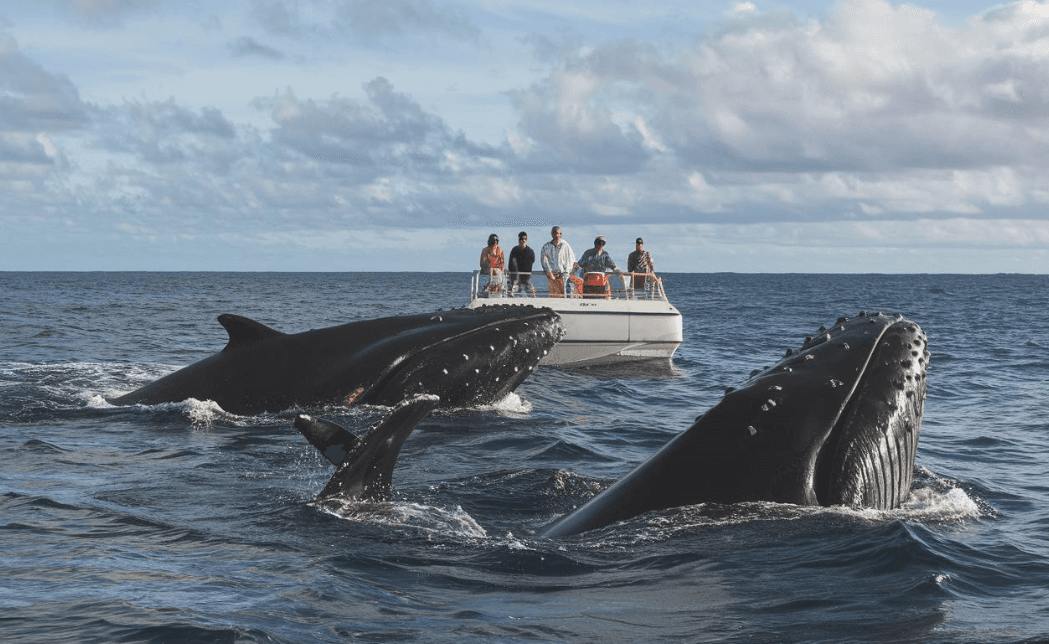
Researchers also study whales by conducting structured observations from boats or aircraft.
During a survey, trained observers record sightings and information such as the number of whales, their estimated locations, group composition, and visible behavior. The survey may follow a planned route so that researchers can compare observations across locations or dates.
Aircraft can cover large areas relatively quickly, while research vessels can provide closer observations and opportunities to photograph individual whales.
What can surveys measure?
Survey data can help scientists estimate whale distribution, examine seasonal patterns, and assess how frequently whales use particular habitats.
However, not every whale in a survey area will be detected. Some remain underwater, others may be obscured by sea conditions, and weather can limit observation quality.
Researchers account for these limitations when estimating whale numbers or comparing survey results.
Tour boats may also provide useful observations when information is collected systematically and shared through appropriate research programs. Ordinary tourist sightings, however, should not automatically be treated as scientific survey data.
How Scientists Combine Tracking Methods
No single method answers every question about humpback whales. Researchers often combine several techniques to improve the reliability of their findings.
For example, a scientist might photograph a whale in Samaná Bay, compare its fluke pattern with a research catalog, and use satellite tracking or records from other locations to investigate its movements.
Acoustic monitoring could provide additional information about whale activity in the same region, while surveys could help establish how whale distribution changes through the season.
Together, these methods help scientists distinguish between individual sightings, repeated observations of the same whale, and broader patterns across a population.
What Whale Tracking Means for Samaná Bay
Samaná Bay is a well-known seasonal breeding area for North Atlantic humpback whales. Research on whale movements helps scientists understand how this habitat connects with other areas used during the whales' annual cycle.
Tracking and identification can contribute to conservation planning by showing which habitats whales use, how they move between regions, and where human activities might create risks.
Such research can support efforts to manage threats including vessel collisions, entanglement in fishing gear, underwater noise, and habitat changes.
The importance of Samaná extends beyond the whales visible during a boat excursion. It forms part of a much larger ecological network that researchers continue to investigate.
Can Visitors Help Scientists Track Whales?
Visitors can sometimes contribute to whale research through established citizen-science projects or approved reporting programs.
Depending on the program, useful contributions may include:
- Sharing clear photographs of whale flukes.
- Recording the date and general location of a sighting.
- Reporting observations through an authorized project.
- Following the project's image-submission and data-quality guidelines.
Not every photograph is suitable for research, and a sighting should only be submitted through a program that accepts public observations.
Visitors should never approach, touch, feed, chase, or deliberately disturb a whale to obtain a better photograph. Research-quality images must never take priority over the animal's welfare or the safety of people on board.
Frequently Asked Questions
How do scientists know where humpback whales travel?
Scientists use photo identification, satellite telemetry, acoustic monitoring, genetic analysis, and systematic surveys. Combining methods helps researchers understand individual movements and wider population patterns.
Can scientists recognize individual humpback whales?
Yes. The pigmentation patterns, scars, and edges of their tail flukes can help researchers distinguish individuals when clear photographs are available.
Do scientists put GPS trackers on humpback whales?
Researchers may use specialized satellite tags to study whale movements. Tagging requires appropriate scientific expertise, permits, and animal-welfare procedures.
Can scientists track whales underwater using sound?
Hydrophones can detect and record whale vocalizations. These recordings help researchers study acoustic activity, although sound alone does not always reveal an individual whale's exact location.
How does whale tracking help conservation?
Tracking research helps identify important habitats and movement routes. This information can support efforts to reduce threats such as vessel strikes, fishing-gear entanglement, and underwater noise.
Can tourists contribute to whale research in Samaná?
Potentially, yes. Some research and citizen-science projects accept whale photographs or sightings, provided they meet the project's requirements. Visitors should follow responsible whale-watching practices and never disturb whales to collect data.
Conclusion
Scientists track humpback whales by combining photographs, satellite tags, underwater recordings, genetic research, and systematic observations. Each technique contributes a different piece of information, helping researchers understand where whales travel and which habitats they depend on.
In Samaná Bay, this research helps place seasonal whale watching within a broader scientific and conservation context. The next time you see a humpback whale, remember that the animal may be part of a much larger story—one that scientists are still working to understand.

Local explorer & expert guide in Visita Haitises.