What Do Humpback Whales Eat During Their Stay in Samaná?
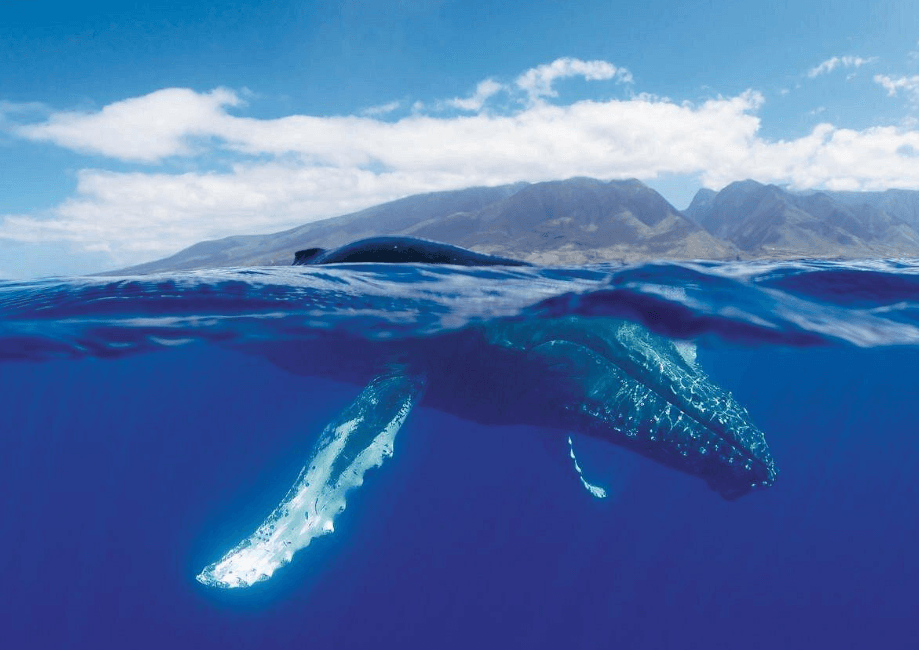
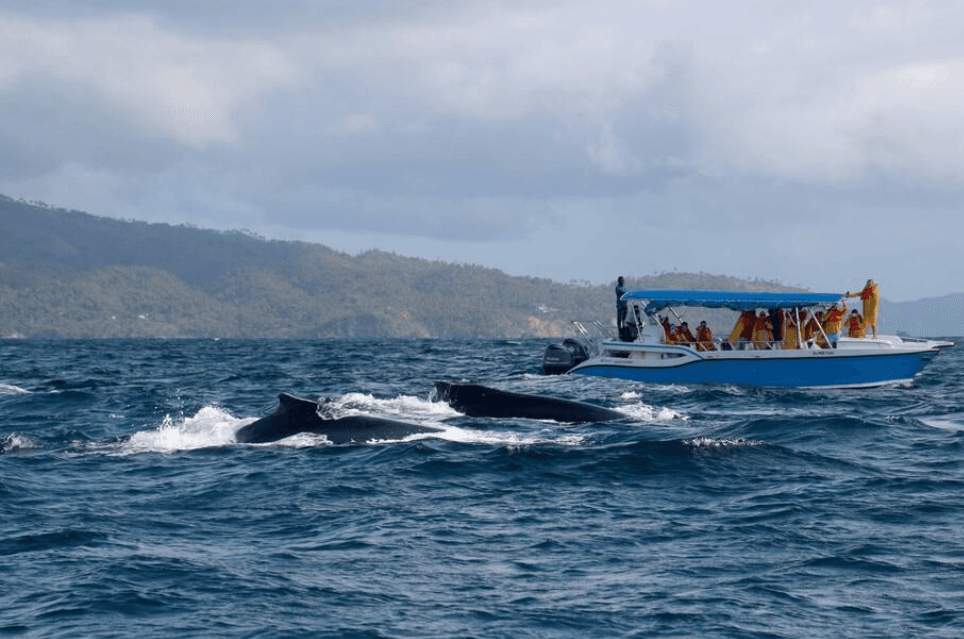
Humpback whales are among the most recognizable marine mammals in the world. Their enormous bodies, long pectoral fins, and spectacular surface displays attract visitors to Samaná, Dominican Republic, during the annual whale-watching season.
But one interesting question often comes up when people learn about these animals: what do humpback whales eat while they are in Samaná?
The answer reveals an important part of their life cycle. Humpback whales travel between high-latitude feeding grounds and warmer tropical breeding areas. They generally build up energy reserves by feeding heavily in productive waters before undertaking long migrations. During their seasonal stay in tropical breeding areas such as the waters around Samaná, they typically feed much less than they do on their feeding grounds.
Humpback whales mainly eat small fish and tiny crustaceans such as krill, but their diet depends on where they feed. Their presence in Samaná is closely associated with breeding and calving, so visitors should not assume that whales seen during a boat tour are actively feeding.
This guide explains what humpback whales eat, how their baleen helps them capture food, why they migrate, and how their feeding habits connect to their seasonal appearance in the Dominican Republic.
What Do Humpback Whales Eat?
Humpback whales are filter feeders. Their diet commonly includes small schooling fish and small crustaceans, especially krill, depending on the feeding region and the prey available.
They do not hunt large marine mammals as their normal food source. Instead, they consume many relatively small organisms, sometimes in large quantities, to obtain the energy required to support their enormous bodies.
1. Krill
Krill are small, shrimp-like crustaceans that live in marine environments. In some feeding regions, they are an important part of the humpback whale diet.
Krill can occur in dense aggregations, making them an efficient food source when whales locate a suitable concentration. A whale can take in a large volume of water containing prey and then filter the food from that water.
However, krill availability differs between regions and seasons. Their importance in the diet of a particular whale population depends on the prey available where that population feeds.
2. Small schooling fish
Humpback whales also consume small fish, including species that gather in schools. The particular fish species eaten varies according to the region.
When suitable schools are available, a humpback whale may use feeding strategies that allow it to capture many fish in a single movement.
A whale's diet is therefore not identical everywhere. Local prey communities and seasonal conditions influence what it can eat.
3. Other small prey
Depending on the feeding area, humpback whales may consume other small marine organisms, including certain small crustaceans.
The exact composition of their diet varies among populations and locations. It would be inaccurate to assume that every humpback whale eats the same prey in the same proportions.
For visitors in Samaná, the key distinction is that these whales' food sources are generally associated with productive feeding areas, while the tropical waters they visit seasonally serve an important role in their breeding cycle.
Do Humpback Whales Feed in Samaná Bay?
Humpback whales visit the waters around Samaná as part of their seasonal breeding migration. The region is known for breeding-related activity, including courtship, mating behavior, and the presence of mothers and calves.
During this period, humpback whales generally rely heavily on energy reserves accumulated during earlier feeding periods in more productive waters.
This does not mean that a whale can never feed while in a tropical region. Feeding behavior can vary, and it is important not to make absolute claims about every whale or every encounter. However, Samaná's primary significance for seasonal whale watching is its role as a breeding and calving area rather than as a major feeding destination.
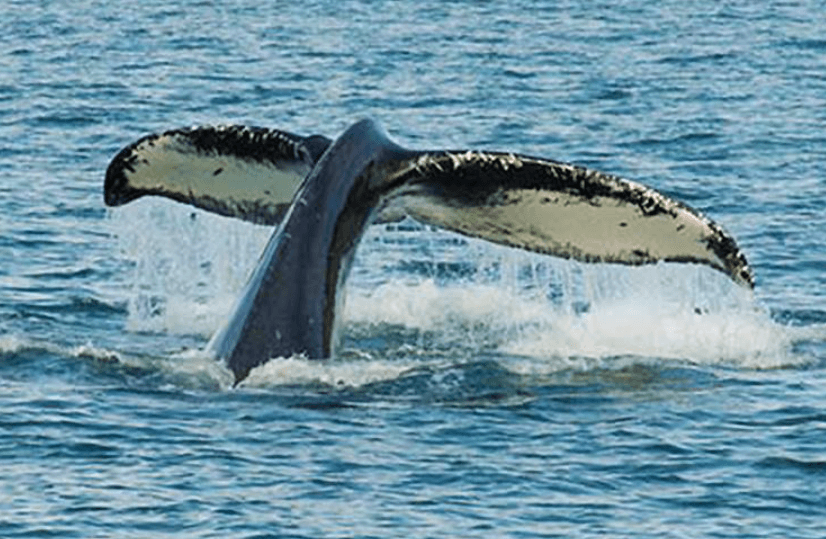
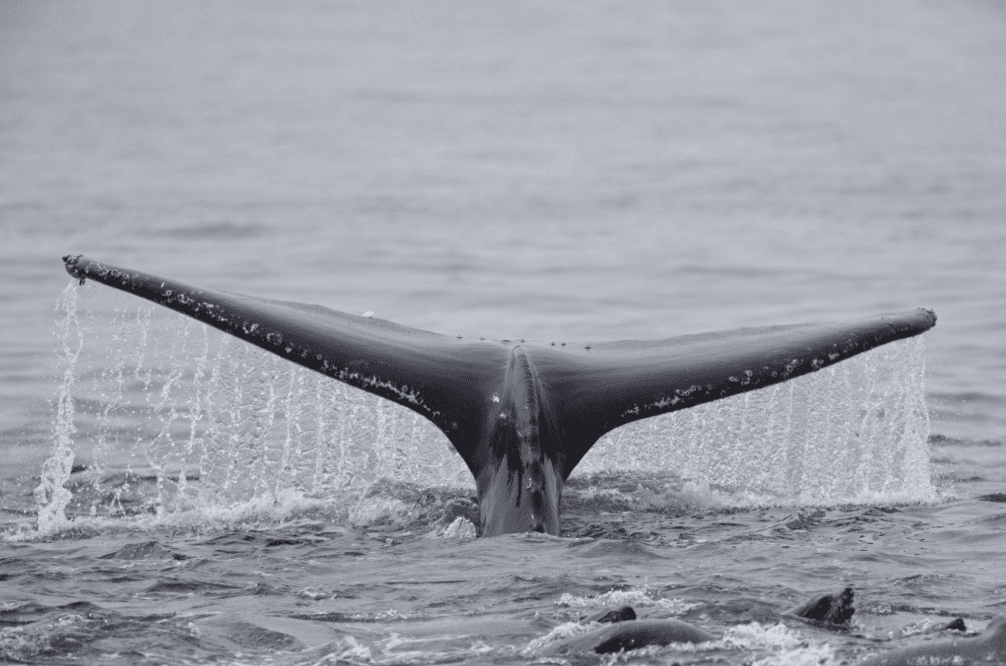
Seeing a whale surface, roll, slap the water, or swim near another whale does not by itself establish that it is feeding. Those movements may be related to breathing, travel, social interaction, or other behaviors.
Visitors should avoid labeling a sighting as a feeding event unless the behavior provides convincing evidence.
Why Do Humpback Whales Migrate Between Feeding and Breeding Areas?
Humpback whales undertake long seasonal migrations that connect feeding grounds in colder, productive waters with warmer breeding areas in tropical and subtropical regions.
These different environments serve different purposes during the whales' annual cycle.
Feeding in productive waters
Many humpback whale populations spend part of the year in high-latitude waters where seasonal productivity can support abundant prey.
During this period, whales build energy reserves by consuming large amounts of food when prey is available.
The energy stored in their bodies helps sustain them during periods when feeding opportunities are reduced.
Traveling to warmer breeding areas
Humpback whales migrate to warmer waters for reproductive activities. In the Caribbean, the waters around the Dominican Republic, including Samaná, are an important seasonal destination for North Atlantic humpback whales.
These breeding areas are associated with courtship and mating, as well as the birth and early development of calves.
Warm water is particularly relevant for newborn calves, which have limited insulating fat compared with adults. The tropical breeding environment offers a different set of conditions from the colder feeding grounds.
Returning to feeding grounds
After the breeding season, many whales migrate back toward productive feeding areas. The timing and route can vary according to the individual, reproductive status, and population.
This migration allows humpback whales to take advantage of different marine environments during different parts of the year.
How Can Humpback Whales Survive When They Eat Less?
Humpback whales are adapted to sustain themselves during extended periods when food intake is reduced.
Before and during productive feeding periods, they accumulate energy in the form of blubber, a layer of fat beneath the skin. These reserves help provide energy during migration and while they spend time in breeding areas where feeding may be limited.
The amount of energy available to an individual depends on its condition, feeding history, reproductive status, and other factors.
The importance of blubber
Blubber serves several important functions. It stores energy, helps insulate the body, and contributes to the whale's overall body condition.
During migration and breeding, whales draw on stored energy to support movement and normal body functions.
Why mothers and calves have different needs
A female whale that gives birth and nurses a calf faces substantial energetic demands. Producing milk requires energy, and the calf must grow rapidly during its early life.
The mother relies on her body reserves while caring for her calf. The calf also needs to develop strength and coordination as it learns to swim alongside its mother.
This is one reason breeding areas such as Samaná are biologically important. They provide seasonal habitat for reproduction and early calf development.
How Do Humpback Whales Capture Their Food?
Humpback whales have a specialized feeding system that allows them to capture small prey from the water.
Instead of using teeth to chew food, they use baleen plates that hang from the upper jaw.
What is baleen?
Baleen consists of flexible plates made from keratin, the same general structural protein found in human hair and fingernails.
The plates form a filtering system. When a whale takes in water containing prey, it can push the water back out through the baleen while retaining many of the food organisms.
The prey is then swallowed.
How does filter feeding work?
A simplified sequence looks like this:
- The whale locates a suitable concentration of prey.
- It takes in prey-filled water using a feeding movement appropriate to the situation.
- The water exits through the baleen plates.
- The prey remains inside the mouth and is swallowed.
Different feeding strategies may be used depending on the prey and local conditions.
Humpback whales can also perform dramatic movements associated with feeding, such as lunging through prey concentrations. Some populations use coordinated techniques, including bubble-net feeding, in which bubbles help concentrate or influence the movement of prey.
These specialized behaviors depend on circumstances and should not be assumed to occur during every feeding event or in every whale population.
Do Humpback Whales Eat While They Are Migrating?
Feeding during migration can vary. Humpback whales are not necessarily in a complete feeding fast throughout every stage of their journey, and feeding opportunities may differ among individuals and populations.
Nevertheless, many whales rely heavily on stored energy when traveling between feeding grounds and tropical breeding areas.
Their migration involves a trade-off between obtaining food in productive waters and reaching breeding habitats at the appropriate seasonal time.
For the North Atlantic humpback whales that visit the Caribbean, the seasonal presence of whales in Samaná is primarily connected with reproduction rather than with the kind of concentrated feeding commonly associated with high-latitude feeding grounds.
Researchers study whale movements and behavior to better understand how these animals use different habitats over the course of the year.
Can Whale Watchers Recognize Feeding Behavior?
Visitors sometimes see a humpback whale make a sudden movement and wonder whether it is eating.
Some feeding behaviors can be distinctive, but a single surface movement is not enough to confirm feeding.
Possible signs of feeding activity may include repeated lunges through a prey concentration, coordinated movements associated with a feeding strategy, or observations of prey and whale behavior together.
However, many dramatic whale behaviors have other explanations. Breaching, tail slapping, rolling, and surfacing can occur in different contexts.
The safest interpretation is to describe what was actually observed rather than assigning a specific purpose without sufficient evidence.
For example, saying that a whale repeatedly lunged through a visible school of fish is more informative than claiming that any whale making a splash must be feeding.
Guides can help explain observable behavior, but responsible interpretation also includes acknowledging uncertainty.
Why Is Samaná Important Even When Whales Are Not Feeding?
The importance of Samaná does not depend on whether visitors witness a feeding event.
The area's seasonal role as a breeding habitat makes it valuable for understanding humpback whale biology, migration, reproduction, and early calf development.
Visitors may observe whales traveling, surfacing, interacting with other whales, or swimming with calves. Each encounter can offer an opportunity to learn about the species without assuming that feeding is taking place.
The presence of whales in the region also highlights the importance of protecting marine habitat and managing wildlife tourism responsibly.
Responsible whale watching should allow whales to behave naturally and should follow applicable rules for vessel operation and wildlife observation.
Frequently Asked Questions
What is the main food of humpback whales?
Humpback whales eat small fish and small crustaceans such as krill. The exact diet depends on the population, location, and prey available in its feeding habitat.
Do humpback whales eat krill in Samaná Bay?
Humpback whales can eat krill in appropriate feeding habitats, but their seasonal presence in Samaná is mainly associated with breeding and calving. It is not accurate to assume that krill feeding is a routine or defining activity for every whale observed there.
Do humpback whales eat during the breeding season?
Many humpback whales feed much less while spending time in tropical breeding areas and rely on stored energy. Feeding behavior can vary, so it is best not to claim that every whale completely stops eating.
How do humpback whales eat without teeth?
They use baleen plates to filter prey from water. Their feeding system allows them to capture small organisms rather than chewing food with teeth.
Why do humpback whales travel to Samaná?
The waters around Samaná form part of an important seasonal breeding area for North Atlantic humpback whales. The region is associated with courtship, mating, and the presence of mothers and calves.
How do baby humpback whales get food?
Young calves nurse from their mothers. The mother produces energy-rich milk that supports the calf's early growth and development.
Do all humpback whales eat the same food?
No. Their diets vary depending on the feeding region, prey availability, and the population's feeding ecology.
Can I watch a humpback whale feeding during a Samaná boat tour?
It is possible to observe different natural behaviors, but a feeding event should not be expected or guaranteed. Samaná is primarily known as a seasonal breeding area, and many visible behaviors are unrelated to feeding.
Final Thoughts: Understanding the Whale's Seasonal Diet
Humpback whales are powerful filter feeders that depend on small fish and crustaceans for energy. They commonly build up energy reserves in productive feeding areas before migrating to tropical breeding regions.
Their seasonal presence in Samaná is closely connected to reproduction and calf development. During this time, many whales rely heavily on stored energy, although feeding behavior should not be described in absolute terms for every individual.
Understanding this distinction helps visitors appreciate why humpback whales travel so far and why different parts of their migration serve different biological purposes.
When watching whales in Samaná, look beyond spectacular surface displays. Every sighting takes place within a larger life cycle shaped by feeding, migration, reproduction, and the need for healthy marine habitats.

Local explorer & expert guide in Visita Haitises.