How Long Do Humpback Whales Stay in Samaná Bay?
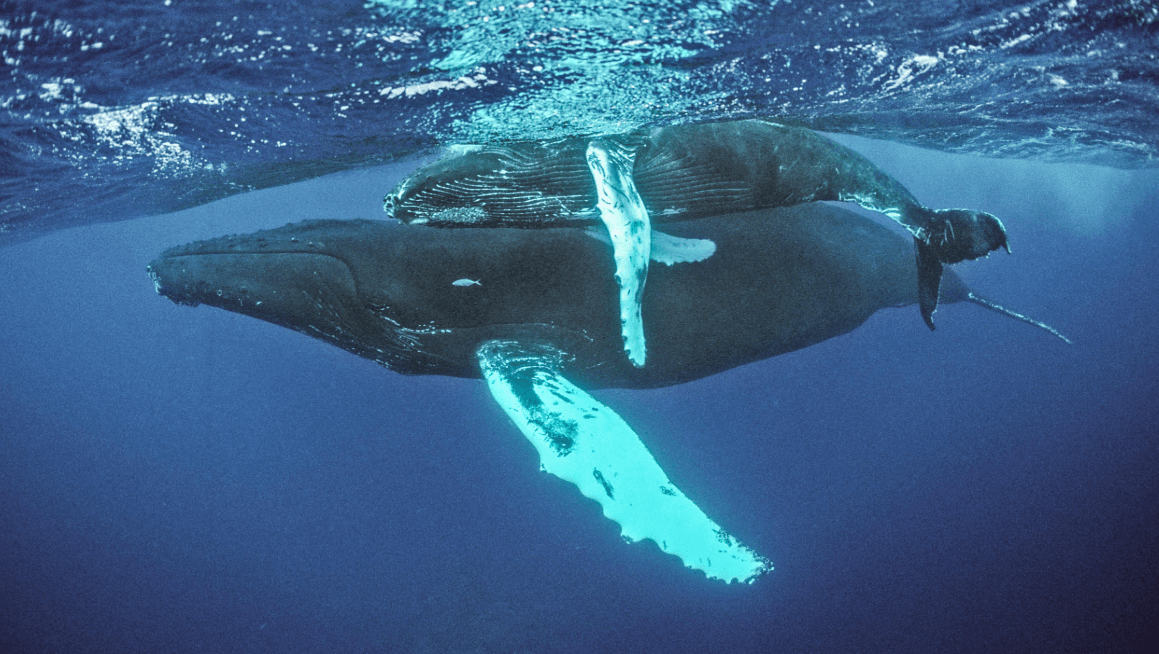
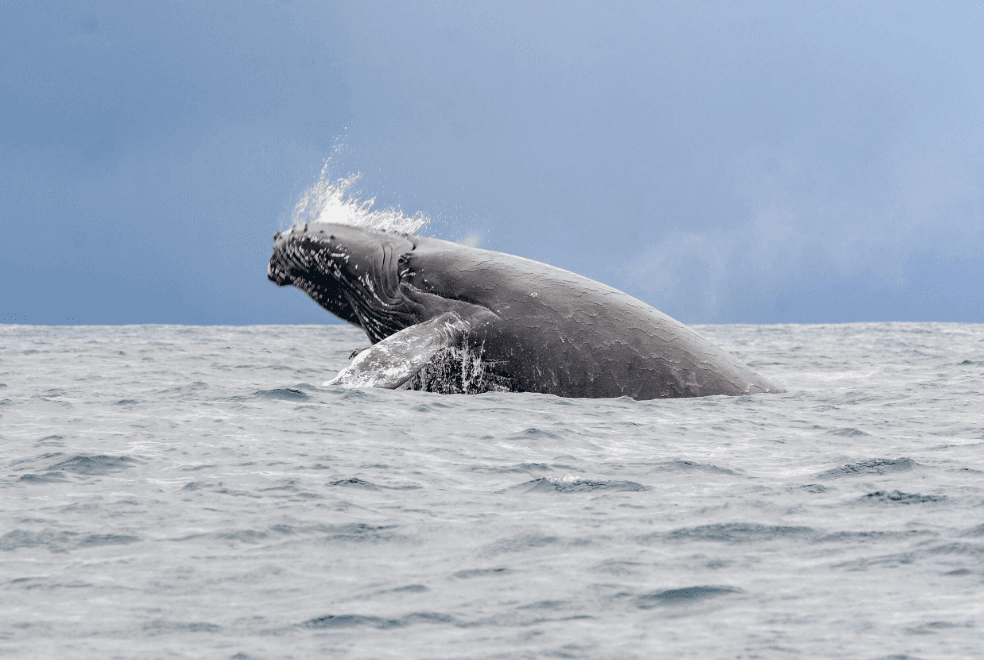
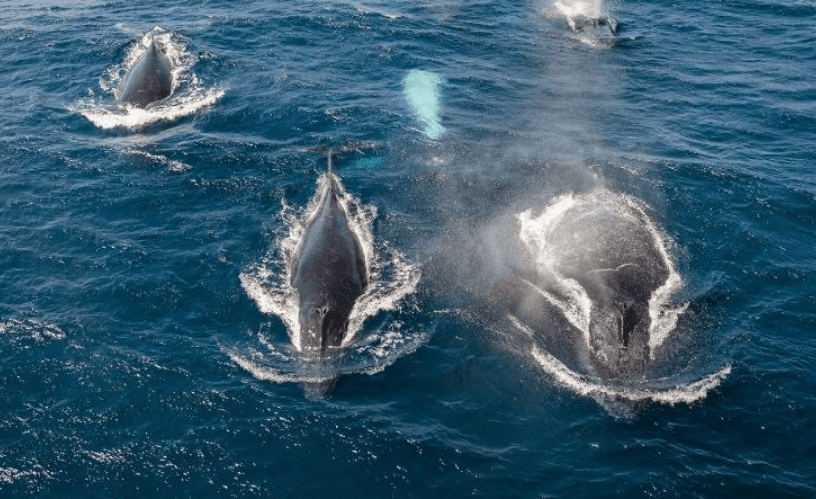
Every year, humpback whales travel to the warm Caribbean waters surrounding the Dominican Republic. Samaná Bay is an important seasonal destination where these magnificent animals can be observed during the breeding season.
Some whales may be photographed repeatedly over a period of days or weeks, while others are seen only once. These observations raise an interesting scientific question: how long does an individual humpback whale actually remain in Samaná Bay?
Scientists investigate this question by combining repeated sightings, individual identification, survey records, and statistical analysis. Although researchers can estimate how long whales remain in an area, determining the exact arrival and departure dates of every individual is much more difficult.
Why Do Scientists Measure Whale Residence Time?
In marine research, residence time describes how long an animal remains within a defined area during a particular period. For humpback whales in Samaná Bay, researchers may investigate how long individual whales are documented in the region during the breeding season.
Understanding residence time can help scientists learn how whales use seasonal habitats and whether different individuals show different patterns of presence.
For example, researchers might investigate whether some whales are observed repeatedly in the bay, whether others appear briefly, or whether mothers with calves have different sighting patterns from other groups.
These findings can contribute to understanding habitat use, seasonal movement, and the importance of the bay to migrating humpback whales.
However, a whale's recorded residence time is not necessarily the same as the total time it actually spends in the area. That distinction is essential when interpreting scientific results.
How Do Repeat Sightings Help Estimate How Long Whales Stay?
Repeated sightings provide one of the most useful sources of information.
Suppose researchers photograph a particular whale in Samaná Bay on February 3, identify it again on February 11, and record another confirmed sighting on February 20.
These observations demonstrate that the whale was present in the area on at least those three dates. They do not prove that it remained continuously in the bay throughout the entire period.
The whale might have left temporarily, moved beyond the survey area, or remained underwater while researchers were not observing it.
Scientists can use these dated records to calculate the interval between the first and last confirmed sightings. This gives them a measure of the whale's documented presence, but additional evidence is needed to estimate its actual time in the area.
The more consistent and frequent the observations, the better researchers may be able to describe patterns of presence.
Why Is Photo Identification Important?
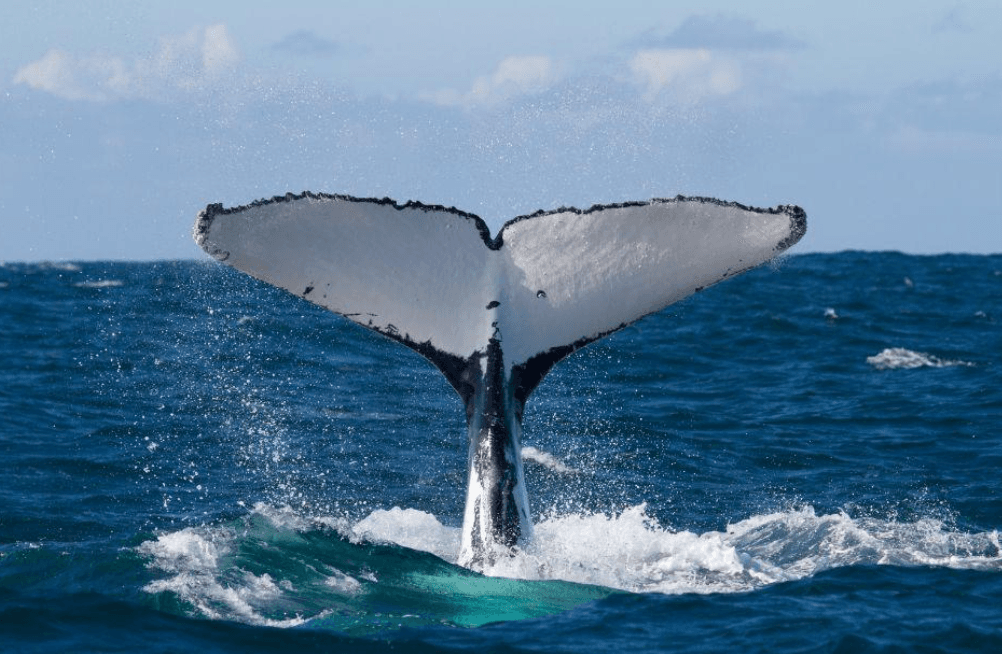
Researchers often use photographs of humpback whale tail flukes to recognize individual animals.
The underside of a humpback whale's tail can display distinctive pigmentation patterns, scars, and markings. Scientists compare these features with photographs stored in identification databases to determine whether observations involve the same whale.
Once an individual is reliably identified, sightings from different dates can be connected.
For example, a photograph from early in the season can be compared with another taken several days later. If the markings match, researchers can add both observations to the whale's sighting history.
Photo identification is especially valuable for long-term studies because it can reveal repeat sightings without requiring scientists to attach tracking devices to every animal.
Nevertheless, identification depends on photograph quality and the visibility of distinctive features. Not every sighting produces an image suitable for a reliable match.
Can Scientists Determine the Exact Day a Whale Arrives?
Usually, not from observation records alone.
If a whale is first photographed on February 10, it may have arrived that morning, several days earlier, or even earlier in the season without being detected.
The first recorded sighting is therefore the earliest documented observation in the available dataset, not necessarily the animal's true arrival date.
Researchers may narrow the uncertainty when surveys are frequent and cover the relevant area consistently. Even then, the exact arrival date may remain unknown.
The same problem occurs when estimating departure. A whale's last sighting does not necessarily mean it left the bay immediately afterward.
Scientists must account for these gaps rather than treating the first and last photographs as exact boundaries of an animal's stay.
How Does Survey Effort Affect Residence-Time Estimates?
Survey effort refers to how frequently, extensively, and consistently researchers search for whales.
Imagine two areas in Samaná Bay. Researchers visit the first area every day but visit the second only once a week. Even if whales use both areas for similar periods, the first area may produce more repeat sightings simply because it is observed more often.
Weather, sea conditions, visibility, vessel availability, and the locations covered can also influence the likelihood of detecting whales.
Researchers therefore need to consider observation effort when comparing residence patterns.
Useful records may include survey dates, search duration, geographic coverage, weather conditions, and the number of sightings obtained during each survey.
Without this information, an apparent difference in residence time could reflect differences in observation methods rather than a genuine difference in whale behavior.
How Do Statistical Methods Help Researchers?
Statistical methods help researchers account for uncertainty when the beginning or end of an animal's stay is not directly observed.
Depending on the research question and the available data, scientists may use sighting-history models, mark-recapture approaches, or other statistical techniques that account for the probability of detecting an animal.
These methods can help estimate how frequently individuals are observed, how likely they are to be detected during a survey, and how observation gaps affect conclusions about their presence.
Some models estimate the probability that an animal remains within a study area between observations. Others focus on the likelihood of detecting an animal that is present.
The appropriate method depends on the study design and the assumptions that can reasonably be supported by the data.
Statistical estimates do not eliminate uncertainty. Instead, they provide a structured way to quantify it and avoid making stronger claims than the evidence allows.
Do All Humpback Whales Stay for the Same Length of Time?
Not necessarily.
Individual whales may differ in their movements, behavior, and use of the seasonal habitat. The available evidence may reveal different sighting histories, but researchers need sufficient data to determine whether those differences reflect genuine differences in residence time.
Age, reproductive status, social interactions, and other ecological factors may be relevant to whale movements. However, scientists should not assume that any particular group always remains longer without supporting observations.
A whale photographed repeatedly may also be easier to identify or more likely to occupy an area that researchers survey frequently.
For this reason, differences in recorded sightings should be interpreted alongside information about observation effort and identification confidence.
Does a Longer Stay Mean a Whale Prefers Samaná Bay?
Repeated sightings over an extended period may indicate that a whale makes substantial use of the area during the breeding season. However, residence time alone cannot prove an animal's preference.
Scientists would need to consider alternative explanations, including the location of survey effort, movement outside the study area, and the whale's broader seasonal behavior.
A whale may use several areas during its migration, and researchers may observe only a portion of its activities.
Understanding habitat use therefore requires more than measuring the number of days between two photographs. Researchers may also examine movement records, repeated location data, environmental conditions, and other relevant observations.
Why Does Residence Time Matter for Whale Conservation?
Knowing how whales use Samaná Bay can help researchers and conservation managers understand the area's role in the seasonal life cycle of humpback whales.
If reliable evidence indicates that whales repeatedly use particular areas, this information may help guide monitoring priorities and habitat-management decisions.
Residence-time research can also help scientists interpret changes in sightings across the season. A lower number of observations might reflect whales moving elsewhere, differences in detection, or changes in survey effort rather than a decline in the number of animals.
For responsible whale watching, better knowledge of seasonal presence can support planning and education. However, estimates of residence time should not be used to guarantee sightings on a particular day.
Wild whales move independently, and their presence is never certain.
Frequently Asked Questions
How long do humpback whales stay in Samaná Bay?
The length of time can vary among individuals. Researchers use repeated sightings and other observation records to investigate how long whales use the area, but a single sighting cannot establish an individual's total stay.
How do scientists calculate whale residence time?
Researchers connect dated observations of identified whales and analyze the intervals between sightings. Depending on the data, statistical methods may be used to account for animals that go undetected between surveys.
Does the first sighting reveal when a whale arrived?
No. The first recorded sighting establishes when the whale was documented, not necessarily when it arrived. It may have been present before researchers first observed it.
Does the last sighting mean the whale has left?
Not necessarily. The whale may remain in the area without being detected or may move outside the survey boundary temporarily. Researchers must account for these possibilities.
Can scientists estimate residence time without tagging whales?
Yes. Photo identification and repeated observations can provide useful information without attaching electronic tags. The precision of the estimate depends on observation frequency, identification quality, and the methods used.
Why is residence time important for conservation?
It helps scientists understand how whales use seasonal habitats, interpret changes in sighting patterns, and identify areas that may deserve continued monitoring or protection.
Conclusion
Scientists estimate how long humpback whales stay in Samaná Bay by studying repeated sightings, identifying individual animals, documenting survey effort, and applying suitable statistical methods.
The most important distinction is between the time a whale is documented and the time it actually spends in the bay. First and last sightings provide useful evidence, but they rarely reveal exact arrival and departure dates on their own.
By accounting for missed observations and uncertainty, researchers can develop a more reliable understanding of seasonal whale presence. This knowledge contributes to marine science, responsible whale watching, and the conservation of humpback whales in the Dominican Republic.

Local explorer & expert guide in Visita Haitises.