How Do Humpback Whales Rest While Breathing in Samaná Bay?
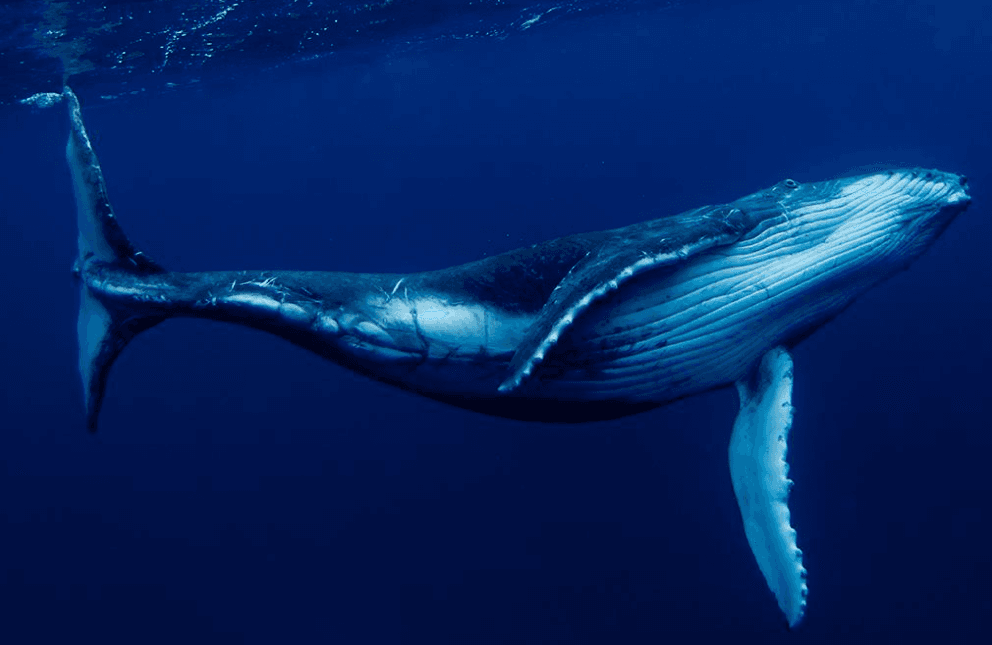
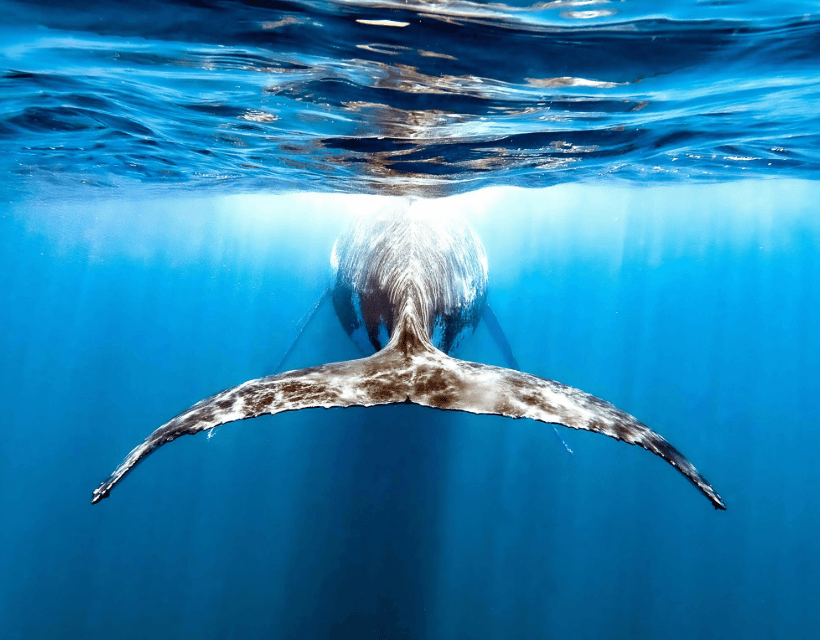
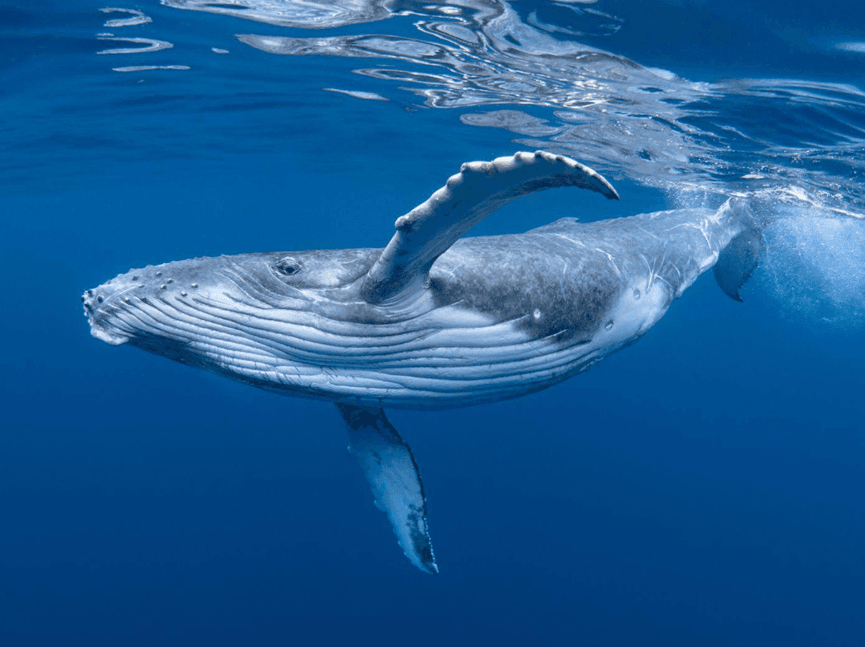
Humpback whales spend much of their lives traveling through the ocean, searching for food, communicating, and carrying out important activities during the breeding season. But like other mammals, they also need time to rest.
Their resting habits raise an interesting question: how can a whale sleep underwater when it must return to the surface to breathe air?
Unlike humans, humpback whales cannot simply fall asleep without considering their next breath. They have specialized adaptations that allow them to rest while remaining able to surface when necessary. Understanding this behavior adds another dimension to whale watching in Samaná Bay, Dominican Republic.
During the seasonal whale-watching period, visitors may see whales spending time quietly at or below the surface. Although a brief sighting cannot confirm whether a whale is asleep, learning about whale rest helps explain why not every encounter involves dramatic jumps or energetic movements.
Do Humpback Whales Sleep Underwater?
Yes. Humpback whales sleep and rest in the water, and they may spend periods submerged while resting. However, their sleep is different from human sleep because they are air-breathing mammals.
Whales must remain capable of surfacing to breathe. Their bodies are adapted to aquatic life, but they still rely on oxygen from the air rather than extracting it from water.
Scientists have studied sleep in several cetacean species and found that many exhibit forms of unihemispheric slow-wave sleep. This means that one half of the brain can show slow-wave sleep activity while the other half remains relatively more alert.
This type of sleep is well documented in some dolphins and other cetaceans. The precise patterns and details of sleep can differ among species, so it is important not to assume that every finding from dolphins applies identically to humpback whales.
The general principle is that cetaceans have evolved ways to rest without losing the ability to manage essential functions such as breathing and responding to their surroundings.
Why Must Humpback Whales Return to the Surface?
Humpback whales are mammals. They have lungs and breathe air through blowholes located on top of their heads.
When a whale reaches the surface, it can exhale and inhale before diving again. The visible cloud often called a whale's blow consists primarily of warm, moist air condensing in the cooler atmosphere, along with droplets from the surrounding water near the blowhole.
Because whales do not breathe automatically in the same way humans do during ordinary sleep, they need to retain control over surfacing and breathing.
A resting whale therefore cannot remain underwater indefinitely. Its body must balance time spent submerged with the need to return to the surface for oxygen.
The length of a dive can vary with activity, individual condition, and circumstances. A whale's visible breathing pattern alone is not enough to determine whether it is resting or how much oxygen it needs.
How Do Humpback Whales Rest Without Losing Awareness?
Cetacean sleep is often discussed in connection with unihemispheric sleep, in which the two sides of the brain can show different levels of activity. This arrangement is thought to help some cetaceans remain responsive to important needs while resting.
For a marine mammal that must surface to breathe, such adaptations are especially useful. They can help an animal maintain essential functions and remain attentive to its surroundings during rest.
However, whale sleep is not fully understood in every species and situation. Researchers cannot reliably identify a humpback whale's exact sleep state from every surface sighting.
A whale that appears quiet may be resting, traveling slowly, or engaging in another behavior. Observers should avoid treating stillness as proof that the animal is asleep.
What Does a Resting Humpback Whale Look Like?
There is no single surface behavior that proves a humpback whale is resting. Depending on the situation, a whale may appear relatively inactive, move slowly, or remain submerged for a period before surfacing again.
From a whale-watching boat, visitors might notice fewer obvious movements than they would during a more active encounter. Yet these observations are only clues, not a definite diagnosis of the whale's state.
Some behaviors that people interpret as sleep may simply reflect a pause between other activities. Likewise, a whale that surfaces quietly may still be aware of its environment.
A responsible guide can explain what is visible without claiming certainty about behaviors that cannot be confirmed from the boat.
Why Is Rest Important During the Breeding Season?
Humpback whales use tropical and subtropical breeding areas during part of their annual cycle. Samaná Bay is one of the Caribbean locations associated with their seasonal presence.
During the breeding season, whales may engage in courtship, social interactions, travel, and maternal care. These activities require energy, making rest an important part of their overall behavior.
Humpback whales generally feed much less in their breeding grounds than they do in their colder-water feeding areas. They rely substantially on energy reserves accumulated during feeding periods.
Resting can help animals manage their energy, although the amount of rest an individual needs and the way it rests may vary.
Visitors should remember that whales do not follow a predictable schedule for resting. A whale-watching trip may encounter active whales, relatively quiet animals, or no whales at all. Each trip depends on natural conditions and the whales' movements.
Can You See a Whale Sleeping in Samaná Bay?
It is possible to encounter a whale displaying quiet or low-activity behavior during a trip in Samaná Bay. However, seeing a whale does not necessarily mean you are witnessing sleep.
A short observation from a boat generally cannot establish the whale's brain activity or exact physiological state. Scientific studies of sleep may require methods and observations that are not available during ordinary wildlife excursions.
Instead of expecting to see a sleeping whale, focus on observing the animal's natural behavior. You may notice its surfacing pattern, movement, or the time it spends below the water.
These details can be interesting in their own right, even when the whale's precise activity remains unknown.
How Long Can a Humpback Whale Stay Underwater?
Humpback whales can remain submerged for many minutes, but dive duration varies according to what the animal is doing and the circumstances of the dive.
A whale engaged in active swimming may have a different dive pattern from one moving slowly. Individual whales can also differ in their behavior.
It is misleading to use one exact time as a universal limit for every humpback whale. A single long or short dive does not, by itself, indicate that an animal is sleeping, distressed, or in trouble.
During whale watching, visitors should let the crew interpret sightings carefully and avoid assuming that a whale will surface at a particular moment.
Does a Resting Whale Need Space From Boats?
Yes. Regardless of whether a whale is resting, traveling, or engaged in another behavior, it needs space to move naturally.
Boats that approach too closely, pursue an animal, or repeatedly change direction to follow it can create unnecessary disturbance. This is especially important when whales are spending time quietly at the surface or when mothers are accompanied by calves.
A responsible whale-watching operator should follow applicable local regulations and established wildlife-viewing guidance. Captains should avoid pressuring whales into changing their behavior simply to provide passengers with a closer view.
Visitors can help by keeping noise down, following the crew's instructions, and accepting when the boat needs to maintain distance or move away.
How Can You Observe Whale Behavior Without Disturbing It?
You do not need a close approach to appreciate humpback whales. Patience and careful observation can make a trip more rewarding while reducing pressure on the animals.
Keep these practical tips in mind:
- Bring binoculars if appropriate and follow the crew's guidance on their use.
- Watch how the whale surfaces, moves, and disappears beneath the water.
- Avoid shouting or encouraging the captain to chase a whale.
- Do not assume that a quiet whale is asleep or that a long dive indicates a problem.
- Follow the operator's instructions about distance and boat moveme

Local explorer & expert guide in Visita Haitises.