Los Haitises Caves: Complete Guide to Caves, Taíno Art and Boat Tours
Los Haitises Caves: Discover the Underground World of the Dominican Republic
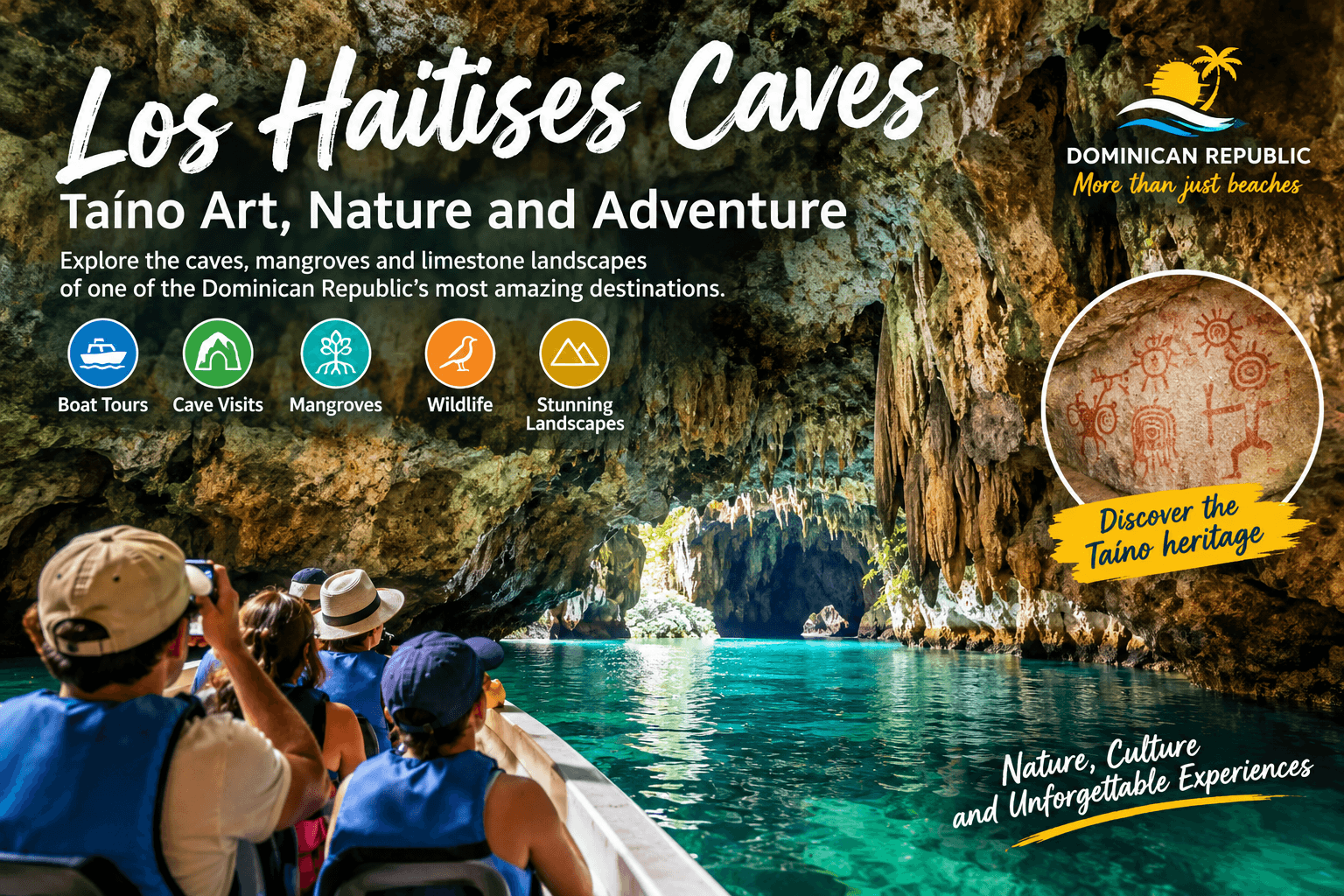
The Los Haitises caves are among the most fascinating attractions in northeastern Dominican Republic. Surrounded by tropical forests, mangroves and spectacular limestone formations, these natural caves provide visitors with an opportunity to discover both the geological and cultural history of the region.
Many visitors explore the caves as part of a Los Haitises boat tour, combining cave visits with mangrove channels, limestone islands, wildlife and spectacular coastal scenery.
For travelers interested in nature, history, photography and adventure, the caves are an important part of the Los Haitises experience.
Where Are the Caves of Los Haitises?
The caves are located within the Los Haitises region around Samaná Bay, particularly near the coastal areas accessed from Sabana de la Mar and other local departure points.
Because many attractions are surrounded by water, boat excursions are one of the most practical ways to reach several of the best-known cave areas.
The exact caves visited depend on the tour route, weather conditions, park regulations and local access.
Why Are the Los Haitises Caves Important?
The caves are important because they combine natural geological formations with evidence of the Indigenous history of the Dominican Republic.
Some caves contain Taíno pictographs and petroglyphs, providing visitors with a connection to the people who lived in the region before European colonization.
A local guide can explain the meaning and history of the sites while helping visitors understand the importance of protecting these archaeological areas.
Taíno Art Inside Los Haitises Caves
One of the most memorable parts of visiting Los Haitises is seeing Indigenous artwork inside selected caves.
Taíno communities used caves for cultural and ceremonial purposes, and some locations preserve paintings and carvings on the cave walls.
Visitors should never touch, scratch or attempt to modify cave walls. These archaeological remains are fragile and should be protected for future generations.
What Do the Caves Look Like?
The caves of Los Haitises feature impressive limestone formations created over thousands of years.
Inside and around the caves, visitors may see:
- Stalactites and stalagmites.
- Limestone walls and chambers.
- Natural openings and rock formations.
- Taíno pictographs and petroglyphs at selected sites.
- Bats and cave-adapted wildlife.
- Forest vegetation around cave entrances.
Conditions inside caves can be dark, humid and uneven, so visitors should follow their guide and use appropriate footwear.
How to Visit Los Haitises Caves
The easiest way for most travelers to visit the caves is through an organized Los Haitises boat excursion.
A typical experience may include:
- Departure from a local port.
- Boat navigation through Samaná Bay.
- Exploration of mangrove channels.
- Views of limestone islands and cliffs.
- Visit to one or more caves.
- Explanation of the area's natural and cultural history.
- Return by boat to the departure point.
Some excursions can also include hiking, kayaking, lunch or a visit to Caño Hondo.
Los Haitises Caves from Sabana de la Mar
Sabana de la Mar is one of the main gateways for exploring the eastern side of Los Haitises.
Its location makes it possible to reach important coastal areas of the region by boat while avoiding a longer journey around the bay.
For travelers staying in Punta Cana, Bávaro, Miches or nearby destinations, private transportation to Sabana de la Mar can be combined with a Los Haitises boat excursion.
Los Haitises Caves from Punta Cana
Travelers staying in Punta Cana can visit Los Haitises on a full-day excursion.
Because the journey from Punta Cana requires several hours of transportation, most itineraries begin early in the morning.
A full-day experience can combine:
Punta Cana → Sabana de la Mar → Los Haitises boat tour → caves → mangroves → lunch → Caño Hondo → return to Punta Cana
The exact itinerary depends on the selected tour and availability.
Combine the Caves with Caño Hondo
After exploring the caves and mangroves by boat, travelers can continue to Caño Hondo.
This area is known for its tropical surroundings, river-fed natural pools and opportunities to relax after the boat excursion.
A Los Haitises and Caño Hondo itinerary is a convenient way to combine cultural exploration, nature and relaxation during the same day.
Can You Kayak in Los Haitises?
Kayaking may be available on selected routes and under appropriate weather and water conditions.
Kayaking through calm mangrove areas offers a quieter perspective of the ecosystem and can be an excellent complement to a boat tour.
Availability depends on the selected excursion, weather, safety conditions and local regulations.
What Wildlife Can You See Near the Caves?
Los Haitises provides habitat for many species of birds and other wildlife.
During a boat and cave excursion, visitors may see tropical birds flying around the mangroves and limestone islands. Other wildlife can sometimes be observed depending on the season and location.
Wildlife sightings are naturally unpredictable, so tours should focus on enjoying the ecosystem rather than guaranteeing specific animals.
Best Time to Visit the Los Haitises Caves
Los Haitises can be visited throughout the year, but weather and sea conditions can influence boat routes and cave access.
For a comfortable visit:
- Start early in the morning.
- Check the weather before traveling.
- Wear comfortable shoes.
- Bring insect repellent.
- Protect yourself from the tropical sun.
- Follow your local guide's instructions.
- Do not touch archaeological artwork.
Boat routes and cave visits can change when conditions are not suitable.
What Should You Bring?
For a Los Haitises cave excursion, bring:
- Comfortable walking shoes.
- Lightweight clothing.
- Sunscreen.
- Insect repellent.
- Hat or cap.
- Sunglasses.
- Water.
- Camera or smartphone.
- Waterproof protection for electronics.
- Swimsuit and towel if swimming is included.
Avoid carrying unnecessary valuables because some cave areas can be wet or difficult to access.
Is Visiting the Caves Suitable for Children?
Many families visit Los Haitises, but parents should consider the age and mobility of their children.
Some cave areas can have uneven surfaces, low ceilings or slippery sections. Children should remain close to adults and follow the guide's instructions throughout the visit.
Always ask the tour operator about the specific cave route before booking if traveling with young children.
Responsible Tourism in Los Haitises
Los Haitises is a protected natural and cultural environment. Visitors play an important role in helping preserve it.
During your visit:
- Do not touch Taíno artwork.
- Do not leave trash behind.
- Do not remove rocks, shells or archaeological objects.
- Follow marked routes and guide instructions.
- Avoid disturbing wildlife.
- Keep noise levels low inside caves.
- Respect local communities and guides.
Responsible tourism helps protect Los Haitises for future generations.
Book a Los Haitises Cave Tour
Explore the caves, mangroves and limestone landscapes of Los Haitises with local guides and discover the natural and cultural heritage of northeastern Dominican Republic.
Booking Adventures offers Los Haitises experiences from Sabana de la Mar, Punta Cana, Miches and other locations, with options that can include boat tours, caves, hiking, kayaking, Caño Hondo and other local attractions.
WhatsApp: +1 809 720 6035
Email: reservabatour@gmail.com
Website: https://gobookingadventures.com/
Contact Booking Adventures to confirm availability, departure location, itinerary and prices for your travel dates.
Frequently Asked Questions About Los Haitises Caves
How many caves are in Los Haitises?
Los Haitises contains numerous caves and rock shelters throughout its limestone landscape. Only selected caves are accessible to visitors, depending on the official route, conditions and regulations.
Can you visit Los Haitises caves by boat?
Yes. Boat excursions are one of the main ways visitors reach several cave areas around the coastal part of Los Haitises.
Can you see Taíno paintings in the caves?
Yes. Selected caves contain Taíno pictographs and petroglyphs that form part of the region's Indigenous cultural heritage.
Are the Los Haitises caves safe to visit?
Cave visits should be made with an authorized or experienced local guide. Conditions can include darkness, uneven surfaces and slippery areas.
Can I visit the caves from Punta Cana?
Yes. Full-day excursions from Punta Cana can combine transportation with a Los Haitises boat and cave experience.
Can I combine Los Haitises caves with Caño Hondo?
Yes. Some tours combine the caves and boat excursion with lunch and a visit to Caño Hondo's natural pools.
What is the best way to explore Los Haitises?
A boat tour with a knowledgeable local guide is a popular way to explore the mangroves, limestone landscapes and accessible caves while learning about the area's natural and cultural history.
Final Thoughts
The Los Haitises caves offer much more than impressive rock formations. They connect the natural landscape of Samaná Bay with the Indigenous history of the Dominican Republic.
A boat trip through the mangroves followed by a guided cave visit provides an unforgettable way to experience Los Haitises. Add Caño Hondo, hiking or kayaking to create a complete nature adventure in northeastern Dominican Republic.
Explore Los Haitises, discover its caves and experience the Dominican Republic beyond the beaches.
Local explorer & expert guide in Visita Haitises.