Why Do Humpback Whales Slap Their Tails A Samaná Whale-Watching Guide
Humpback whales are famous for their spectacular movements, from powerful breaches to loud splashes that echo across the ocean. One behavior that often catches the attention of whale watchers in Samaná Bay, Dominican Republic, is tail slapping. A whale may lift its tail flukes above the water and bring them down with considerable force, creating a dramatic splash.
But why do humpback whales slap their tails Scientists believe this behavior can serve several purposes, including communication, social interaction, and possibly displaying agitation. The exact meaning depends on the situation, and researchers cannot always determine what a particular whale is communicating.
If you are planning a whale-watching trip in Samaná, understanding this behavior can make the experience more interesting. Instead of simply watching a splash, you can learn to appreciate one of the many ways humpback whales interact with their environment.
What Is Tail Slapping in Humpback Whales?
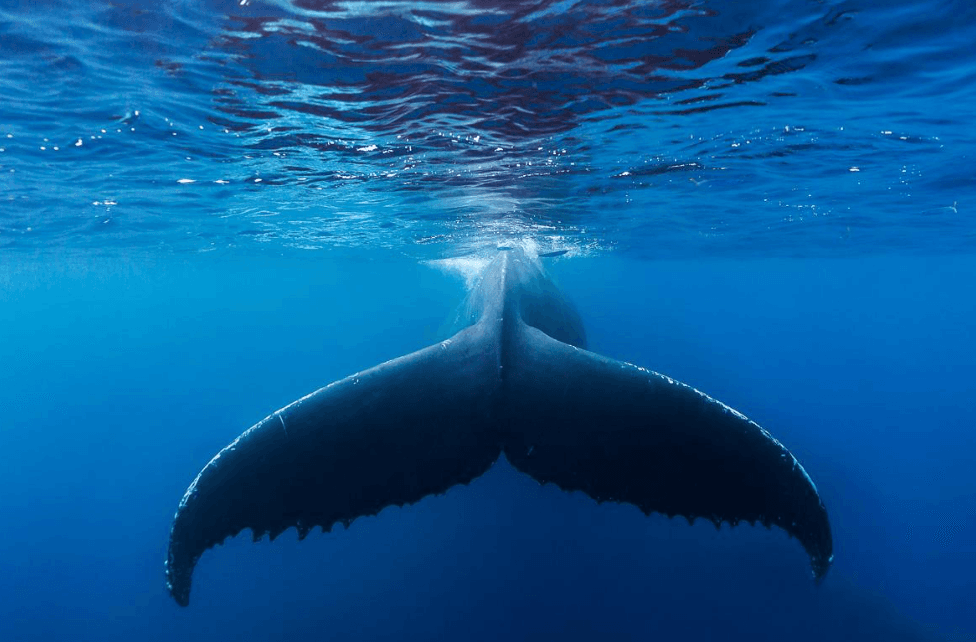
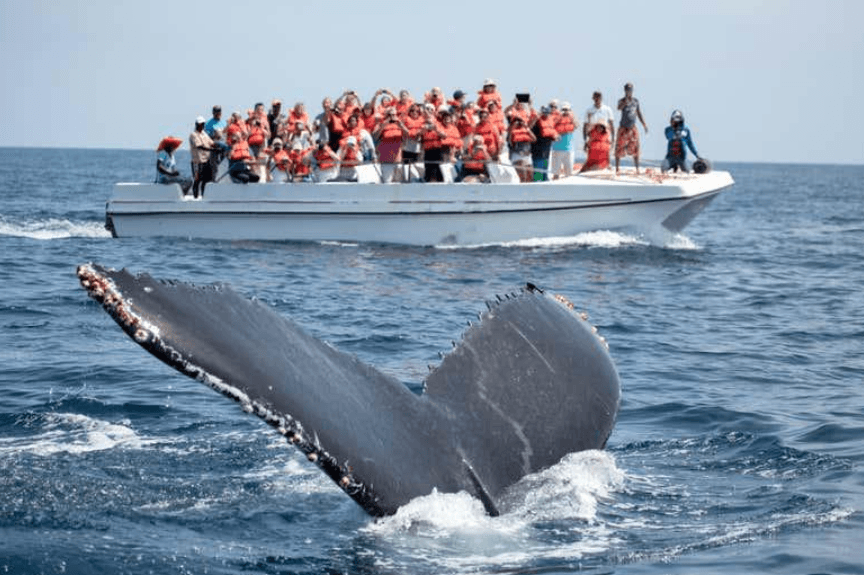
Tail slapping, sometimes called a tail slap or lobtailing, occurs when a whale raises its tail flukes out of the water and strikes the surface.
The impact can produce a loud sound and a large splash. Depending on the whale's position, it may repeat the movement several times.
Humpback whales have broad, powerful tail flukes that help them move through the ocean. These flukes are also involved in several recognizable surface behaviors, making them particularly fascinating to observe during whale watching.
Tail slapping is different from breaching. During a breach, a whale launches much or most of its body out of the water before falling back onto the surface. During a tail slap, the main action involves the tail striking the water.
1. Humpback Whales May Use Tail Slaps to Communicate
One possible explanation for tail slapping is communication.
A forceful impact against the water produces sound that can travel through the surrounding environment. Researchers study how whales use sound and physical displays to interact with other whales, although the meaning of an individual tail slap is not always clear.
A tail slap may help attract attention or form part of a social interaction. However, it would be inaccurate to assume that every slap carries the same message.
Whale behavior is complex. To understand what is happening, researchers consider the whale's movements, nearby animals, repeated behaviors, and the broader circumstances.
For visitors watching whales in Samaná Bay, this uncertainty is part of the fascination: the behavior is visible, but its precise meaning may remain unknown.
2. Tail Slapping May Be Part of Social Interaction
Humpback whales gather in different social situations during their annual movements. In breeding areas, several whales may sometimes be seen near one another, and their interactions can involve a variety of surface behaviors.
Tail slapping may occur during these interactions. Scientists investigate whether particular displays relate to social spacing, competition, or other interactions between individuals.
Still, a single observation does not establish the reason for the behavior. A whale slapping its tail near another whale is not automatically fighting, warning the other animal, or trying to communicate a specific message.
The most reliable approach is to observe the entire scene rather than interpret one movement in isolation.
3. A Tail Slap May Display Agitation or Arousal
Powerful surface movements may sometimes occur when a whale is highly stimulated or agitated. In certain contexts, tail slapping may be associated with tension or a response to nearby animals.
However, people should avoid labeling every tail slap as anger. Human emotions cannot be reliably assigned to a whale simply because its behavior looks forceful.
Scientists use repeated observations and contextual evidence to distinguish possible explanations. The whale's posture, other movements, the presence of nearby whales, and what happens before and after the slap can all be relevant.
For whale watchers, the important lesson is to appreciate the behavior without assuming the animal's emotional state.
4. Tail Slapping May Be Repeated for Several Reasons
Sometimes, a humpback whale slaps its tail more than once. Repeated movements can make the display especially dramatic, but they do not necessarily reveal one definite purpose.
The whale may be engaging in a repeated behavioral display or responding to the circumstances around it. Scientists continue to study the functions of different humpback whale surface behaviors.
When watching a sequence of tail slaps, notice whether other whales are nearby, whether the animal changes position, and whether it performs other movements.
These details help describe what happened without claiming more than the evidence supports.
5. Tail Slapping Is Different From Other Humpback Whale Behaviors
Humpback whales perform several recognizable movements at the surface. Learning the differences helps visitors better understand what they see during a whale-watching trip.
Tail slapping
The whale raises its tail flukes and strikes the water. The movement often produces a noticeable splash and may create a loud impact.
Breaching
The whale propels itself out of the water, exposing a large portion of its body before landing. Breaching can be spectacular, but the reason for a particular breach is not always known.
Pectoral-fin slapping
The whale raises one of its long pectoral fins and brings it down onto the water. This can create another conspicuous splash.
Fluke display
The whale lifts its tail flukes above the surface, sometimes before diving. This may provide an excellent view of the tail's shape and markings, but raising the tail does not always mean a slap will follow.
Spouting
When a whale surfaces to breathe, a visible blow may appear above its head. What people call a whale's spout is largely warm, moist air and water droplets released during exhalation.
Each behavior offers a different glimpse into humpback whale movement and biology. None should be assigned a definite meaning without considering the circumstances.
6. Can You See Tail Slapping During Whale Watching in Samaná?
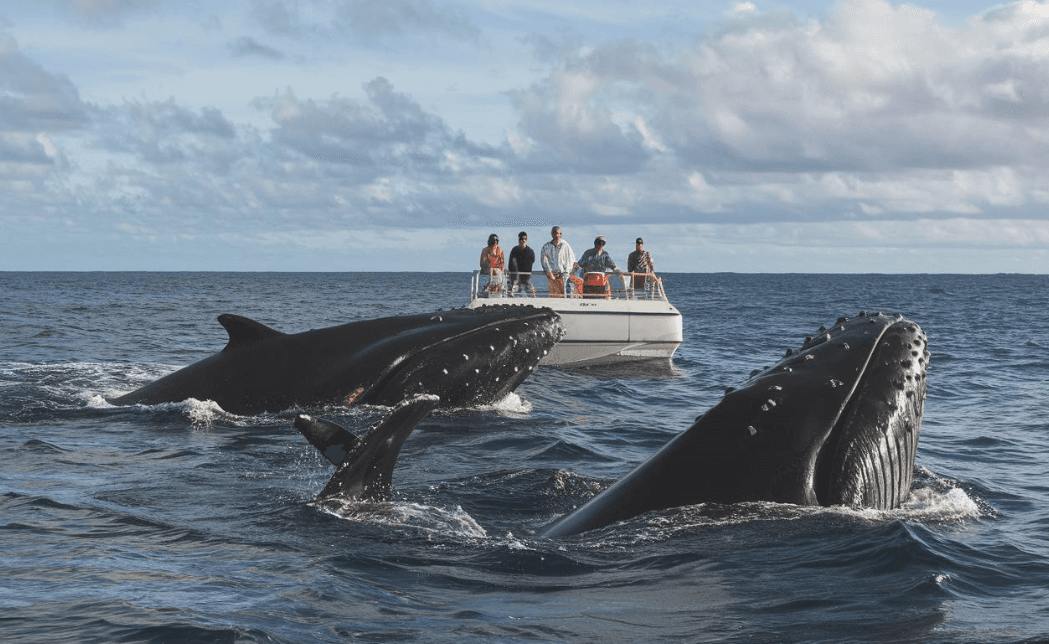
Samaná Bay is a well-known destination for observing migrating North Atlantic humpback whales. During the seasonal gathering, visitors may have opportunities to see whales surfacing, diving, displaying their tails, or performing other surface behaviors.
Tail slapping is one possible sighting, but it is not guaranteed on any particular trip.
Whales are wild animals, and their movements change from day to day. A tour might provide excellent views of a whale's back and blow without any dramatic surface display. On another outing, a whale may repeatedly slap its tail or perform another conspicuous behavior.
The most rewarding approach is to appreciate the full range of natural behaviors rather than measure a trip only by the number of splashes or dramatic movements observed.
If you are planning a visit, check the seasonal dates, departure arrangements, tour duration, and wildlife-viewing rules with a reputable local operator before booking.
7. What Should You Do If a Whale Slaps Its Tail Near Your Boat?
Seeing a powerful whale movement from a boat can be exciting. If it happens during your trip, follow the crew's instructions and remain seated or in the designated safe position.
Keep these practical points in mind:
- Stay calm. A dramatic splash is a natural behavior, not proof that the whale is attacking the boat.
- Follow the crew's directions. The captain and guide are responsible for safe viewing and complying with applicable wildlife rules.
- Keep a safe distance. Never encourage a boat operator to approach a whale more closely for a photograph.
- Avoid sudden movements. Do not lean dangerously over the rail or attempt to touch the animal.
- Take photographs responsibly. Use your camera's zoom rather than asking the boat to move closer.
- Respect other passengers. Avoid blocking views or moving around unsafely when a whale appears.
A responsible whale-watching experience puts the welfare of the animals and the safety of passengers ahead of getting a close-up photograph.
8. Is Tail Slapping a Sign That a Whale Is in Danger?
Not necessarily. Tail slapping is a natural behavior, and observing it does not by itself establish that a whale is injured, frightened, or in danger.
Context matters. Researchers and trained observers look for additional evidence before drawing conclusions about an animal's condition or the reason for its movements.
If a whale displays unusual behavior, passengers should not attempt to investigate or approach it. The appropriate response is to leave the interpretation and any reporting to qualified guides, researchers, or relevant wildlife authorities.
Visitors can help protect whales by choosing responsible operators and following viewing guidelines throughout the trip.
9. Why Understanding Whale Behavior Makes Your Samaná Trip Better
Learning about whale behavior before visiting Samaná Bay can turn a sightseeing excursion into a richer wildlife experience.
When a humpback whale slaps its tail, you will recognize the movement and understand some of the possible explanations. You will also know that science does not always provide a definitive answer for every individual display.
That distinction matters. Responsible wildlife education separates what observers can see from what they can confidently conclude.
You may see a tail slap, a breach, a fluke display, or a mother swimming near her calf. Every encounter is different, and none can be promised in advance.
By observing patiently and respecting the whales' space, visitors can appreciate these remarkable marine mammals while supporting a more responsible approach to wildlife tourism.
Frequently Asked Questions
Why do humpback whales slap their tails on the water?
Tail slapping may be associated with communication, social interactions, or other behavioral displays. Its precise function can vary, and scientists cannot always determine the reason for an individual event.
Is tail slapping the same as breaching?
No. Tail slapping involves striking the water with the tail flukes. Breaching involves launching much or most of the whale's body out of the water before it falls back onto the surface.
Does a tail slap mean a humpback whale is angry?
Not necessarily. A tail slap alone does not establish that a whale is angry or threatening another animal. Its meaning should be considered in context.
Can a tail slap be heard underwater?
A tail slap can create a sound as the tail strikes the water, and the resulting sound may travel through the surrounding water. The distance and strength at which it can be detected depend on several conditions.
Can I see tail slapping in Samaná Bay?
It is possible to observe tail slapping during the humpback whale season, but no operator can guarantee that a whale will perform this behavior on a particular trip.
When is the best time to see humpback whales in Samaná?
Humpback whales typically visit Dominican Republic waters during the winter breeding season, with sightings commonly associated with January through March. Seasonal timing and individual sightings can vary, so check current local guidance when planning your trip.
Should a boat approach a whale that is slapping its tail?
The boat should follow applicable wildlife-viewing rules and the captain's safety procedures. Passengers should not encourage closer approaches to obtain photographs or provoke a reaction.
Final Thoughts
Humpback whale tail slapping is one of the most impressive behaviors visitors may witness in Samaná Bay. It can be connected to communication, social interaction, or other behavioral displays, but its exact purpose is not always clear.
The best way to enjoy whale watching is to remain curious, respect the animals' space, and appreciate what you observe without assuming that every movement has the same meaning.
If Samaná is on your travel itinerary, learning a little about humpback whale behavior before your trip can help you make the most of a memorable encounter with these remarkable marine mammals.

Local explorer & expert guide in Visita Haitises.