Samaná Whale Watching Season 2027: Best Time to See Humpback Whales
If seeing a humpback whale in the wild is on your Dominican Republic bucket list, timing matters.
Every winter, humpback whales migrate to the warm waters around Samaná Bay and the Dominican Republic, creating one of the Caribbean's most spectacular seasonal wildlife experiences.
But what is the best time for whale watching in Samaná in 2027?
Should you visit in January, February or March?
Is February really the best month Can you still see whales at the end of March When are you most likely to see mothers with calves?
This guide explains the Samaná whale watching season 2027 month by month so you can choose the best dates for your trip.
When Is Whale Watching Season in Samaná?
The main Samaná whale watching season runs from January through March.
The Dominican Republic's official tourism website identifies January–March as the primary period for humpback whale watching in Samaná, while the International Whaling Commission also describes Samaná Bay whale watching as generally operating between January and March each year.
For travelers planning specifically around whales, a particularly strong window is:
Mid-January through late March
The Dominican Republic Tourism website notes that while first whales may appear before the official tourist season and some can remain later, peak activity is generally from mid-January through the end of March.
That means you have approximately ten weeks when Samaná becomes one of the Dominican Republic's most exciting wildlife destinations.
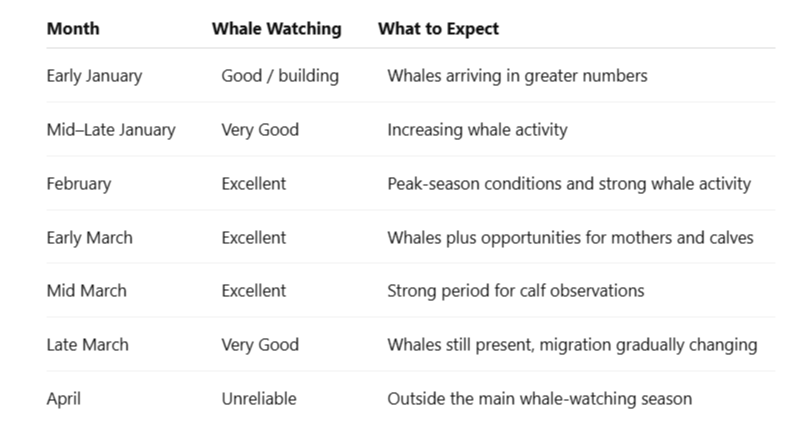
Samaná Whale Watching Season 2027 at a Glance
What Is the Best Month for Whale Watching in Samaná?
February is the best all-around month for most travelers.
If your main reason for visiting Samaná is whale watching and you can choose any month, February is an excellent choice.
February sits near the center of the established January–March season.
During this period, Samaná Bay can contain adult whales involved in breeding activity as well as females that have traveled to Dominican waters to give birth.
However, February being the "best" month does not mean whales will perform more dramatic behavior every day.
Humpback whales are wild animals.
A January excursion could experience several spectacular breaches while a February excursion on another day might encounter a calm mother and calf.
Nature does not follow a tour schedule.
January Whale Watching in Samaná
Is January a good time to see whales in Samaná?
Yes.
January marks the beginning and buildup of the main whale-watching season.
As the month progresses, greater numbers of humpback whales arrive in Dominican waters.
The second half of January is especially attractive.
Early January
Early January can produce whale sightings, but travelers planning an entire international vacation specifically around whale watching may prefer later in the month.
Migration timing naturally varies from year to year.
Mid-January
By the middle of January, the season becomes much more established.
This is an excellent period for travelers who want good whale-watching opportunities while visiting before February's busiest tourism period.
Late January
Late January is one of our preferred periods.
You benefit from:
- Established whale activity
- Excellent opportunities for adult whale encounters
- Pleasant winter weather
- Full whale-tour operations
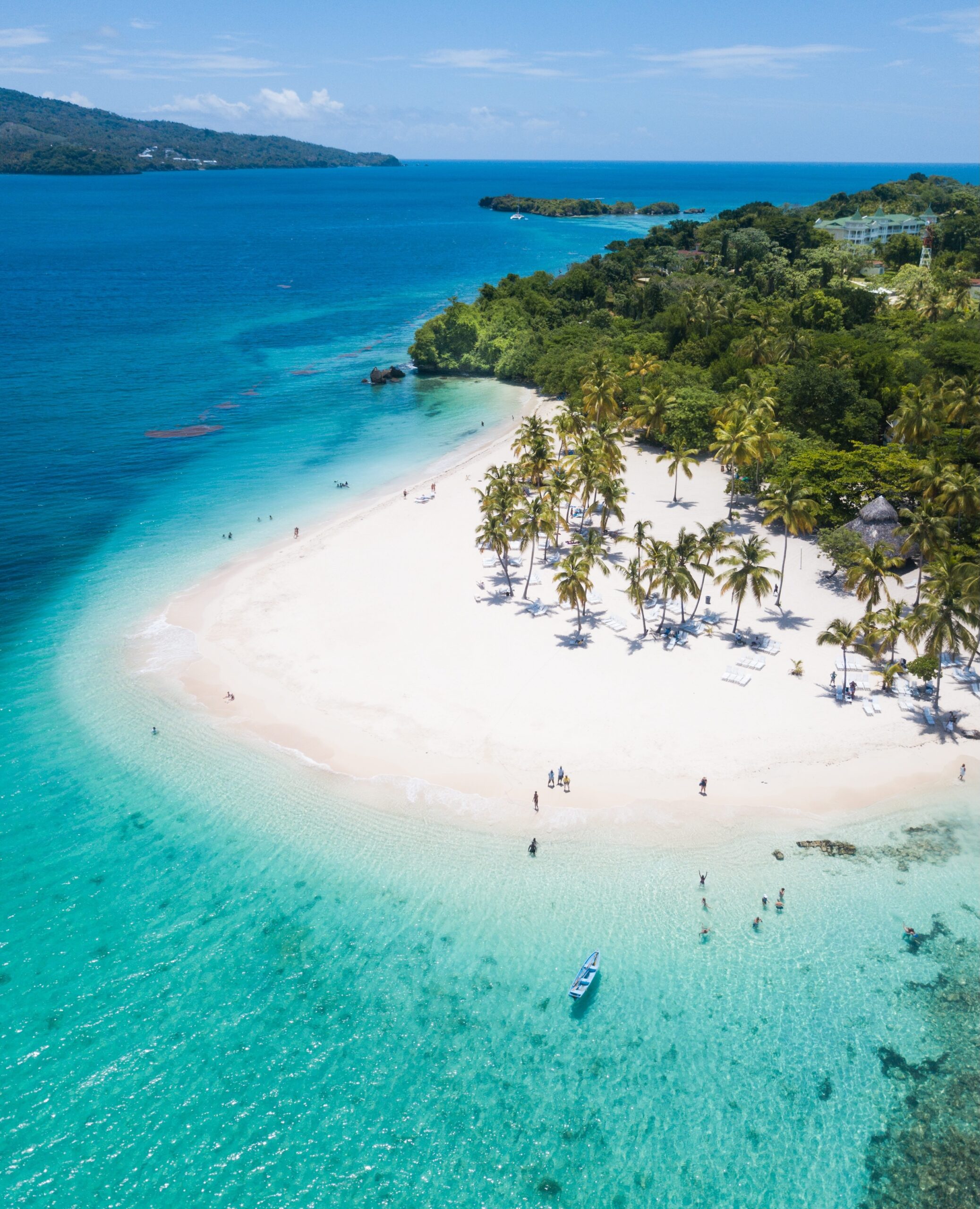
- Opportunities to combine whales with Cayo Levantado
- Potentially fewer peak-period visitors than February
January rating:
★★★★☆ Excellent from mid-month onward
February Whale Watching in Samaná
If someone asks us:
"I can visit Samaná only once. Which month should I choose for whale watching"
Our answer would usually be:
February.
February falls directly in the heart of the humpback whale season.
It is an excellent period to search for:
- Adult humpback whales
- Male competition groups
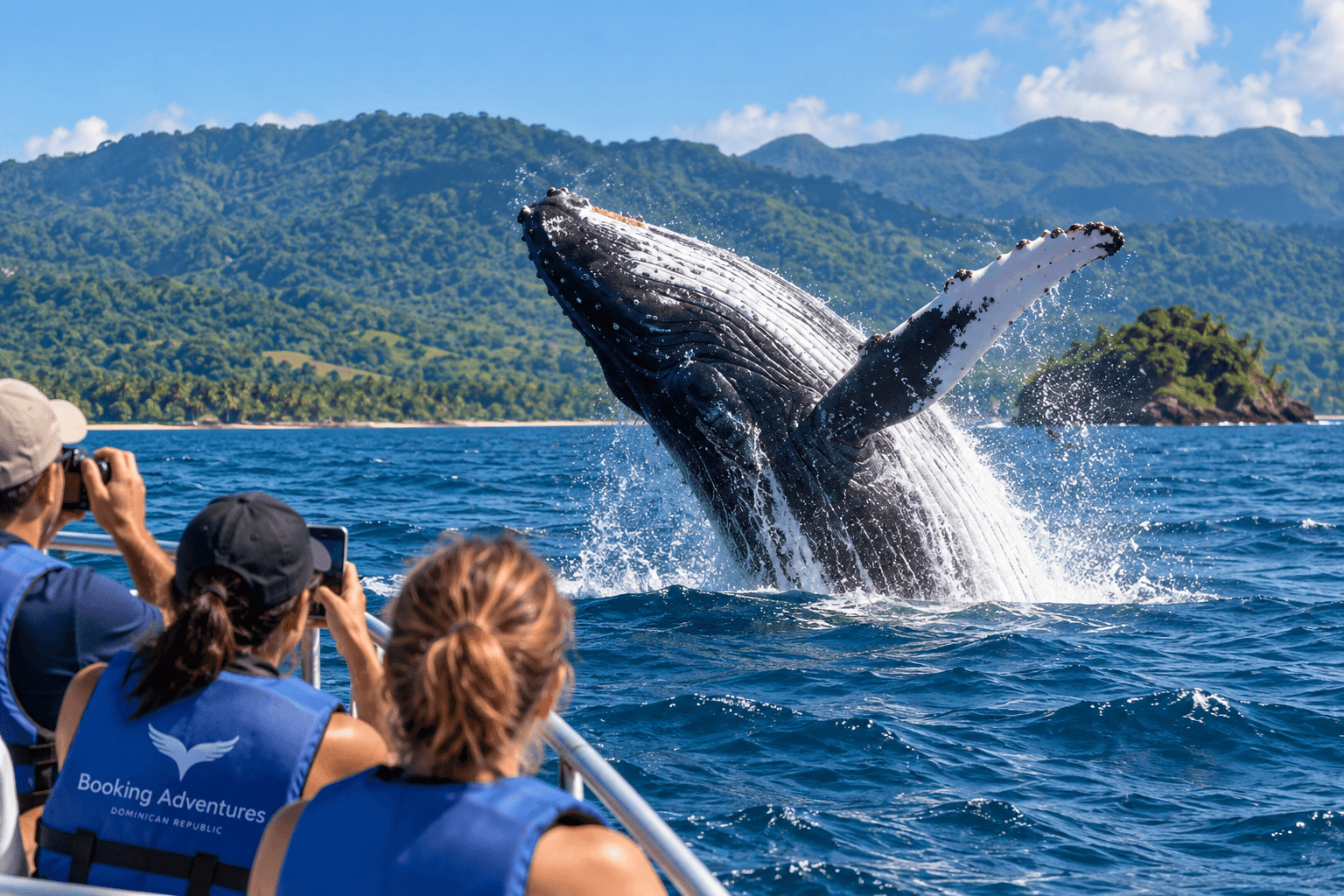
- Breaching
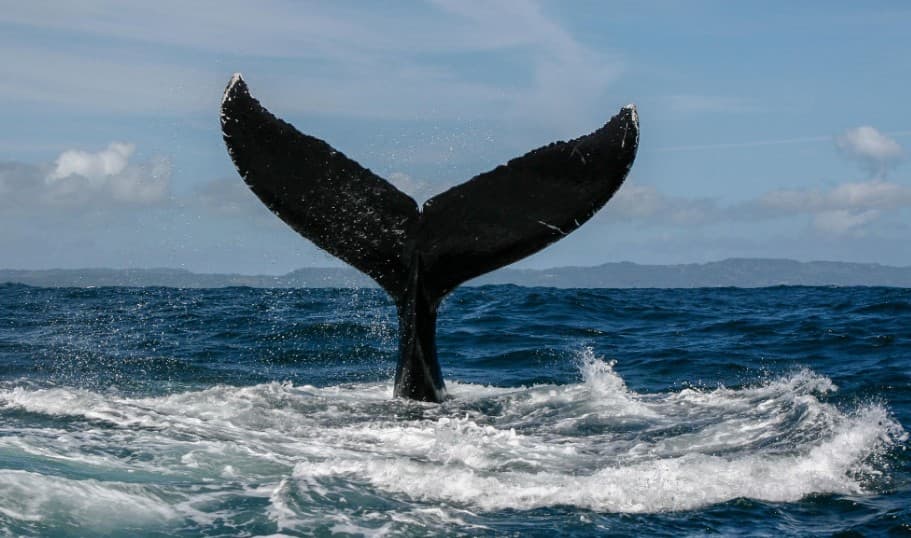
- Tail slapping
- Pectoral-fin displays
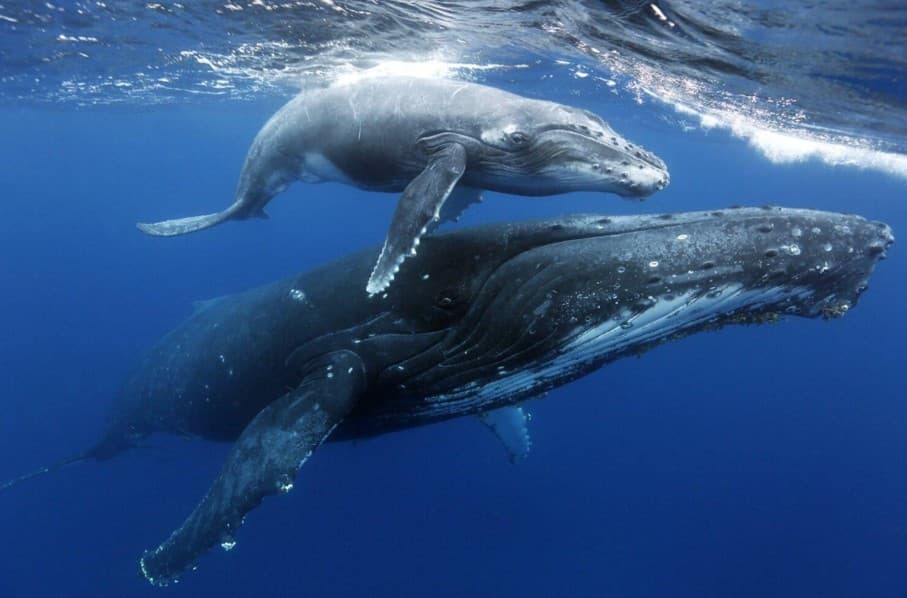
- Mothers
- Young calves
- Humpback whale blows across Samaná Bay
The exact behavior varies every day.
You could see several whales moving together or spend time peacefully observing a mother and her calf.
Is February crowded?
It can be.
Because February is widely considered one of the best months for whale watching in Samaná, demand increases.
If you're traveling in February 2027, book ahead—particularly if you need:
- Hotel pickup
- Punta Cana transportation
- A private excursion
- Whale Watching + Cayo Levantado
- Space for a large family or group
- A particular departure time
February rating:
★★★★★ Best overall month
March Whale Watching in Samaná
Do not make the mistake of assuming whale season ends when February finishes.
March can be an exceptional month for Samaná whale watching.
The official tourism information continues to identify March as part of the main whale season.
March can be particularly interesting because mothers and calves may still be spending time in the warmer Dominican waters before beginning their northward migration.
Why March Can Be Special
A newborn humpback calf needs time to grow and become stronger before making a long migration toward northern feeding areas.
For wildlife lovers, quietly watching a mother traveling with her young calf can be one of the most memorable whale encounters possible.
You may observe a calf:
- Surfacing frequently
- Swimming close to its mother
- Practicing small breaches
- Slapping the water
- Resting near the surface
Remember that regulations require boats to maintain greater care and distance when calves are present.
Early March
Excellent.
Mid-March
Still an excellent choice.
Late March
Whales can still be present, but the season is progressing toward its end.
If whale watching is the only reason you're traveling to the Dominican Republic, February or early-to-mid March gives you a safer planning window than waiting until the very end of the season.
March rating:
★★★★★ Especially attractive for mothers and calves
January vs February vs March: Which Should You Choose?
Choose January if:
You want to visit toward the beginning of the season and combine whale watching with a broader Dominican Republic vacation.
Best period: Mid-to-late January.
Choose February if:
Whale watching is your highest priority and you want to travel near the center of the season.
Best overall choice: February.
Choose March if:
You are especially interested in mothers, calves and late-season whale encounters.
Best period: Early-to-mid March.
Best Time of the 2027 Season
For the best balance of whale activity and schedule reliability, we recommend planning between:
January 20 and March 20, 2027
This is a travel-planning recommendation rather than an official government season announcement.
Once official 2027 operating dates are published, travelers should confirm them before booking.
Why Do Humpback Whales Come to Samaná?
Humpback whales do not live permanently in Samaná Bay.
They are migratory animals.
They spend part of the year feeding in productive northern waters and travel thousands of kilometers toward warmer tropical breeding areas.
The Dominican Republic is one of those important winter destinations.
The International Whaling Commission explains that humpback whales visit Samaná Bay between January and March to mate and give birth.
This is why Samaná offers such a different whale experience from northern feeding grounds.
Here, visitors are seeing part of the whales' reproductive cycle rather than their summer feeding season.
Where Are the Humpback Whales Coming From?
Many of the humpback whales that visit the wider Caribbean migrate from feeding grounds in the North Atlantic.
Their annual cycle can involve enormous distances between nutrient-rich northern feeding areas and warmer breeding waters.
Humpback whales generally rely heavily on energy reserves during their tropical breeding season.
Then, as winter ends, adults and growing calves gradually begin migrating north again.
Why Is Samaná Bay Famous for Whale Watching?
Samaná combines several important advantages.
Accessible whale watching
Visitors can join a day excursion directly from Santa Bárbara de Samaná instead of requiring a multi-day offshore expedition.
Protected habitat
The region forms part of the Dominican Republic's protected marine mammal sanctuary system.
Established whale-watching history
The International Whaling Commission notes that commercial whale watching became established in Samaná in 1985, making it one of the Caribbean's longstanding whale-watching centers.
Other attractions nearby
Travelers can combine whale season with:
- Cayo Levantado
- Los Haitises National Park
- El Limón Waterfall
- Las Terrenas
- Las Galeras
- Playa Rincón
- Samaná town
That makes the area much more than a single wildlife excursion.
What Time of Day Is Best for Whale Watching?
There is no scientifically guaranteed hour when humpback whales suddenly become more active.
Whales can breach, travel, rest or socialize throughout the day.
However, morning departures are often convenient because they allow enough time to combine whale watching with another activity, particularly Cayo Levantado.
Sea conditions also matter.
Weather, wind and waves can change throughout the day.
Always follow the advice of the local captain and tour operator regarding marine conditions.
Does Weather Affect Whale Watching?
Yes.
Whales do not disappear because there are clouds, but sea conditions influence the quality and safety of an excursion.
Calmer conditions can make it easier to:
- Spot whale blows
- See distant dorsal fins
- Photograph whales
- Move comfortably on the boat
- Observe surface behavior
Strong winds or rough seas may result in delayed or canceled departures.
Safety should always come before maintaining a scheduled tour.
Is Morning Better Than Afternoon?
For many travelers, we recommend morning.
Not because the whales follow a morning schedule, but because:
- It leaves additional time in the day
- Cayo Levantado combinations work well afterward
- Morning departures fit many full-day itineraries
- It gives operators greater flexibility if conditions change
The best whale encounter can happen at any permitted observation time.
When Can You See Baby Whales in Samaná?
Mothers and calves are among the biggest reasons travelers visit Samaná.
The warm tropical waters are important calving and nursery habitat.
Calves may be observed during the main season, with February and March particularly attractive for travelers interested in mother-and-calf encounters.
There are no guarantees.
Wildlife viewing always depends on which animals are present and where they are located on that particular day.
When Is the Best Time to See Whales Breaching?
There is no specific week or month when a breach can be guaranteed.
Breaching can occur during January, February or March.
Humpbacks may display behaviors such as:
- Full breaches
- Partial breaches
- Tail slaps
- Pectoral-fin slaps
- Spyhopping
- Tail fluking
- Surface rolls
Sometimes an excursion has dramatic surface activity.
Another day may provide a calmer but equally meaningful encounter.
Can You See Whales in Samaná in December?
Some individual whales may arrive before the main tourism season.
However, travelers should not organize an expensive international trip around December whale sightings.
The established tourism season is January through March.
For reliable vacation planning, choose the main season.
Can You See Whales in Samaná in April?
Some whales may remain into April as migration timing varies naturally.
However, April falls outside the principal whale-watching season.
If seeing humpbacks is essential to your vacation, don't deliberately wait until April.
Visit between mid-January and March instead.
How Long Does a Samaná Whale Watching Tour Last?
The duration depends on the tour.
A dedicated whale-watching excursion may last several hours.
A combination such as:
Whale Watching + Cayo Levantado
can occupy much of the day.
Tours departing from Punta Cana, Miches, Santo Domingo or other distant locations can become full-day excursions because transportation must also be included.
Whale Watching + Cayo Levantado During Whale Season
One of the best ways to turn whale watching into a complete Samaná experience is to combine it with Cayo Levantado.
A typical day can include:
- Departure from Samaná
- Whale watching in Samaná Bay
- Arrival at Cayo Levantado
- Dominican lunch depending on package
- Beach time
- Swimming
- Return to Samaná
This combination is particularly popular with first-time visitors.
Visiting From Punta Cana During Whale Season
Travelers staying in Punta Cana can experience Samaná whale watching, but expect an early departure.
Because of the distance, it is normally a full-day trip.
If you're staying in:
- Punta Cana
- Bávaro
- Cap Cana
- Uvero Alto
reserve the entire day.
Do not schedule an evening excursion immediately afterward.
Visiting From Miches
Miches is strategically located for whale-season excursions from the eastern Dominican Republic.
Official Dominican Republic Tourism information also promotes humpback whale excursions from Miches during the January–March migration season.
This is particularly useful for travelers staying in the growing Miches resort area.
Should You Book Whale Watching in Advance?
Yes, particularly during February.
Book in advance if:
- You have only one available day
- You are traveling during February
- You need transportation from Punta Cana
- You are traveling with children
- You need several seats together
- You want a private tour
- You want Whale Watching + Cayo Levantado
Planning ahead also gives you more flexibility if weather conditions require changes.
What Happens if You Don't See a Whale?
Wildlife sightings can never be treated like a scheduled performance.
Humpback whales are free-moving wild animals.
During the established Samaná season, operators search areas where whales are being observed, but specific sightings or behaviors cannot responsibly be guaranteed.
Check your tour's current wildlife and cancellation policy before booking.
Responsible Whale Watching Matters
The goal should never be to chase a whale until it performs.
Responsible whale watching means observing animals while allowing them to continue natural behaviors.
Regulations in the Dominican Republic include controls on vessel numbers, approach distances, speeds and observation time.
The International Whaling Commission also confirms that swimming with whales is prohibited in Samaná Bay.
Following those rules is particularly important around mothers and calves.
Is 2027 a Good Year to Visit Samaná for Whales?
Humpback migration to Dominican waters is an annual natural phenomenon.
For 2027, travelers should plan around the established January–March whale-watching period, while checking official announcements closer to the season for exact operating rules and dates.
If your dates are flexible, our preferred 2027 windows are:
Best overall:
February 2027
Great alternative:
Late January 2027
Best for a later trip:
Early-to-mid March 2027
Our Recommended 2027 Whale Watching Calendar
January 1–14
Possible whale activity, but season still building.
Recommendation: ★★★☆☆
January 15–31
Excellent period.
Recommendation: ★★★★☆
February 1–28
Prime whale-season travel period.
Recommendation: ★★★★★
March 1–15
Excellent period, particularly interesting for mothers and calves.
Recommendation: ★★★★★
March 16–31
Still a strong period, gradually moving toward the end of the season.
Recommendation: ★★★★☆
April
Not recommended if whales are your principal reason for traveling.
Recommendation: ★★☆☆☆
Best Samaná Whale Watching Season FAQ
What months are whale season in Samaná?
The main whale-watching season is January through March.
What is the best month to see whales in Samaná?
February is the best all-around month for most travelers because it falls in the center of the season.
Is January good for Samaná whale watching?
Yes. Mid-to-late January is an excellent period.
Is March too late for whale watching?
No. March remains part of the principal whale-watching season and can be particularly interesting for observing mothers and calves.
Can you see whales in April?
Some whales may remain, but April is outside the main whale-watching period and should not be your first choice if whales are the primary purpose of your trip.
Are whales guaranteed in February?
No wildlife sighting can be guaranteed. February is an excellent seasonal period, but humpback whales remain completely wild.
When can you see baby humpback whales?
Calves may be observed during the main season. February and March are especially interesting periods for mother-and-calf encounters.
Is January or February better for whale watching?
Both are good, but February generally provides the strongest overall timing.
Is February or March better?
Choose February for the center of peak season. Choose early-to-mid March if mother-and-calf encounters are especially important to you.
Can you go whale watching from Punta Cana?
Yes. Samaná whale-watching excursions from Punta Cana are normally full-day trips with early transportation.
Can you combine whale watching with Cayo Levantado?
Yes. Whale Watching + Cayo Levantado is one of the most popular combinations during Samaná's whale season.
Can you swim with the whales?
No. Swimming with whales is prohibited in Samaná Bay.
Final Recommendation: When Should You Visit?
If you have complete flexibility, visit during:
February 2027
For a slightly earlier trip:
January 20–31
For travelers especially interested in the later part of the breeding season:
March 1–20
But remember that there is no perfect day.
One morning might bring a spectacular breach.
Another might reveal a mother slowly swimming beside her newborn calf.
Another could show several adults moving together across the bay.
That unpredictability is part of the magic.
Every winter, humpback whales travel enormous distances to reach these tropical waters.
For a few special months, Samaná Bay becomes one of the Caribbean's great places to witness them in the wild.
If you're visiting the Dominican Republic between January and March 2027, this is one experience you should strongly consider adding to your itinerary.
Book Whale Watching in Samaná
Explore Samaná whale watching tours, private excursions and Whale Watching + Cayo Levantado experiences with Booking Adventures.
Main internal booking link: /en/tour/samana-whale-watching-tour
Main pillar article to link: /en/blog/whale-watching-samana/
Local explorer & expert guide in Visita Haitises.