Why Does the Ocean Change Color During Whale Watching in Samaná Bay?
During a whale-watching excursion in Samaná Bay, Dominican Republic, visitors may notice that the ocean does not always appear to be the same color. One area may look deep blue, another turquoise, and a nearby section may appear greenish or silvery under the sunlight.
These changes can be especially noticeable when a boat moves across the bay. The water's appearance may shift even when the weather seems unchanged, leaving travelers wondering whether the difference comes from depth, underwater features, sunlight, or marine activity.
The ocean's color is influenced by several factors, including how light interacts with the water, what is beneath the surface, and the angle from which it is viewed. Understanding these factors can make a whale-watching trip more interesting while helping visitors avoid assuming that every color change signals a whale nearby.
Why Does Ocean Water Look Blue?
Sunlight contains a range of visible colors. When light enters the ocean, water absorbs and scatters different wavelengths in different ways.
Under many conditions, blue light is scattered back toward an observer more effectively than longer wavelengths, contributing to the familiar blue appearance of the sea. The exact color depends on the water's properties, the light, and the viewing conditions.
This is why the ocean around Samaná Bay can appear rich blue on one part of a trip and noticeably different in another location.
The water does not contain blue coloring in the same way that paint does. Its appearance results from the interaction of light with water and the materials suspended or dissolved within it.
Why Can the Ocean Look Turquoise or Green?
Blue is not the only color visitors may see during a whale-watching trip.
Water can appear turquoise or green when conditions change the way light travels through it. Shallow areas may allow light to interact with the seabed, while suspended particles and microscopic organisms can influence the color of the water column.
The seabed may be particularly important in shallow coastal areas, where pale sand or other bottom features can contribute to a lighter appearance. In deeper water, the bottom usually has less influence on the color seen from the surface.
Greenish water can also occur because of the optical properties of suspended material or phytoplankton. However, color alone cannot establish exactly which factor is responsible.
Visitors should therefore treat color differences as an interesting feature of the marine environment rather than a precise indicator of what lies underwater.
How Does Sunlight Change the Ocean's Appearance?
Sunlight can make the same stretch of ocean look different at different times.
When the sun is high, its light reaches the surface at a different angle than it does in the early morning or late afternoon. This changes the balance between light entering the water and light reflected toward the observer.
Clouds can also affect the color and brightness of the sea. Under a bright sky, the water may appear vivid and saturated. Under cloud cover, the same area may look darker or less colorful.
The observer's position matters too. A passenger looking toward the sun may see strong reflections, while someone facing away from it may see a clearer view of the water's color.
These effects can change during a single whale-watching trip, even if the boat remains within the same general part of Samaná Bay.
Can Water Depth Affect Ocean Color?
Yes. Depth can influence how much light reaches the seabed and how that light returns toward the surface.
In shallow water, light may reach sand or other bottom features and reflect back upward, contributing to a bright turquoise or pale blue appearance. In deeper water, less light returns from the seabed, so the water may appear darker.
However, depth is not the only factor that determines color. Suspended particles, water clarity, sunlight, and viewing angle also influence what visitors see.
A dark-blue patch does not automatically mean that the water is unusually deep, just as turquoise water does not always indicate a shallow area. Determining depth accurately requires more than visual color alone.
During whale watching, passengers should avoid interpreting water color as a reliable navigation or depth indicator.
Do Reflections Make the Ocean Look a Different Color?
Reflections can have a strong effect on the ocean's appearance.
The surface of the sea reflects some of the light arriving from the sky and surrounding environment. Depending on the angle of observation, the water may reflect blue sky, bright clouds, or direct sunlight.
These reflections can create patches that appear silver, dark blue, or almost white. As the boat moves, the angle changes, and the same area may look completely different.
Reflections can also make it harder to see below the surface. Even when the water is relatively clear, glare may conceal underwater features or reduce the visibility of a whale that is swimming close to the surface.
Polarized sunglasses may help reduce some reflected glare, although their effectiveness depends on the conditions and viewing angle.
Does a Change in Ocean Color Mean a Whale Is Nearby?
No. A change in ocean color is not a dependable sign that a humpback whale is nearby.
During the whale-watching season, visitors may see whales in different parts of Samaná Bay, but the sea's color can change for reasons unrelated to marine mammals.
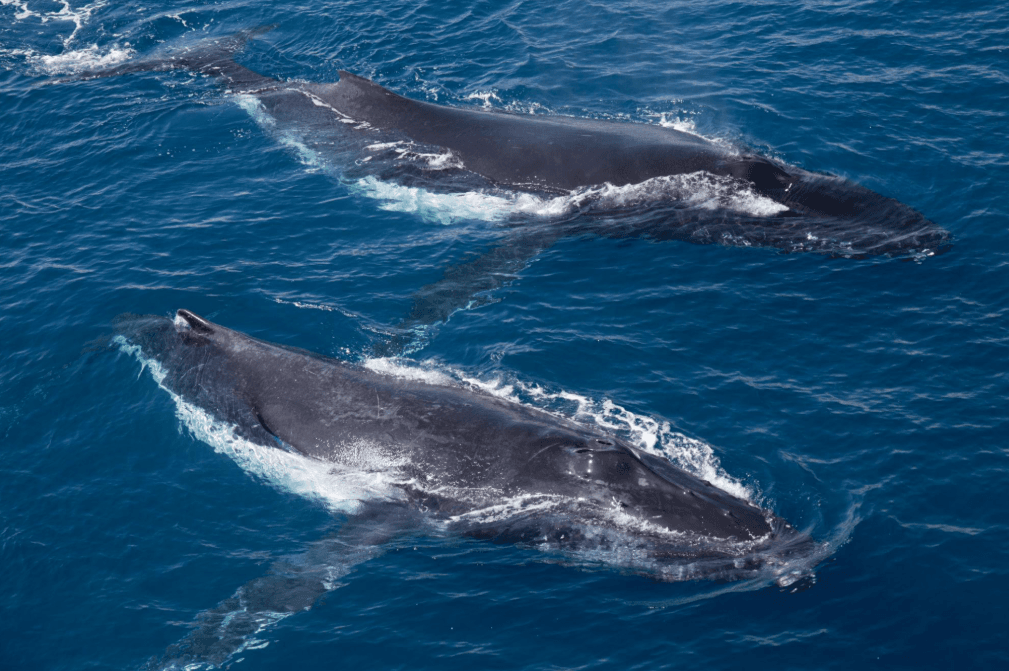
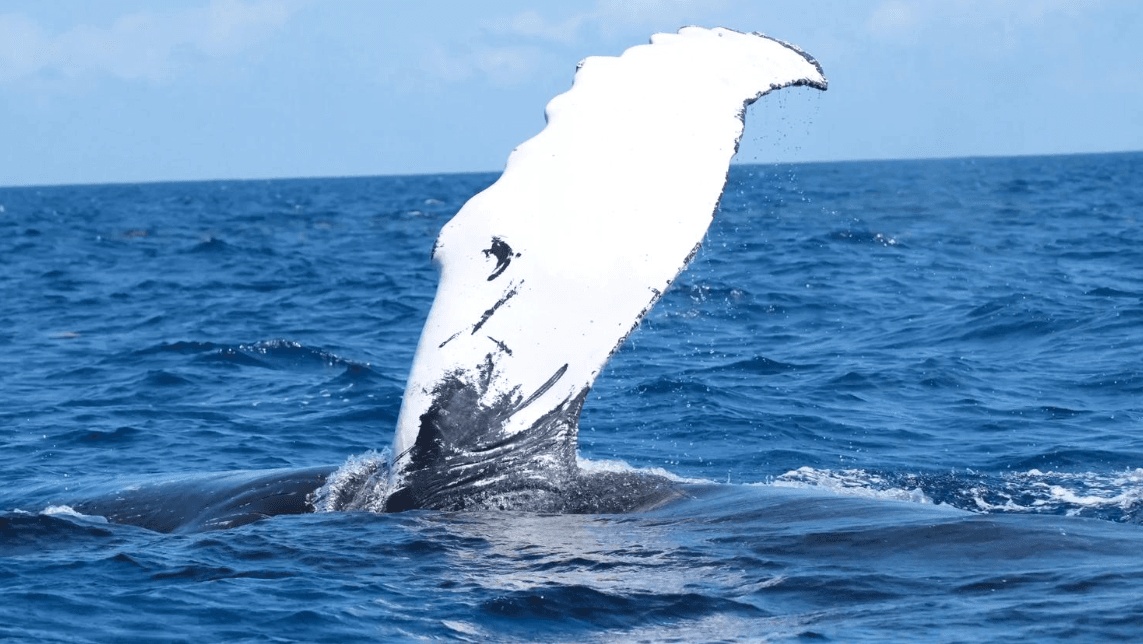
If a whale surfaces, more direct signs may include its blow, back, dorsal fin, pectoral fin, or tail fluke. These features provide clearer evidence of a sighting than a patch of unusual color.
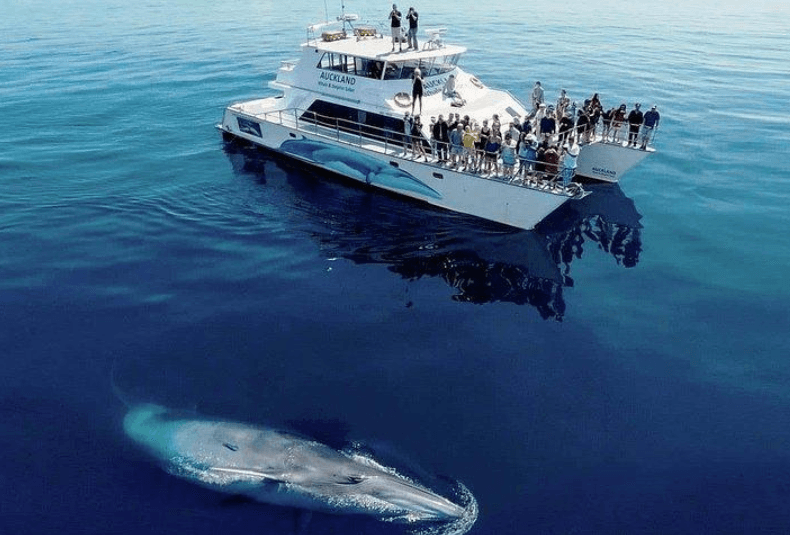
A whale swimming beneath the surface may not be visible, but the surrounding water's color alone cannot confirm its location.
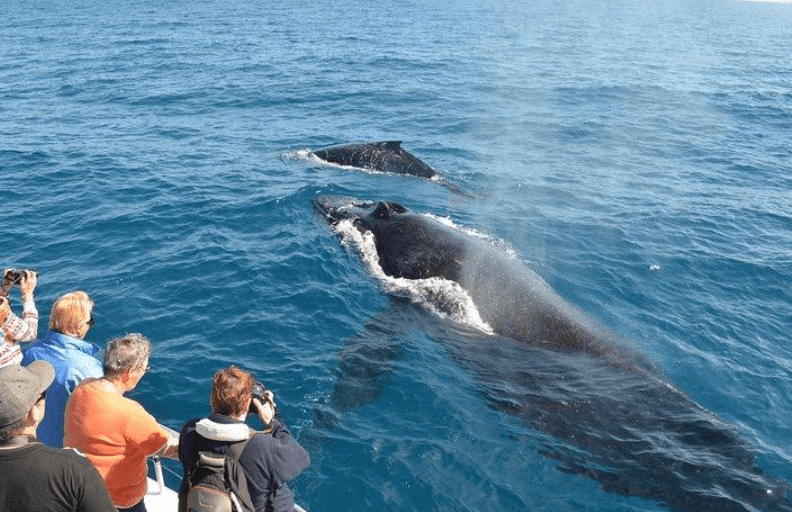
Experienced guides can help passengers look for recognizable wildlife features and understand the local viewing conditions. Even with experience, guides cannot guarantee a sighting based on the appearance of the water.
Why Does Ocean Color Matter for Whale Watching Photography?
Ocean color can make a major difference to the appearance of photographs.
A deep-blue background may create strong contrast with a whale's dark body and pale markings. Turquoise water may produce a brighter, more tropical-looking image, while reflections can create dramatic highlights.
Photographers should remember that a camera may record colors differently from what the eye sees. Automatic exposure settings, white balance, cloud cover, and reflections can all affect the final image.
For better results:
- Watch how the light changes before taking a photograph.
- Avoid pointing directly into strong glare when possible.
- Keep the horizon level and include some surrounding water for context.
- Use a fast enough shutter speed to capture moving wildlife.
- Prioritize observing the whale rather than viewing the entire trip through a screen.
Natural color variation can add visual interest to a photograph, even when a whale is not immediately visible.
How Can Visitors Observe Ocean Color More Carefully?
You do not need specialized equipment to notice changes in the sea. A few simple habits can help you understand what you are seeing.
First, compare different areas of water while considering the direction of sunlight. Notice whether the color changes when the boat turns or when clouds pass overhead.
Next, consider the surroundings. Shallow coastal areas, deeper open water, and locations with different levels of suspended material may have distinct appearances.
Finally, avoid drawing firm conclusions from color alone. A visual observation can be accurate without providing a complete explanation of the underlying conditions.
These small details can make the journey through Samaná Bay more educational, even during periods when whales remain underwater.
Frequently Asked Questions
Why does the ocean in Samaná Bay sometimes look dark blue?
Dark-blue water can result from the interaction of light with deeper water, the water's optical properties, and the viewing conditions. Color alone cannot establish the exact depth.
Why does Caribbean water sometimes look turquoise?
Turquoise shades may appear when light interacts with relatively shallow water, the seabed, and the water itself. Sunlight and water clarity also influence the appearance.
Can clouds change the color of the ocean?
Yes. Clouds change the amount and direction of sunlight reaching the water, which can alter its brightness and apparent color.
Does green water mean there are many marine organisms?
Not necessarily. Suspended particles and microscopic organisms can influence water color, but color alone is not enough to determine the abundance or type of organisms present.
Can I predict whale sightings by looking at ocean color?
No. Ocean color is not a reliable predictor of whale sightings. Look for direct signs of wildlife and follow the guidance of your whale-watching operator.
Conclusion
The ocean around Samaná Bay can appear in many shades, from deep blue to turquoise, green, and silvery gray. These differences arise from the interaction of light, water depth, suspended material, seabed features, reflections, and changing weather conditions.
For whale watchers, understanding these effects adds another dimension to the experience. The sea is not merely a background for humpback whales; it is a dynamic environment whose appearance changes throughout the day.
Enjoy the color variations, observe the surrounding conditions, and remember that an unusual shade of water does not necessarily indicate a whale. The most rewarding wildlife observations come from patience, careful attention, and respect for the natural environment.

Local explorer & expert guide in Visita Haitises.