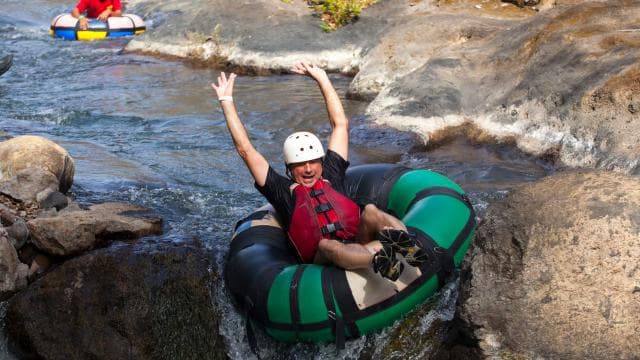
From Liberia: Tubing Adventure at Rio Negro
5.0(50)
From
View Details$75
Discover the wild beauty of Costa Rica’s Caribbean coast on a guided nature and wildlife hike through Cahuita National Park, one of the most rewarding places to experience tropical biodiversity near Cahuita and Puerto Viejo. Walk along an easy, mostly flat trail with a knowledgeable licensed guide who knows how to spot the animals that can be surprisingly difficult to see without an experienced eye. From slow-moving sloths resting high in the trees to lively white-faced capuchin monkeys, colorful tropical birds, reptiles, butterflies, and leaf-cutter ants, every section of the forest offers the possibility of a new discovery.
This Cahuita National Park guided hike is designed for travelers who want more than simply walking through a rainforest. With an expert guide leading the way, you can learn how to recognize wildlife, understand animal behavior, explore the coastal forest, and appreciate the incredible biodiversity of Costa Rica’s Limón Province. The small-group format, limited to a maximum of 10 participants, creates a more personal experience and gives you opportunities to stop, observe, photograph, and ask questions along the trail.
The experience lasts approximately two hours, with the guided walk itself taking around 1.5 hours depending on conditions and the pace of the group. The route begins near the Cahuita National Park entrance and returns to the same general meeting area, making it a convenient addition to a day exploring Cahuita. After the guided walk, you can continue enjoying the natural surroundings and access the park’s beautiful coastal beach areas.
Imagine stepping beneath a canopy of tropical greenery while the sounds of the Caribbean coast surround you. Leaves move gently overhead. Birds call from branches that may seem empty at first glance. Somewhere high above, a sloth rests quietly among the foliage. A monkey moves through the canopy. Along the forest floor, insects work constantly, while a lizard warms itself in a patch of sunlight.
This is the atmosphere that makes a Cahuita National Park wildlife tour so memorable.
Rather than rushing from one attraction to another, this experience invites you to slow down and observe. Wildlife watching in a tropical rainforest is often about patience and attention. Some animals are obvious once you know where to look, while others blend almost perfectly into their surroundings.
That is where an experienced local guide can make such a difference.
The tour’s licensed guides have detailed knowledge of Cahuita National Park and its wildlife. Their ability to identify movement, sounds, shapes, and camouflage can help travelers notice animals they might otherwise walk straight past. According to the activity information, guests can sometimes begin spotting wildlife within the first part of the trail.
For travelers visiting Costa Rica for the first time, this can transform an ordinary rainforest walk into an engaging wildlife experience. For experienced nature lovers, it offers another opportunity to observe the remarkable ecosystems of the Caribbean coast.
Cahuita National Park is located on Costa Rica’s Caribbean coast in Limón Province, close to the town of Cahuita. The park is known for its combination of tropical forest, coastline, beaches, and marine ecosystems, making it a particularly distinctive destination for travelers interested in nature and wildlife.
On this guided hike, the focus is on the land-based rainforest experience.
The trail provides an easy way to explore the tropical environment while remaining close to the coast. You can experience the contrast between dense vegetation and glimpses of the Caribbean, creating a hiking environment that feels very different from a conventional inland forest trek.
The route is described as flat and easy, making it accessible to travelers with a range of fitness levels. However, visitors should still be prepared for moderate physical activity and changing tropical weather conditions.
This balance is one of the tour’s most appealing qualities. You do not need to be an experienced hiker to enjoy the experience, yet you still get to enter a genuine tropical environment where wildlife is the main attraction.
One of the biggest reasons travelers choose a Costa Rica wildlife hike is the opportunity to see animals in their natural environment.
Cahuita provides an excellent setting for observing tropical wildlife, and the tour focuses on finding species that inhabit the forest and surrounding vegetation.
Few animals are more closely associated with Costa Rica than the sloth.
During the hike, your guide will help you search the treetops for both two-toed and three-toed sloths. Because sloths spend much of their time resting quietly among branches, they can be difficult to notice without assistance.
A seemingly ordinary section of canopy can suddenly become fascinating when a guide points out a sloth hidden among the leaves.
Watching a sloth in the wild is very different from seeing one in captivity. The experience allows you to observe an animal in the environment where it naturally lives, surrounded by the vegetation and trees that form its habitat.
For wildlife photographers, sloth sightings can also provide memorable photo opportunities. The guide has access to equipment that can assist with viewing distant wildlife, including a telescope lens that can be used to help guests photograph animals with their phones.
Keep your eyes moving through the canopy as you search for white-faced capuchin monkeys.
These intelligent and active primates can move quickly through the trees, making them exciting to observe. Unlike a sloth, which may remain almost completely still, monkeys can bring sudden movement and energy to the rainforest.
Your guide can help identify where the animals are moving and explain aspects of their behavior as you observe them.
The experience is not simply about collecting a list of animals seen during the tour. It is about understanding the environment and learning how the different species interact with it.
The tropical forest is also home to howler monkeys.
Even when they are not immediately visible, their presence can become part of the rainforest experience through sound. Listening carefully to the forest is one of the pleasures of wildlife watching, because the jungle communicates in many ways.
A guide can help distinguish animal sounds and direct your attention toward the areas where wildlife may be active.
Cahuita’s rainforest environment is also home to a variety of bird species.
The tour description highlights the possibility of seeing colorful birds such as toucans, trogons, and hawks.
For bird lovers, the experience can become a fascinating exercise in observation. Instead of simply looking for large animals, you begin noticing movement in the canopy, unusual silhouettes, calls, flashes of color, and birds moving between branches.
A knowledgeable guide can make these moments more meaningful by helping identify what you are seeing.
The rainforest is not only about monkeys, sloths, and birds.
Cahuita’s wildlife also includes reptiles, and the guided walk offers opportunities to search for iguanas, lizards, and snakes.
Some reptiles are masters of camouflage. They may sit completely still against vegetation, tree trunks, or branches, making them easy to miss when walking independently.
The activity description specifically mentions the possibility of seeing colorful snakes, including the eyelash viper.
Wildlife should always be observed responsibly and from a safe distance. The value of having a knowledgeable guide is not simply that they can find animals; they can also help visitors understand how to observe them appropriately within their natural environment.
For travelers who enjoy discovering the smaller and less obvious residents of the rainforest, these encounters can become some of the most memorable moments of the hike.
One of the most enjoyable aspects of a guided rainforest experience is learning to appreciate creatures that are easy to overlook.
Look down and you may notice leaf-cutter ants moving through the forest. Look toward the vegetation and you may spot a blue morpho butterfly. Look closely at leaves and branches and you may discover insects that would otherwise remain invisible.
The activity highlights leaf-cutter ants and blue morpho butterflies among the wildlife travelers may encounter.
These smaller species are an important reminder that a tropical ecosystem is not defined only by its most famous animals.
Every part of the forest contributes to the larger environment.
A trail can therefore become an outdoor classroom, where travelers gradually begin to see details they might have ignored at the beginning of the walk.
Walking through a rainforest alone can be beautiful, but knowing where to look can completely change the experience.
A professional guide can recognize clues that most visitors would miss.
A movement high in a tree.
A particular sound coming from the canopy.
A shape that appears to be part of a branch.
A small creature hiding among leaves.
A distant bird that is difficult to identify.
These details can turn an ordinary walk into an active wildlife search.
The Cahuita experience is led by licensed guides with knowledge of the park and its wildlife. Reviews on the activity page repeatedly mention guides helping visitors notice animals they would probably not have seen without assistance.
That is particularly important in tropical forests, where wildlife does not necessarily appear on demand.
The goal is not to guarantee a particular animal at a particular moment. Instead, the guide helps maximize your ability to notice the wildlife that is naturally present during your visit.
This is not a race through the jungle.
The guided walk is designed around observation.
You may stop frequently to look into the trees, listen to the forest, photograph wildlife, or learn about the species around you.
That slower pace is an important part of the experience.
Wildlife photography often rewards patience. A few quiet minutes can reveal more than a rushed walk covering a much greater distance.
The activity information notes that the tour moves at a slow pace to allow participants to take photographs and observe animals.
This makes the experience particularly appealing to travelers who want to take their time rather than simply pass through the park.
The tour is limited to a maximum of 10 participants.
A smaller group can make a wildlife walk feel more personal. Instead of feeling like part of a large crowd, travelers have more opportunity to communicate with the guide and share discoveries with the other participants.
When someone spots movement in a tree, everyone can stop and look.
When the guide explains a particular animal, there is space to listen.
When a wildlife photography opportunity appears, the group can pause rather than rushing forward.
The small-group format is therefore particularly suited to a tour where observation and interpretation are central to the experience.
It also makes the hike a natural choice for couples, families, solo travelers, friends, and small groups looking for a more intimate way to explore Cahuita.
One of the most distinctive features of this experience is its connection between rainforest and coastline.
The guided walk takes place along a coastal environment where you can experience tropical forest while remaining close to the ocean.
At the end of the tour, travelers can continue enjoying the park and its beach environment, including the white-sand beach area around Punta Cahuita.
This creates a natural way to combine two classic Costa Rica experiences: wildlife and the Caribbean coast.
You can begin your visit focused on animals and forest ecology, then transition into a more relaxed beach setting afterward.
For travelers planning a day in Cahuita, this combination can be especially convenient.
Instead of treating wildlife viewing and beach time as completely separate activities, you can experience both within the same destination.
The coastal setting adds another dimension to the hike.
Cahuita is not simply a rainforest destination. Its identity is closely connected to the Caribbean Sea, beaches, coastal vegetation, and marine environment.
The tour ends near Punta Cahuita, where visitors can enjoy the beach after the guided walk. The park also has covered picnic areas along the trails, offering places where visitors can pause and relax.
This makes the experience easy to adapt to your travel style.
If wildlife is your priority, you can focus your attention on the guided hike.
If you want a slower day, you can spend additional time around the beach.
If you are traveling with family or friends, the combination of guided nature exploration and relaxed coastal time can provide variety throughout the day.
Costa Rica is famous for biodiversity, and Cahuita offers a particularly appealing introduction to that natural richness.
The experience is ideal for travelers who want to understand what makes the country’s tropical ecosystems so special.
You are not simply passing through a green landscape.
You are entering a living environment where animals, insects, trees, birds, reptiles, and coastal ecosystems interact.
The guide helps turn these observations into a story.
Why does the sloth spend so much time in the canopy?
How do monkeys move through the forest?
Where might a reptile hide?
Why are some birds easier to hear than see?
What makes a butterfly’s color so striking?
These questions can make the experience engaging for adults and younger travelers alike.
A major advantage of this Cahuita National Park hiking tour is the relatively easy character of the trail.
The route is described as flat and easy and suitable for a broad range of ages and fitness levels. At the same time, visitors should be prepared for moderate physical activity and should consider weather conditions when choosing clothing and footwear.
This combination makes the tour appealing to travelers who want a genuine rainforest experience without committing to a demanding mountain trek.
There is no need to climb steep terrain simply to experience Costa Rica’s wildlife.
Instead, the adventure comes from what you discover around you.
The excitement can be as simple as your guide suddenly stopping and pointing toward a tree.
Everyone becomes quiet.
You look up.
At first, you see only leaves.
Then, slowly, you notice the shape of an animal hidden among them.
That moment is at the heart of wildlife travel.
Cahuita National Park offers countless opportunities for nature photography.
The variety of subjects means that you may find yourself photographing very different scenes within a single walk.
A sloth resting among branches.
A capuchin monkey moving through the canopy.
A colorful bird perched against green foliage.
An iguana in the sunlight.
A butterfly passing through the vegetation.
Leaf-cutter ants working along the forest floor.
And beyond the forest, the Caribbean coastline.
The tour specifically provides a telescope lens that can help guests photograph distant wildlife using their phones.
You do not need professional camera equipment to enjoy the photography opportunities.
A smartphone can be enough to capture memories, especially when a guide helps you locate the subject and position your camera.
For serious wildlife photographers, meanwhile, the slower pace provides opportunities to spend more time observing natural behavior.
A strong nature tour should do more than point out animals.
It should help visitors understand what they are seeing.
The guides on this experience share information about wildlife behavior and the park, making the walk both entertaining and educational.
This educational element can change how you experience the rest of your Costa Rica trip.
After learning to look for certain signs of wildlife, you may begin noticing similar details elsewhere.
You become more aware of movement in the trees.
You listen more carefully to bird calls.
You start looking beneath leaves and along branches.
The rainforest becomes more than scenery.
It becomes a place full of stories and connections.
Families visiting Costa Rica often want activities that are engaging without being overly strenuous.
The relatively flat trail makes this experience accessible to a wide range of travelers, while the possibility of seeing sloths, monkeys, birds, reptiles, and butterflies provides plenty of visual interest.
Children can turn the hike into a real-life wildlife discovery game.
Who can spot the first monkey?
Can you find a sloth?
Where is the iguana?
Can you hear the birds before you see them?
The guide can provide the knowledge that helps turn these observations into meaningful learning moments.
Families should still consider weather, footwear, walking ability, and individual needs before participating, particularly during periods of heavy rain.
Solo travelers can also benefit from the small-group nature of the activity.
Rather than exploring the park completely alone, you join a group led by a local expert.
This provides both social interaction and access to local knowledge.
For a solo traveler interested in wildlife photography, nature, or Costa Rica’s Caribbean coast, the experience can provide an easy way to spend several hours exploring without having to organize every detail independently.
The meeting point is located beside the appropriate park entrance, where participants are instructed to wait near the large park sign and ask for Kenry.
A rainforest experience is not only visual.
The sounds are part of the adventure.
Bird calls echo through the trees.
Leaves move in the breeze.
Insects create a constant background rhythm.
Monkeys may make their presence known from the canopy.
And beyond the vegetation, the Caribbean coast provides another layer of atmosphere.
These sounds make the experience feel alive.
Even when you are not looking directly at an animal, you are surrounded by signs of life.
This is one reason a guided hike can be so rewarding: it encourages you to slow down and pay attention to the environment as a whole.
Not every traveler wants an entire day filled with intense activity.
This experience offers a useful balance.
The guided portion is active enough to feel adventurous, but the trail itself is relatively easy. Afterward, you can continue enjoying the park and coastal surroundings at your own pace.
You might spend time at the beach.
You might enjoy a picnic.
You might simply sit beneath the tropical landscape and reflect on the wildlife you have seen.
The park’s coastal setting makes it possible to shift naturally from exploration to relaxation.
That flexibility is especially useful for travelers building a broader Costa Rica itinerary.
Many travelers associate Costa Rica with famous volcanoes, cloud forests, and Pacific beaches.
The Caribbean side offers a different atmosphere.
Cahuita combines tropical forest, Caribbean coastline, wildlife, and a relaxed coastal character.
The national park provides a chance to experience these elements together.
A visit here can complement other Costa Rica destinations by showing a different side of the country’s natural environment.
Instead of focusing on one dramatic landmark, Cahuita invites you to appreciate biodiversity itself.
The attraction is the living landscape.
The trees.
The animals.
The beach.
The sounds.
The small discoveries.
The unexpected encounters.
The most exciting part of a wildlife hike is often what you do not know you are going to see.
You may arrive hoping to see a sloth.
Then your guide spots a monkey.
A few minutes later, a colorful bird appears.
Then someone notices an iguana.
A butterfly crosses the trail.
The guide points out a hidden reptile.
Suddenly, the forest feels completely different.
Every branch and leaf becomes something worth examining.
This sense of discovery is what makes a guided wildlife tour in Cahuita more than a simple walk.
It is an invitation to look closer.
Travel is often most memorable when it gives you a deeper connection to a destination.
A guided nature walk does exactly that.
Instead of simply seeing Cahuita, you begin to understand it.
You learn that wildlife can be difficult to spot.
You discover how animals use the forest.
You learn why patience matters.
You notice how closely the rainforest and Caribbean coastline are connected.
And you leave with a greater appreciation for the biodiversity that makes Costa Rica such a remarkable destination for nature travelers.
The experience combines professional guiding, wildlife observation, an accessible trail, a small-group atmosphere, and access to the coastal environment, creating a well-rounded introduction to Cahuita National Park.
Search the treetops for two-toed and three-toed sloths resting among the branches.
Watch for white-faced capuchins and listen for the presence of howler monkeys as you explore the forest.
Keep your eyes and ears open for toucans, trogons, hawks, and other tropical birdlife.
Look carefully for iguanas, lizards, and colorful snakes within the forest environment.
Discover leaf-cutter ants, blue morpho butterflies, and other fascinating creatures that are easy to overlook.
Enjoy a mostly flat route that combines tropical forest with views and access to the Caribbean coastal environment.
Benefit from the knowledge of a guide who understands the park and knows how to locate wildlife.
Travel with a maximum of 10 participants for a more personal and interactive wildlife experience.
After the guided walk, stay in the park and enjoy the beautiful beach environment around Punta Cahuita.
Your experience begins near the entrance to Cahuita National Park.
Rather than spending time navigating a complicated meeting location, participants meet beside the correct park entrance, near the large park sign. From there, the guide begins the introduction to the experience and prepares the group for the wildlife walk.
Once inside the park environment, the pace becomes slower.
This is where the real adventure begins.
The guide scans the trees.
You begin scanning them too.
A sound comes from above.
Everyone stops.
The guide points.
You look through the foliage.
Then the shape becomes visible.
This process may happen repeatedly throughout the hike, creating a sense of anticipation that keeps the experience engaging from beginning to end.
Rather than knowing exactly what will happen next, you remain curious.
There is something deeply rewarding about seeing animals in their natural habitat.
A sloth is not performing for visitors.
A monkey is not waiting for a photograph.
A bird does not appear because someone has scheduled it.
Wildlife follows its own rhythms.
That unpredictability is part of the experience.
It is also why responsible wildlife tourism is so valuable. Observing animals without disturbing them allows travelers to appreciate nature while respecting the environment that supports it.
A guided experience helps visitors approach the park with greater awareness and understanding.
The approximately two-hour duration makes this tour easy to incorporate into a broader travel schedule.
You can plan a morning or afternoon around the experience, depending on availability.
Because the guided walk is relatively short compared with a full-day excursion, it can work well alongside other activities in Cahuita and the surrounding Caribbean region.
Travelers staying in or around Cahuita can use the experience as a dedicated wildlife activity.
Visitors exploring the wider Limón Province can include it as part of a larger Caribbean coast itinerary.
Nature lovers can make the hike one of the central highlights of their stay.
Beach lovers can combine the guided experience with additional time along the coast.
Modern travel can sometimes become a checklist.
One attraction.
Then another.
Then another photograph.
Then another destination.
A rainforest hike encourages a different rhythm.
You stop.
You listen.
You watch.
You wait.
You look again.
This slower pace is not wasted time.
It is the point.
Wildlife requires attention.
Nature rewards patience.
And Cahuita provides an environment where travelers can step away from a rushed sightseeing schedule and simply observe the world around them.
A comfortable experience begins with sensible preparation.
The activity recommends bringing comfortable shoes, a hat, swimwear, a camera, snacks, sunscreen, water, and insect repellent. Visitors are also advised to check weather conditions and dress appropriately.
Comfortable footwear is particularly useful because even an easy trail can become damp or uneven in tropical conditions.
Light, practical clothing can help you stay comfortable in warm weather.
Sun protection is important, especially if you plan to continue toward the beach after the guided walk.
Insect repellent can make time in a tropical forest more comfortable.
And, of course, a camera or smartphone is useful for capturing the memories created along the trail.
Cahuita National Park is a protected natural environment, so responsible behavior is an important part of visiting.
The activity information states that visitors cannot bring single-use plastic bottles or bags, drones, cigarettes, alcohol, or drugs into the park.
Travelers should follow all park rules and guidance from their tour leader.
The goal is to enjoy the environment without leaving unnecessary impact behind.
Responsible tourism helps protect the very wildlife and landscapes that visitors come to experience.
From the first steps along the trail to the final views near the beach, this Cahuita experience combines many of the qualities travelers seek from a Costa Rica adventure.
It is active without requiring a difficult hike.
It is educational without feeling like a formal classroom.
It is focused on wildlife while also showcasing the coastal landscape.
It is social through the small-group format while still allowing personal moments of observation.
Most importantly, it creates opportunities for genuine discovery.
You may arrive knowing only that you want to see a sloth.
You may leave remembering the monkey moving through the canopy, the colorful bird you almost missed, the tiny butterfly crossing the trail, the reptile hidden in the vegetation, and the moment your guide helped you see something that would otherwise have remained invisible.
That is the magic of guided wildlife travel.
If your Costa Rica itinerary includes the Caribbean coast, a visit to Cahuita National Park offers a chance to experience the country’s extraordinary biodiversity at a comfortable pace.
Walk beneath tropical trees.
Search the canopy for sloths.
Watch for capuchin monkeys.
Listen for howler monkeys.
Look for toucans, trogons, hawks, and other birds.
Search the vegetation for iguanas and lizards.
Discover butterflies and leaf-cutter ants.
Learn from a knowledgeable local guide.
Capture photographs of wildlife using your camera or phone.
Then slow down beside the Caribbean coast and enjoy the beach environment after your hike.
With an approximately two-hour experience, an easy trail, a maximum group size of 10 participants, and a focus on wildlife interpretation, this Cahuita National Park guided nature and wildlife hike provides a memorable way to explore one of Costa Rica’s most distinctive coastal natural environments.
The forest is waiting.
The animals are already there.
All you have to do is slow down, look closely, and discover what is hiding among the trees.
A visit to Costa Rica’s Caribbean coast is an opportunity to experience a side of the country where rainforest, wildlife, beaches, and Caribbean culture come together. The Cahuita National Park guided nature and wildlife hike gives travelers an easy and engaging way to explore this remarkable environment with the support of a knowledgeable local guide.
Rather than simply following a trail and hoping to notice wildlife, you will explore the forest with someone who understands the behavior and habitats of the animals around you. The experience is centered on observation, interpretation, photography, and discovery.
The guided activity lasts approximately two hours and is designed as a relaxed wildlife experience rather than a strenuous trek. The walking route is generally flat and easy, allowing you to concentrate on the surroundings instead of worrying about difficult terrain.
From the moment you meet your guide near the park entrance, the focus shifts toward the natural world.
You begin looking at the trees differently.
You listen for movement.
You watch the canopy.
You examine the forest floor.
And gradually, the landscape starts revealing the wildlife that may have been around you all along.
Your experience begins at the designated meeting point beside the entrance to Cahuita National Park.
Participants should look for the large park sign and meet near the entrance area as instructed in the activity details. The meeting location provides a straightforward starting point for the guided experience.
Before setting out, this is a good opportunity to make sure you have everything you need for the walk, including water, comfortable footwear, sun protection, insect repellent, and your camera or smartphone.
Once the group is ready, the guide introduces the experience and prepares everyone for the wildlife search.
The next stage is entering the park and beginning the nature walk.
The environment changes quickly as the forest surrounds you. Tropical vegetation creates shade, sounds come from different directions, and the trail becomes the pathway through a living ecosystem.
Your guide begins identifying interesting features of the environment and explaining what to look for.
The objective is not simply to walk from one point to another.
Instead, you will move at a deliberate pace, stopping when there is something worth observing.
As the hike continues, your guide begins looking for signs of wildlife.
This may include movement in the canopy, animal calls, tracks, feeding activity, or creatures resting among vegetation.
Wildlife encounters cannot be scheduled like a museum exhibit. Animals move freely through the park, and sightings depend on natural conditions.
That unpredictability is part of what makes the experience exciting.
Every bend in the trail creates another possibility.
One of the highlights of the walk is searching for sloths in the trees.
Your guide can help identify the locations where sloths may be resting, including both two-toed and three-toed varieties.
Because these animals often remain still for long periods, spotting one can become an enjoyable challenge.
The guide can also help position the group so everyone has an opportunity to observe without unnecessarily disturbing the animal.
If a sloth is high in the canopy, the telescope lens available during the experience can help bring the subject closer for observation and smartphone photography.
Continue looking upward as you explore the forest.
White-faced capuchin monkeys can bring a completely different type of energy to the experience. Their movement through the trees can be quick and unpredictable, making them exciting to watch.
You may also hear the distinctive sounds of howler monkeys.
Even when monkeys are difficult to see immediately, their calls can provide clues about where to direct your attention.
Your guide helps interpret these moments and can explain what you are observing.
The tropical forest is also an ideal setting for birdwatching.
As you move through Cahuita, keep your attention on the branches, canopy, and open spaces between trees.
Depending on natural conditions, the wildlife search may reveal colorful tropical birds such as toucans, trogons, and hawks.
Birdwatching is often about patience.
A bird may appear for only a few seconds before moving deeper into the forest.
A knowledgeable guide can make these fleeting encounters easier to recognize and appreciate.
The wildlife search continues closer to the forest floor and vegetation.
Iguanas and lizards can sometimes be found in sunny areas, around vegetation, or near suitable resting places.
The forest can also contain snakes, including brightly colored species such as eyelash vipers.
Wild animals should always be observed from a safe distance, and guests should follow the guide's instructions regarding where to stand and how to behave around wildlife.
Not every memorable encounter needs to involve a large animal.
Your guide may also point out tiny creatures that would be easy to miss during an independent walk.
Look for leaf-cutter ants carrying pieces of leaves through the forest.
Watch for butterflies moving between plants.
The blue morpho butterfly is especially striking when its vivid wings appear against the greenery.
These smaller discoveries demonstrate just how much activity is taking place around you.
Throughout the walk, the guide adds context to the sightings.
You can learn more about the animals, the forest, their behaviors, and the importance of the surrounding environment.
This makes the experience more than wildlife spotting.
It becomes a way to understand the relationship between the species and their habitat.
The more you learn, the easier it becomes to recognize why even small details matter.
The tour allows time for photography and observation rather than rushing through the trail.
When wildlife appears, the group can pause.
This gives travelers an opportunity to take photographs and enjoy the encounter.
The telescope lens provided by the guide can be particularly useful when an animal is high in a tree or otherwise difficult to photograph with a standard smartphone camera.
Remember that wildlife photography should always prioritize the animal's comfort and natural behavior.
As the experience progresses, the landscape begins connecting the forest environment with the Caribbean coast.
The route eventually brings travelers toward the Punta Cahuita area.
This transition from rainforest to coastal surroundings is one of the distinctive aspects of exploring Cahuita.
Instead of experiencing the forest in isolation, you see how the protected landscape extends toward the Caribbean.
After completing the guided portion of the experience, you can continue enjoying the park and its beach environment.
The white-sand beach around Punta Cahuita provides an opportunity to relax after the wildlife walk.
Depending on your plans, you can spend additional time enjoying the coastline, taking photographs, relaxing, or simply appreciating the surroundings.
This makes the experience particularly flexible for travelers who want both wildlife exploration and Caribbean beach time.
The activity is designed around observation rather than speed.
You will not be expected to race along the trail.
Instead, the guide can stop when there is something interesting to investigate.
This is important because wildlife can be hidden in places that are easy to overlook.
A slower pace allows the group to spend more time looking into the trees and vegetation.
The route is described as flat and easy, making it appropriate for many travelers who do not want a demanding hiking experience.
Even so, the tropical environment means the trail may feel warm or humid, and conditions can change depending on recent weather.
Comfortable walking shoes remain important.
The small-group format is another practical feature of the experience.
With no more than 10 participants, the guide can maintain a manageable group while allowing travelers to communicate, ask questions, and share wildlife sightings.
For photography enthusiasts, smaller groups can also make it easier to stop without creating congestion along the trail.
The activity takes approximately two hours.
This makes it possible to incorporate the experience into a larger itinerary around Cahuita and the Caribbean coast.
Travelers can schedule the wildlife experience while leaving time before or afterward for meals, beach visits, sightseeing, or other activities.
Even though the trail is relatively easy, comfortable footwear is strongly recommended.
Choose shoes that provide reliable traction and are suitable for warm and potentially damp conditions.
Avoid footwear that becomes uncomfortable after prolonged walking.
Tropical conditions can make walking feel warmer than expected.
Bring enough drinking water to remain comfortable throughout your time outdoors.
Hydration is especially important if you plan to stay in the park after the guided walk.
The forest provides shade, but portions of the experience and beach environment can expose you to direct sunlight.
Bring sunscreen and consider wearing a hat.
If you continue to Punta Cahuita after the hike, sun protection becomes even more useful.
Cahuita is a tropical environment, so insect repellent can make your visit more comfortable.
Apply it before entering the forest and reapply as needed according to the product instructions.
Wildlife encounters can happen unexpectedly.
Keeping your camera accessible means you are ready when your guide discovers something interesting.
A smartphone is perfectly suitable for casual photography, and the guide's telescope lens can help with distant wildlife.
If you plan to enjoy the beach after the hike, bringing swimwear is practical.
This allows you to transition easily from the nature experience to a relaxing period by the Caribbean coast.
Costa Rica's Caribbean coast can experience changing weather.
Check the forecast before your visit and prepare accordingly.
Light rain does not necessarily eliminate the rainforest experience, but wet conditions can affect comfort and trail conditions.
Visitors should follow park regulations concerning items that are not permitted inside the protected area.
The activity specifically advises against bringing single-use plastic bottles or bags, as well as drones, cigarettes, alcohol, and drugs.
Responsible visitors should follow all instructions from park staff and guides.
One of the simplest ways to improve your wildlife experience is to pay attention to where your guide is directing the group.
When the guide suddenly stops and looks toward the canopy, there is often a reason.
Follow their line of sight.
At first, you may see nothing.
Give your eyes time to adjust.
The animal may be partially hidden behind leaves or branches.
Wildlife is unpredictable.
Even in a biodiversity-rich national park, no guide can guarantee that a specific species will appear during a particular visit.
The experience should therefore be approached as a wildlife search rather than a guaranteed checklist.
This mindset makes unexpected encounters even more rewarding.
The rainforest communicates through sound.
Birds call from the canopy.
Monkeys may make their presence known before becoming visible.
Insects create constant background sounds.
Your guide can help you understand what different sounds may indicate.
Patience is one of the most valuable skills in wildlife observation.
If you spend a few extra moments looking at a tree, you may suddenly notice movement.
The animal may have been there the entire time.
Wildlife should be allowed to behave naturally.
Do not attempt to touch animals, feed them, chase them, or move toward them for a better photograph.
Following the guide's instructions helps protect both visitors and wildlife.
A professional local guide brings knowledge that cannot be replicated by simply downloading a trail map.
The guide knows how to interpret the environment and where wildlife may be easier to spot.
The purpose of the experience is not simply walking.
Wildlife observation is at the heart of the activity.
This makes it particularly appealing to travelers who want nature to be the main focus of their visit.
The relatively flat trail allows travelers to experience the rainforest without committing to an intense trek.
A maximum of 10 participants creates a more personal setting than a large sightseeing group.
The slower pace gives travelers time to take photographs, while the telescope lens can assist with distant wildlife.
The experience also connects naturally with the coastal environment, allowing travelers to continue to the beach after the guided walk.
You are not simply seeing animals.
You are learning about them.
The guide helps explain what you encounter and gives the surrounding ecosystem greater meaning.
If wildlife and biodiversity are among your main reasons for visiting Costa Rica, this experience fits naturally into your itinerary.
The tour offers an approachable introduction to the country's tropical ecosystems.
Couples can enjoy a relaxed outdoor experience while discovering wildlife together.
The combination of animals, easy walking, and educational interpretation can make the experience engaging for families.
Joining a small guided group provides local expertise and an opportunity to share the experience with other travelers.
Travelers interested in wildlife photography can benefit from the slower pace and telescope-assisted viewing.
If you are primarily visiting Cahuita for its Caribbean coast, adding a guided wildlife experience allows you to discover the natural environment beyond the beach.
A well-planned Cahuita day can combine wildlife, food, relaxation, and coastal scenery.
Start with the guided national park experience while the focus is on wildlife observation.
Afterward, enjoy time around the beach.
Take a break for lunch or refreshments.
Then continue exploring Cahuita or return to your accommodation.
Because the guided experience takes approximately two hours, you have flexibility to build additional activities around it.
Travelers staying in the Cahuita area can easily treat the hike as one component of a larger day.
Those exploring the Caribbean coast can use it as a focused nature stop within a broader itinerary.
Instead of trying to search for every animal yourself, listen to your guide.
Their ability to locate wildlife can save time and increase your opportunities for photographs.
Keep your smartphone or camera accessible.
Wildlife can move quickly.
Having your equipment ready means you can spend more time enjoying the moment rather than searching through your bag.
Not every photograph needs to be a close-up animal portrait.
Capture the rainforest.
Photograph the trail.
Include the trees and surrounding vegetation.
Take pictures of the coastline.
These images help tell the complete story of your Cahuita experience.
Never sacrifice the comfort of an animal for a photograph.
Listen to your guide and maintain a safe distance.
A photograph is a souvenir; the animal's natural behavior is more important.
Visiting a protected environment comes with responsibility.
Travelers should leave the park as they found it.
Do not litter.
Do not remove plants, rocks, shells, or other natural materials where prohibited.
Do not feed wildlife.
Do not attempt to handle animals.
Follow the marked trails and the instructions of your guide.
Avoid prohibited items.
Keep noise levels reasonable.
These simple actions help preserve the environment for future visitors and protect the wildlife that makes Cahuita special.
Responsible tourism is particularly important in biodiversity-rich destinations.
The reason travelers come to Cahuita is precisely because the natural environment remains valuable and alive.
A practical packing list can make the experience more comfortable.
Travelers should also respect the park's restrictions on prohibited items.
Before your visit, check the latest instructions provided by the tour operator and national park authorities.
Costa Rica's Caribbean coast is tropical, so weather can be part of the adventure.
Rain may occur even when the morning begins bright and sunny.
Rather than assuming the forest will always be dry, prepare for changing conditions.
A lightweight rain jacket can be useful.
Protect cameras and electronics if rain is expected.
Wear footwear that can cope with damp ground.
The forest can actually feel particularly atmospheric after rainfall, when vegetation appears fresh and the sounds of the environment become even more noticeable.
However, safety always comes first. Follow any instructions from your guide regarding weather conditions and trail accessibility.
The activity is described as involving an easy, flat trail, which makes it accessible to many travelers who prefer moderate outdoor activities.
However, visitors should consider their own mobility and comfort before booking.
The experience involves walking outdoors for an extended period, potentially in warm and humid conditions.
Travelers with specific accessibility requirements should confirm current conditions with the tour provider before booking.
Parents traveling with young children should also consider the child's ability to walk comfortably and remain attentive around natural surroundings.
Independent exploration offers freedom, but a guided wildlife hike provides another dimension.
When you explore alone, you may walk past a sloth without noticing it.
You may hear a monkey without knowing where to look.
You may see an unfamiliar bird without knowing what species it is.
A guide can connect these moments.
The guide can help transform:
“Something moved in that tree.”
into:
“That is a monkey.”
Or:
“There is something above us.”
into:
“That is a sloth resting among the branches.”
This interpretation is a major part of the value of a guided wildlife experience.
You are not simply being taken along a trail.
You are learning how to see the forest.
Costa Rica is internationally recognized for its extraordinary biodiversity, but statistics alone cannot communicate what that means.
The experience becomes more understandable when you stand beneath a tropical canopy and realize that multiple species are active around you.
A bird calls overhead.
An insect moves across the trail.
A monkey crosses the trees.
A sloth rests above.
A butterfly passes through sunlight.
The forest becomes a living network rather than a background landscape.
Cahuita offers travelers an opportunity to experience this biodiversity directly.
Cahuita is more than a national park.
It is a Caribbean coastal community with a distinctive atmosphere and cultural character.
After spending time in the forest, travelers can continue exploring the local area, enjoy Caribbean-inspired food, relax by the coast, or simply experience the slower rhythm of the destination.
This makes the guided hike a useful starting point for discovering the wider Cahuita area.
The national park introduces you to the natural side of the destination.
The town and coastline add the human and cultural dimension.
Together, they create a fuller travel experience.
Some of the best travel memories come from experiences that encourage curiosity rather than simply showing you a landmark.
A guided wildlife hike is one of those experiences.
There is no single monument to photograph.
Instead, the experience unfolds gradually.
You discover something.
You stop.
You observe.
You learn.
You continue.
Then another discovery appears.
This makes the experience feel personal.
Every group may encounter different wildlife, creating a unique story for each visit.
At approximately two hours, the experience can fit comfortably into a busy Costa Rica itinerary.
You benefit from a licensed guide with local knowledge of Cahuita's wildlife and environment.
With a maximum of 10 participants, the activity maintains a more intimate atmosphere.
The experience is designed specifically for travelers who want to discover the animals and biodiversity of Cahuita National Park.
The guide's telescope lens can assist with viewing and photographing wildlife from a distance.
The experience combines rainforest exploration with access to the Caribbean beach environment.
After the guided walk, you can continue enjoying the park and surrounding coastline according to your own schedule.
Before booking, review the latest tour information carefully.
Confirm the meeting point and arrival instructions.
Check the expected duration.
Review what is included and what you need to bring yourself.
Consider weather conditions.
If traveling with children, seniors, or anyone with mobility considerations, make sure the walking requirements are appropriate.
Arrive prepared and with enough time to find the meeting location.
The more comfortable you are at the beginning, the easier it is to focus on the wildlife once the experience starts.
The trail is described as flat and easy rather than a strenuous hiking route. Nevertheless, participants should be comfortable walking outdoors for the duration of the experience.
Wildlife encounters depend on natural conditions and animal behavior. Guides can improve the chances of finding animals, but sightings cannot be guaranteed.
Yes. The tour is designed with time for observation and photography. A telescope lens is available to help guests photograph distant wildlife using their phones.
Yes. The experience finishes near Punta Cahuita, and participants can continue enjoying the beach and park environment afterward.
The activity is limited to a maximum of 10 participants.
Possible sightings include sloths, white-faced capuchin monkeys, howler monkeys, tropical birds, iguanas, lizards, snakes, butterflies, and leaf-cutter ants.
A local guide's knowledge can be particularly valuable in a rainforest because the most interesting wildlife is often hidden.
A guide can recognize patterns that visitors may not notice.
They know where to pause.
They know when to look upward.
They understand animal behavior.
They can explain what you see.
And they can help you appreciate the environment without disturbing it.
This combination of interpretation and discovery is what transforms the walk into a genuine guided nature experience.
Although the route follows a planned trail, the wildlife encounters create natural pauses throughout the experience.
If the guide spots something interesting, the group can stop.
If a bird appears, there is time to observe.
If a sloth is hidden in the canopy, the group can look carefully.
This flexibility creates a more natural experience than a tightly scheduled sightseeing itinerary.
You are given time to appreciate what is actually happening around you.
The guided hike does not have to be the end of your visit to Cahuita National Park.
Afterward, you can continue exploring the coastal environment.
Spend time at the beach.
Relax in the shade.
Enjoy a picnic where permitted.
Explore the surrounding area.
Take photographs of the Caribbean coastline.
Or simply sit back and remember the wildlife encounters from the morning or afternoon.
The combination of activity and relaxation makes Cahuita an appealing destination for travelers who want variety without constant movement.
Cahuita often stays in travelers' memories because the experience is not limited to one attraction.
It is a collection of sensations.
The sound of the forest.
The movement of monkeys.
The stillness of a sloth.
The colors of tropical birds and butterflies.
The texture of rainforest vegetation.
The warmth of the Caribbean climate.
The sight of the coastline beyond the trees.
These details combine into a destination experience that feels distinctly Caribbean and distinctly Costa Rican.
Every traveler leaves Costa Rica with a different story.
For some, it is a volcano.
For others, it is a beach.
For others, it is the moment they first saw a sloth in the wild.
A visit to Cahuita National Park gives you the opportunity to create your own wildlife story.
Maybe your favorite moment will be spotting a monkey high above the trail.
Maybe it will be finding a brilliantly colored butterfly.
Maybe it will be watching a sloth remain perfectly still while the entire group tries to locate it.
Maybe it will be the surprising discovery of a reptile hidden in the vegetation.
Or perhaps it will simply be the peaceful feeling of walking through a tropical forest beside the Caribbean Sea.
You cannot know exactly what you will encounter.
That is part of the adventure.
For travelers looking to explore the natural side of Costa Rica's Caribbean coast, this guided Cahuita National Park hike offers a balanced combination of wildlife, rainforest scenery, local knowledge, photography, and coastal relaxation.
You will explore an easy trail with a licensed guide, search for wildlife among the trees, learn about the species you encounter, and have time to photograph the environment at a relaxed pace.
With a small maximum group size of 10 participants, the experience maintains a personal atmosphere while giving travelers the benefit of expert local guidance.
And when the guided walk is complete, the adventure does not have to end.
Continue toward Punta Cahuita.
Enjoy the beach.
Take in the Caribbean scenery.
Relax after your nature walk.
Reflect on the wildlife you discovered.
Whether you are a dedicated wildlife enthusiast, a first-time visitor to Costa Rica, a family traveling together, a couple looking for an outdoor experience, or a photographer searching for tropical subjects, Cahuita offers an opportunity to experience the country's biodiversity in a natural and memorable setting.
A guided walk through Cahuita National Park is ultimately about changing the way you see your surroundings.
Before the tour, a tree may simply look like a tree.
After learning from your guide, you may start looking for movement among its branches.
Before the tour, a distant sound may simply be part of the jungle.
Afterward, you may recognize it as the call of an animal.
Before the tour, a patch of leaves may seem ordinary.
Then your guide points out a creature hiding among them.
The forest becomes more detailed.
More alive.
More fascinating.
That is the real value of a guided nature experience.
Come prepared to walk slowly.
Come ready to listen.
Come ready to look carefully.
Bring your camera.
Bring your sense of curiosity.
Most importantly, come with realistic expectations about wildlife: nature operates on its own schedule, and every visit can be different.
The reward is not simply checking animals off a list.
It is experiencing the forest as a living environment.
It is discovering something you might never have noticed alone.
It is learning from someone who knows the destination.
And it is creating memories that extend beyond a typical sightseeing photograph.
If your journey takes you to Costa Rica's Caribbean coast, make time to experience Cahuita beyond the surface.
Walk beneath its tropical canopy.
Explore its wildlife-rich environment.
Listen to the sounds of the forest.
Learn from a local guide.
Search for sloths, monkeys, birds, reptiles, butterflies, and other creatures.
Then finish your experience beside the Caribbean coastline.
The combination of rainforest and beach creates a distinctive travel experience that captures much of what makes this part of Costa Rica so appealing.
Reserve your Cahuita National Park guided nature and wildlife experience and prepare for a relaxed journey into one of Costa Rica's fascinating Caribbean ecosystems.
The trail is waiting.
The forest is alive.
And somewhere among the trees, your next unforgettable wildlife encounter may already be there.
The experience lasts approximately 2 hours, with the guided walk itself taking around 1.5 hours. The itinerary begins and ends near the designated meeting point beside Cahuita National Park.
The meeting point is at Cahuita National Park Hotel and Restaurant, beside the correct park entrance. Guests are instructed to wait near the large park sign that says “Su Parque Cahuita” and ask for Kenry.
Possible wildlife sightings include two-toed and three-toed sloths, white-faced capuchin monkeys, howler monkeys, toucans, trogons, hawks, iguanas, lizards, snakes, leaf-cutter ants, and blue morpho butterflies. Wildlife sightings are naturally dependent on animal behavior and conditions on the day.
Sloths are one of the key animals visitors search for during the experience. The guide helps locate two-toed and three-toed sloths in the higher branches, where they can be difficult to spot without an experienced eye.
The trail is described as flat and easy, but participants should still be prepared for moderate physical activity and outdoor walking. Comfortable shoes are recommended.
The easy, mostly flat trail makes the experience suitable for many ages and fitness levels. However, every traveler should consider their own mobility and ability to walk outdoors for approximately 1.5–2 hours before booking.
Yes. The activity offers a live tour guide in English and Spanish.
The activity is a small-group experience limited to 10 participants, allowing the guide to provide a more personal wildlife-viewing experience.
Yes. The tour moves at a slow pace to give travelers time to observe wildlife and take photographs. A telescope lens is also available to help guests photograph distant animals with their phones.
Recommended items include comfortable shoes, a hat, swimwear, a camera, snacks, sunscreen, water, and insect repellent. You should also check the weather forecast and dress appropriately for tropical conditions.
Yes. The tour ends at Punta Cahuita, near the park's white-sand beach. After completing the guided walk, you can remain in the park and enjoy the beach and surrounding views.
The current activity listing includes food and drinks among the tour inclusions. Travelers should check the booking details for the specific inclusions available for their selected date and option.
Cahuita has a tropical climate, so weather conditions can change. The activity recommends checking the weather and dressing appropriately. Travelers should follow the guide's instructions if weather conditions affect the trail or wildlife experience.
The activity specifically states that single-use plastic bottles and bags are not permitted in the park. Travelers should follow the park's environmental rules and bring suitable reusable alternatives where appropriate.
No. The activity information states that drones are not permitted in the park. Cigarettes, alcohol, drugs, and single-use plastic bottles or bags are also listed among prohibited items.
Snakes are among the reptiles visitors may encounter, including the eyelash viper. Wildlife should always be observed from a safe distance, and participants should follow the guide's instructions when reptiles are encountered.
Independent exploration is possible in the park, but this experience is specifically designed around having a licensed expert guide who can help locate wildlife that may be difficult to see. The activity's recent customer reviews frequently mention that guides helped participants discover animals they would otherwise have missed.
Yes. Photography is an important part of the experience. The guide moves at a slow pace and provides a telescope lens that can help guests photograph animals that are high in trees or otherwise far away.
Yes. The forest is home to numerous tropical birds, with the tour specifically highlighting toucans, trogons, and hawks. Bird sightings depend on natural conditions during your visit.
The main benefit is the guide's ability to identify and locate wildlife that can be difficult for inexperienced visitors to spot. The tour combines an easy coastal rainforest walk, wildlife observation, photography opportunities, educational interpretation, a small-group format, and access to the white-sand beach at Punta Cahuita.
After completing your reservation, our concierge team will contact you directly via WhatsApp / Email to re-confirm your exact hotel pickup time or meeting point.
If you selected a central meeting point during your booking, please note that your reservation is confirmed — arrive at the scheduled departure time.