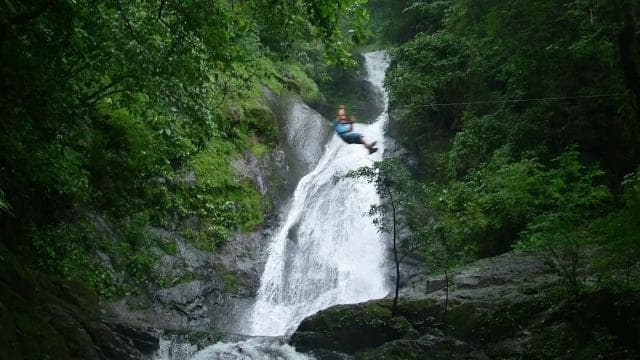
Puntarenas: Zip Line Canopy Tour Over 11 Waterfalls
5.0(83)
À partir de
Voir les détails$109
Manuel Antonio Volunteer for a Day at a Wildlife Sanctuary
Imagine trading the usual sightseeing itinerary for a day spent helping care for rescued wildlife in the heart of Costa Rica’s tropical rainforest. Instead of simply observing animals from a distance, you can become part of the daily conservation routine at Kids Saving the Rainforest Wildlife Sanctuary near Manuel Antonio, where rescued and recovering animals receive care while dedicated staff work toward wildlife rehabilitation, education, research, and rainforest protection.
The Manuel Antonio Volunteer for a Day at a Wildlife Sanctuary experience offers travelers an opportunity to step behind the scenes and discover what it takes to care for Costa Rica’s incredible wildlife. Over the course of a full day, you will learn about rescued animals, participate in practical sanctuary tasks, help prepare enrichment activities, assist with food preparation and care routines, and gain a deeper understanding of the challenges facing rainforest species.
Located in the Manuel Antonio area of Costa Rica’s Central Pacific region, Kids Saving the Rainforest is dedicated to rescuing, rehabilitating, and caring for wildlife while supporting broader conservation initiatives. Its work includes wildlife rescue, research, reforestation, wildlife corridors, and environmental education.
This is more than another wildlife attraction. It is an educational and hands-on conservation experience designed for travelers who want their time in Costa Rica to have a deeper purpose.
Whether you are passionate about animals, interested in environmental conservation, traveling with family, or simply looking for a memorable experience beyond the typical tourist activities, spending a day volunteering at a wildlife sanctuary near Manuel Antonio can become one of the most meaningful parts of your Costa Rica adventure.
Manuel Antonio is famous for its extraordinary combination of tropical rainforest, Pacific beaches, and abundant wildlife. The area surrounding Manuel Antonio National Park is home to a remarkable variety of species, making it one of Costa Rica’s most popular destinations for nature lovers.
But experiencing Costa Rica’s wildlife is not only about spotting animals in the forest.
Behind every healthy wild animal is an ecosystem that needs protection. Roads, power lines, habitat loss, human development, illegal captivity, injuries, and other threats can place native wildlife at risk. Organizations such as Kids Saving the Rainforest work to provide a safe environment for animals that have been rescued, injured, orphaned, or otherwise require specialized care.
The sanctuary’s work extends beyond caring for individual animals. Its conservation programs include wildlife bridges designed to help animals move safely through fragmented habitats, reforestation efforts, scientific research, and educational initiatives.
That wider conservation perspective is what makes this volunteer experience particularly rewarding.
During your day, you are not simply visiting a collection of animals. You are learning why wildlife rescue is necessary, how sanctuary teams care for animals, and how conservation can help protect the rainforest beyond the sanctuary itself.
One of the most exciting aspects of this Manuel Antonio wildlife volunteer experience is the chance to experience some of the daily responsibilities involved in animal care.
You will work alongside experienced staff and learn how sanctuary routines help keep rescued animals healthy, stimulated, and comfortable. Depending on the day's needs, volunteer activities can include cleaning animal areas, preparing food, creating enrichment activities, organizing supplies, and assisting with other practical conservation tasks.
The experience is designed to be active and educational rather than passive.
You may find yourself chopping vegetables for animal meals, preparing enrichment materials, helping maintain animal spaces, or participating in supervised care routines. Current activity information describes the experience as a small-group, full-day program with English- and Spanish-speaking guides.
The work may not always be glamorous—and that is part of what makes it authentic.
Wildlife conservation involves cleaning, preparing food, maintaining spaces, observing behavior, organizing materials, and completing countless small tasks that collectively make a major difference to animal welfare.
By taking part in these responsibilities, you gain a realistic appreciation for what happens behind the scenes at a wildlife sanctuary.
Costa Rica is internationally known for its biodiversity, and the wildlife cared for at Kids Saving the Rainforest can include species such as sloths, monkeys, parrots, coatis, and other native animals. The sanctuary focuses on rescue, rehabilitation, and long-term care for animals that need human assistance.
One of the most memorable parts of the day is learning the individual stories behind the animals.
Rather than simply seeing an animal and moving on to the next attraction, you can learn about its background, why it came into care, and the work required to provide appropriate support.
This creates a much more personal connection with Costa Rica’s wildlife.
A sloth hanging quietly in its enclosure, a curious monkey moving through its environment, or a colorful parrot responding to its surroundings becomes more than a photograph. You begin to understand that every rescued animal has its own needs, behavior, history, and challenges.
The sanctuary’s goal is not simply to keep wildlife in captivity. Rehabilitation and release are important parts of wildlife rescue whenever an animal is capable of returning safely to the wild. Animals that cannot be released may require long-term sanctuary care.
For this reason, responsible interaction is essential. One-day volunteers should follow staff instructions carefully and should not assume that touching or handling animals is permitted. Some volunteer guidance specifically notes that one-day volunteers do not enter animal cages or have physical contact with animals, because animal welfare and safety come first.
This approach makes the experience more educational and respectful of the animals themselves.
Many travelers arrive in Costa Rica hoping to see sloths, monkeys, toucans, and other rainforest species.
This experience takes the idea of wildlife tourism one step further.
You will have the opportunity to learn about the realities of wildlife conservation and the complex relationship between humans, animals, and the rainforest.
During your sanctuary experience, knowledgeable staff can explain how rescued animals are cared for, what rehabilitation involves, and why protecting natural habitat is so important.
You can also gain insight into projects connected to broader rainforest conservation, including reforestation and wildlife corridors. Kids Saving the Rainforest highlights wildlife bridges, research, reforestation, and environmental education as important parts of its conservation work.
This helps put your volunteer day into perspective.
Cleaning an enclosure may seem like a small task.
Preparing food may seem simple.
Creating an enrichment activity may look like a creative project.
But each activity contributes to a larger system of care.
The experience shows that conservation is not one dramatic action. It is the result of people consistently doing the practical work required to protect animals and their environment.
This is designed as a substantial volunteer experience rather than a short wildlife viewing session.
Current listings describe the program as approximately six hours, with a small group of no more than 10 participants.
That extended format gives you time to settle into the environment, meet the sanctuary team, learn about the animals, and participate in practical activities.
The day typically begins with an introduction to the sanctuary and its animals. A guided component helps you understand the organization’s mission and the stories behind the wildlife in its care.
From there, your experience becomes more hands-on.
Depending on operational needs, volunteer tasks can include helping with animal areas, preparing enrichment, assisting with food preparation, and supporting caretakers with appropriate daily routines.
After working in the morning, a lunch break provides time to relax before continuing with volunteer activities. Published activity information for this experience describes a buffet-style lunch and an opportunity to cool down by the swimming pool before returning to volunteer work.
The exact tasks can vary because the sanctuary is a working wildlife rescue facility rather than a scripted attraction.
That variability is part of the experience.
You are contributing to real conservation work based on what the sanctuary needs that day.
One of the most enjoyable parts of volunteering at a wildlife sanctuary is discovering that animal care involves much more than food and shelter.
Animals need appropriate stimulation and opportunities to express natural behaviors.
That is where enrichment comes in.
During the volunteer experience, you may help prepare enrichment activities designed to provide mental or physical stimulation for sanctuary animals. Published descriptions of the program specifically highlight preparing enrichment for monkeys, parrots, sloths, and other animals.
Creating enrichment can be surprisingly creative.
The goal is to encourage animals to explore, investigate, move, forage, or interact with their environment in appropriate ways.
As a traveler, this can completely change the way you think about animal welfare.
You begin to see that professional wildlife care is not simply about keeping animals alive. It is also about supporting appropriate behavior, reducing stress, providing stimulation, and creating an environment suited to each animal’s needs.
Your contribution may be small, but it becomes part of the daily effort to provide better care.
Food preparation is another important part of sanctuary life.
Different species have different dietary requirements, which means preparing meals for rescued wildlife requires attention, organization, and care.
During the volunteer experience, participants may assist with preparing food for the sanctuary animals. Published descriptions mention activities such as chopping vegetables, organizing individual meals, and helping ensure that animals receive their appropriate food.
This can be one of the most memorable practical activities of the day because it reveals just how much work happens before an animal receives its meal.
What looks simple from the outside can involve careful preparation and coordination.
Under staff supervision, you can learn how animal diets form part of the wider care program.
You may also gain a better understanding of why rescued wildlife cannot simply be treated like domestic pets.
Their food, behavior, environment, and care requirements are connected to their species and individual circumstances.
Responsible wildlife tourism should always prioritize the animals.
That principle is central to making this experience meaningful.
Although the activity provides opportunities to work close to the sanctuary’s daily operations, the purpose is not to turn rescued wildlife into entertainment or encourage unnecessary human interaction.
Instead, volunteers support the professional team through appropriate tasks.
This distinction is important.
The most valuable wildlife experience is not necessarily the one where you can touch an animal. It is the one that teaches you to appreciate the animal without disrupting its welfare.
You will receive guidance from sanctuary staff and should always follow their instructions about where you can go, what you can do, and how you should behave around the animals.
For one-day volunteers, physical contact with animals and entering animal enclosures are restricted according to volunteer program guidance.
That may sound like a limitation, but it actually makes the experience more authentic.
You are participating in conservation—not simply looking for an animal encounter.
The volunteer program is designed for small groups of up to 10 participants.
A small group can make a significant difference when you are learning about wildlife.
Instead of being lost in a large crowd, you have more opportunities to listen to your guide, ask questions, understand the animals, and participate in practical activities.
It also creates a more collaborative atmosphere.
You may work alongside couples, families, solo travelers, conservation enthusiasts, and other visitors from around the world.
Together, you become a temporary team working toward the same objective: helping the sanctuary with appropriate tasks while learning about wildlife conservation.
For travelers who prefer meaningful experiences over crowded tourist attractions, this intimate format can be particularly appealing.
Knowledge makes a wildlife experience much more meaningful.
The program includes a live guide in English and Spanish, allowing visitors to learn directly from staff while participating in the experience.
Your guide can help explain the sanctuary’s mission, introduce you to the animals, answer questions, and provide instructions for volunteer tasks.
Do not hesitate to ask questions.
Why was a particular animal rescued?
What does rehabilitation involve?
Why can some animals return to the wild while others cannot?
How do wildlife corridors help animals?
What threats do Costa Rican animals face?
What can travelers do to support conservation?
These are the kinds of questions that can transform a day trip into an educational experience you remember long after returning home.
There are many ways to spend a day in Costa Rica.
You can relax on a beach.
You can hike through a national park.
You can search for wildlife with a camera.
You can explore waterfalls and rainforest trails.
All of these can be wonderful.
But volunteering at a wildlife sanctuary offers something different: the opportunity to contribute.
Instead of simply consuming an experience, you participate in one.
Instead of taking only photographs, you take home knowledge.
Instead of seeing wildlife solely as something to observe, you gain a better understanding of the responsibility humans have to protect it.
That sense of contribution is one of the strongest reasons travelers choose this experience.
The sanctuary itself emphasizes that volunteers and interns are an important part of its work, supporting staff in monitoring, observing, and caring for wildlife.
Even a single day can therefore provide a valuable introduction to the realities of conservation.
Manuel Antonio is often associated with beaches and national park wildlife, but there is another side of the destination that deserves attention.
It is a place where conservation, tourism, local communities, and biodiversity intersect.
The wildlife that makes the region famous depends on healthy rainforest habitat and safe movement through increasingly developed landscapes.
Kids Saving the Rainforest works in this broader conservation environment through rescue, rehabilitation, research, wildlife bridges, reforestation, and education.
A volunteer day gives travelers a chance to see this side of Manuel Antonio.
You can spend part of your Costa Rica vacation enjoying the region’s beaches and rainforest while also dedicating a day to helping an organization involved in wildlife conservation.
For environmentally conscious travelers, that combination can create a more balanced and meaningful itinerary.
If you have always loved animals, this experience can be especially memorable.
But you do not need professional animal-care experience to appreciate it.
You simply need curiosity, enthusiasm, respect for wildlife, and a willingness to participate.
The activities are guided, and you will receive instructions about the tasks you are asked to perform.
The experience is particularly well suited to travelers who want to understand what goes on behind the scenes at a rescue center.
You will discover that wildlife care is built from many different responsibilities.
Some are educational.
Some are physical.
Some are creative.
Some are repetitive.
Together, they support the health and welfare of rescued animals.
Wildlife conservation can also be a powerful learning experience for families.
Children and teenagers who are interested in animals can discover that caring for wildlife involves responsibility, patience, teamwork, and respect.
Current volunteer information indicates that children aged 7–17 may participate with adult supervision, while independent volunteers generally need to meet a higher minimum age requirement. Because age policies and operating procedures can change, families should confirm the applicable requirements at the time of booking.
For adults, couples, friends, and small groups, the experience provides an opportunity to share a meaningful activity rather than simply visiting another attraction.
Working together to prepare enrichment materials or assist with practical sanctuary tasks can become a memorable shared experience.
Because this is a working sanctuary in a tropical environment, comfort and practical clothing are important.
Come prepared to work outdoors.
Comfortable clothing and closed-toe shoes are strongly recommended. Rain gear and insect repellent are also useful, particularly during Costa Rica’s wetter periods. Published volunteer guidance recommends clothing suitable for manual work, closed-toe shoes, and rain protection when necessary.
It is also wise to bring drinking water and snacks unless your confirmed booking specifically states what refreshments or meals are included.
A reusable water bottle can be particularly useful in Costa Rica’s warm climate.
Do not dress as if you are going to a formal sightseeing attraction.
Think practical, breathable, comfortable, and ready to get involved.
For a comfortable volunteer day, consider bringing:
Most importantly, bring the right mindset.
This is a volunteer experience, not simply a wildlife photo opportunity.
Expect to work, learn, listen, and participate.
There are several reasons this experience can become a highlight of a Costa Rica vacation.
You do more than walk through a sanctuary.
You can participate in practical tasks that support daily animal care and sanctuary operations.
Your day is connected to a broader mission of wildlife rescue and rainforest conservation.
With a maximum group size of around 10 participants, the experience can feel more personal and interactive.
English- and Spanish-speaking guides provide explanations and instructions throughout the experience.
You can learn about rescued animals, their individual needs, and the challenges involved in wildlife rehabilitation.
Preparing enrichment, helping with food preparation, learning animal stories, and working alongside sanctuary staff can create memories that are very different from a conventional sightseeing tour.
Perhaps most importantly, you spend part of your vacation contributing time and effort to a conservation-focused organization.
A traditional wildlife tour might last a few hours and focus primarily on spotting animals.
This experience is different.
You have the opportunity to understand the work required to care for animals after rescue.
You learn about the people behind the scenes.
You see how food is prepared.
You discover why enrichment matters.
You learn how sanctuary spaces are maintained.
And you gain a greater understanding of why rainforest conservation matters.
That combination of education, participation, and purpose is what makes a volunteer day at Kids Saving the Rainforest such a distinctive experience in Manuel Antonio.
The best travel memories are often not the ones you planned most carefully.
They are the moments when you unexpectedly learn something, meet someone inspiring, or feel that your time mattered.
A day volunteering at a wildlife sanctuary can create exactly that kind of memory.
You may remember the first time you learned an animal’s rescue story.
You may remember preparing food with other volunteers.
You may remember creating enrichment materials.
You may remember standing in the rainforest listening to staff explain the challenges faced by local wildlife.
Or you may simply remember the satisfaction of knowing that you spent one day of your Costa Rica vacation doing something useful.
These experiences stay with you.
And they can change the way you see wildlife long after you leave Manuel Antonio.
Protecting the rainforest can seem like an enormous challenge.
The problems facing wildlife are complex.
Habitat fragmentation, roads, power infrastructure, human development, and other pressures can create serious risks for animals.
Conservation organizations respond through many different strategies, from wildlife rescue and rehabilitation to reforestation, research, education, and wildlife corridors.
A visitor cannot solve these challenges in one day.
But a visitor can learn.
A visitor can help.
A visitor can support responsible conservation.
And a visitor can return home with a stronger understanding of why protecting biodiversity matters.
That is the real value of this experience.
From the moment you arrive, expect a day that combines education, teamwork, practical tasks, and wildlife conservation.
You begin by getting acquainted with the sanctuary and learning about the animals.
Then you move into the practical side of the experience.
You may help with enclosure cleaning, enrichment preparation, food preparation, or other tasks identified by the sanctuary team.
After a break and lunch, you can continue supporting the sanctuary’s daily activities.
Published descriptions of the program include a guided sanctuary visit, animal-care activities, food preparation, enrichment work, and a lunch break.
The exact sequence and tasks may vary according to sanctuary requirements.
And that is exactly what you should expect from a genuine working wildlife facility.
The animals come first.
The day revolves around their needs rather than a rigid tourist schedule.
Travel is often measured in places visited.
But meaningful travel is also measured in experiences shared and lessons learned.
Volunteering at Kids Saving the Rainforest allows you to experience Manuel Antonio from a different perspective.
You see the rainforest not only as a beautiful backdrop but as a living ecosystem.
You see animals not only as tourist attractions but as individual creatures requiring appropriate care.
You see conservation not only as an abstract idea but as real work performed every day by dedicated people.
And you discover that travelers can play a small but meaningful role in that process.
If responsible tourism is important to you, this experience offers a natural fit.
Instead of spending every day simply moving from one attraction to another, you can dedicate time to learning about conservation and supporting a wildlife-focused organization.
Kids Saving the Rainforest describes its work as including rescue, research, rehabilitation, wildlife corridors, reforestation, and education.
That makes the experience especially appealing to travelers who care about sustainability, biodiversity, animal welfare, and environmental education.
It is also a great choice for travelers who want to connect their Costa Rica vacation with a deeper purpose.
Manuel Antonio already offers spectacular rainforest scenery and abundant wildlife.
Adding a wildlife volunteer day gives your itinerary another dimension.
You can explore the natural beauty of the Pacific coast while also learning about the work required to protect it.
You can enjoy the beaches and national park while gaining a better understanding of the animals that depend on the surrounding ecosystem.
And you can leave Costa Rica knowing that your vacation included more than sightseeing.
It included participation.
Ask travelers what they remember most from a trip, and the answer is rarely a list of attractions.
People remember how they felt.
They remember unexpected encounters.
They remember people they met.
They remember experiences that made them see a destination differently.
A day volunteering at a wildlife sanctuary has the potential to become one of those experiences.
It is active.
It is educational.
It is personal.
It is connected to conservation.
And most importantly, it gives you an opportunity to contribute rather than simply observe.
For anyone searching for a wildlife volunteer experience in Manuel Antonio, a Costa Rica wildlife sanctuary volunteer day, or a meaningful animal conservation experience near Manuel Antonio, this program offers a distinctive way to connect with the country’s extraordinary biodiversity.
Your Costa Rica vacation does not have to be only about what you see.
It can also be about what you contribute.
Spend a day at Kids Saving the Rainforest Wildlife Sanctuary learning from experienced guides, supporting practical sanctuary activities, preparing enrichment, helping with food-related tasks, and discovering the realities of wildlife conservation.
Work alongside other volunteers.
Listen to the stories of rescued animals.
Learn why rainforest protection matters.
Experience the satisfaction of doing something useful.
And leave Manuel Antonio with a deeper connection to Costa Rica’s wildlife.
The sanctuary’s mission extends beyond individual animals to broader conservation efforts, including wildlife research, habitat protection, reforestation, wildlife bridges, and education.
Your day may be only one small part of that larger effort, but it can still be a powerful part of your journey.
If you are looking for a travel experience that combines wildlife, conservation, education, rainforest exploration, and hands-on participation, this Manuel Antonio volunteer experience offers a memorable way to spend your day.
Come ready to learn.
Come ready to work.
Come ready to respect the animals and follow the guidance of the sanctuary team.
Most importantly, come ready to make your vacation mean a little more.
Volunteer for a day at a wildlife sanctuary in Manuel Antonio and discover what it feels like to turn a day of travel into a day of giving back.
A visit to Manuel Antonio can introduce you to some of Costa Rica’s most spectacular scenery, but spending a day volunteering at a wildlife sanctuary lets you experience the destination from a completely different perspective.
At Kids Saving the Rainforest Wildlife Rescue, your day is centered around wildlife care, education, and conservation. The organization explains that its full-day volunteer experience begins with a guided sanctuary tour, followed by refreshments and an activity with an animal caretaker or biologist, before volunteers help prepare food for the animals and participate in feeding time.
The result is a day that combines learning, practical participation, and an opportunity to support an organization working to protect Costa Rica’s wildlife.
Rather than rushing between attractions, you have time to slow down, observe, ask questions, and understand the work that happens behind the scenes.
Your exact schedule can vary according to sanctuary operations, animal needs, weather, and the activities planned for your visit. That flexibility is important because this is a functioning wildlife rescue and sanctuary rather than a staged tourist attraction.
However, the experience can be understood as a series of meaningful stages.
Your wildlife conservation experience begins when you arrive at the sanctuary.
You will be introduced to the environment, the organization’s mission, and the importance of responsible wildlife care.
Kids Saving the Rainforest was founded in 1999 and describes its mission as protecting wildlife and rainforest ecosystems on Costa Rica’s Pacific Coast through rescue, rehabilitation, education, reforestation, wildlife bridges, and related conservation projects.
This introduction provides context for everything that follows.
You are not simply visiting animals.
You are entering a place where staff work to care for wildlife that may be unable to survive independently or that requires rehabilitation before a possible return to the wild.
The day begins with a guided tour of the wildlife sanctuary.
This is an excellent opportunity to learn about the animals in residence and understand why they are receiving care.
KSTR currently highlights animals including sloths, spider monkeys, kinkajous, and other species native to Costa Rica. Its sanctuary tour information explains that visitors learn about animals that cannot be released into the wild and the care provided by dedicated staff.
Listen carefully during this part of the experience.
The stories behind individual animals can be just as fascinating as seeing them.
You may learn why an animal was rescued, how rehabilitation works, what makes release possible or impossible, and what professional caregivers do to provide appropriate long-term care.
Following the guided tour, the full-day volunteer program includes an opportunity for a short activity with an animal caretaker or biologist.
This is where the experience can become particularly educational.
A wildlife professional can help you understand animal behavior, sanctuary routines, conservation challenges, and the practical considerations involved in caring for rescued wildlife.
For travelers interested in biology, veterinary care, zoology, environmental science, or conservation, this part of the day can provide valuable insight into careers and responsibilities that most visitors never see.
But you do not need a scientific background to enjoy it.
Curiosity is enough.
Ask questions.
Observe carefully.
And take the opportunity to understand why professional wildlife care requires patience, knowledge, consistency, and respect for animal welfare.
A break gives you time to relax, hydrate, and absorb what you have learned before moving into the more practical part of the experience.
Costa Rica’s tropical climate can be warm and humid, so staying hydrated and wearing appropriate clothing is particularly important.
Come prepared for outdoor conditions and a day that involves movement and practical work.
One of the most memorable parts of the experience is helping prepare food for the sanctuary animals.
KSTR specifically describes its full-day volunteer experience as including cooking and preparing food for the animals.
This simple-looking task reveals an important truth about wildlife rescue: caring for animals requires extensive daily preparation.
Every animal has nutritional needs, behavioral considerations, and routines.
Food preparation is therefore more than simply putting food into a bowl.
It is part of a structured care system.
Helping with this process allows you to appreciate the work involved in maintaining a sanctuary and supporting the animals living there.
After food preparation comes one of the most exciting moments of the day: feeding time.
KSTR describes dinner time as the most exciting part of its full-day volunteer experience, when participants help prepare food and feed the animals.
This can be an unforgettable experience because you begin to recognize how animal behavior is connected to routine, diet, environment, and individual needs.
However, responsible wildlife tourism means following staff instructions carefully.
Do not attempt to feed animals independently, offer unauthorized food, touch wildlife, or enter restricted areas.
The sanctuary team determines how interactions take place.
Your role is to support the process safely and respectfully.
One reason this experience can be so educational is that it provides insight into the role of a wildlife rescue center and sanctuary.
A conventional zoo is primarily designed around managed animal collections, conservation, education, and public viewing.
A wildlife rescue center has a different starting point.
Animals may arrive because they are injured, sick, orphaned, displaced, illegally kept as pets, or otherwise unable to survive without professional intervention.
KSTR explains that animals that can be rehabilitated and released are returned to the wild when possible, while animals that cannot be released may remain in the sanctuary because of circumstances such as captivity-related dependence, permanent injury, or disability.
This distinction is important.
It helps visitors understand why some animals live in protected care while others may eventually return to natural habitats.
The objective is not simply to display wildlife.
It is to provide appropriate care while supporting broader conservation efforts.
Wildlife becomes much more meaningful when you understand the individual stories.
During your experience, take the time to listen to the guides.
Ask about the animals.
Ask what brought them to the sanctuary.
Ask which species are most affected by habitat loss.
Ask how wildlife corridors can help.
Ask what happens when an animal is ready for rehabilitation.
KSTR's broader conservation work includes wildlife rescue, research, rehabilitation, wildlife bridges, reforestation, and educational initiatives.
These stories connect individual animals to a much larger environmental picture.
A rescued sloth is not an isolated conservation issue.
A monkey injured by human infrastructure is connected to the way landscapes are developed.
A displaced animal may demonstrate why habitat connectivity matters.
The sanctuary therefore provides a window into the complex relationship between people and the rainforest.
One of the most interesting conservation topics connected to KSTR is wildlife connectivity.
As roads, buildings, power lines, and other forms of development expand, natural habitats can become fragmented.
Animals that once moved through continuous forest may encounter dangerous gaps.
KSTR works on wildlife bridge projects intended to create safer routes for animals moving through developed areas. The organization also identifies wildlife corridors as one of its major conservation initiatives.
Learning about these projects can change the way you see Manuel Antonio.
The rainforest is not simply a beautiful place that humans visit.
It is a habitat occupied by animals that need to move, feed, reproduce, and find shelter.
Conservation therefore involves protecting both animals and the landscapes they depend upon.
Wildlife rescue is only one piece of conservation.
Healthy forests are essential to wildlife.
KSTR's conservation work includes reforestation projects designed to help restore and protect rainforest habitat. The organization says its work includes planting trees and developing projects that support the long-term protection of Costa Rica's ecosystems.
This gives your volunteer day an important broader context.
You are learning about animals, but you are also learning about habitat.
You are learning that protecting wildlife requires more than caring for individual animals after something goes wrong.
It also requires preventing problems by protecting natural ecosystems.
A meaningful wildlife experience should leave you with greater respect for animals, not simply a collection of photographs.
Responsible wildlife tourism means allowing animals to behave naturally, following sanctuary rules, avoiding unnecessary physical contact, and respecting restricted areas.
It also means understanding that some animals cannot be released and may need lifelong care.
KSTR states that its wildlife rescue work includes professional staff such as veterinarians, biologists, and veterinary technicians who work toward rehabilitation and release where possible.
For visitors, the best approach is simple:
Observe. Listen. Learn. Follow instructions. Respect the animals.
That attitude helps ensure that your visit supports rather than disrupts the sanctuary's work.
A typical Manuel Antonio itinerary might include beaches, rainforest trails, wildlife watching, kayaking, or a national park visit.
Those experiences are wonderful.
But this volunteer experience is built around participation.
You are not only watching conservation happen.
You are learning about it and helping with appropriate tasks.
That difference can be particularly valuable for travelers who have already experienced traditional wildlife tours and want something more personal.
You walk through an environment and look for animals.
You learn how staff care for animals and help with selected sanctuary tasks.
The sanctuary's full-day volunteer program is designed to give you a much deeper experience.
Instead of simply asking, “What animals will I see?”, you begin asking, “Why are these animals here, and what can we do to protect them?”
That change in perspective is one of the strongest reasons to choose this experience.
This Manuel Antonio wildlife volunteer experience can appeal to many different travelers.
If you have always been fascinated by sloths, monkeys, parrots, kinkajous, or Costa Rica's other wildlife, you will have plenty to discover.
If you prefer rainforest experiences to conventional sightseeing, the sanctuary offers an educational way to connect with Costa Rica's biodiversity.
Travelers who want to incorporate conservation into their vacation itinerary can dedicate a day to supporting wildlife-focused work.
Families with eligible children can turn the experience into an educational day focused on animals, teamwork, and environmental responsibility. Age requirements and participation rules should be confirmed before booking because they can change.
Students interested in biology, zoology, veterinary science, environmental studies, or conservation may find the experience especially valuable.
A shared volunteer activity creates a different kind of travel memory—one based on participation rather than simply sightseeing.
The small-group format provides an opportunity to meet other travelers while participating in a meaningful activity.
You should be prepared for practical work and outdoor conditions.
This is not a luxury sightseeing excursion where you simply sit and watch.
Depending on the day's activities, you may walk, stand, prepare food, help maintain areas, or participate in other tasks assigned by the sanctuary team.
Comfortable work clothes and closed-toe footwear are therefore recommended.
If you have mobility limitations, physical restrictions, or specific accessibility requirements, confirm suitability with the operator before booking.
Your safety and the animals' welfare should always come first.
Choose practical clothing rather than your best vacation outfit.
Recommended clothing includes:
Costa Rica's Pacific coast can experience sudden rain, especially during the wetter season.
A rain jacket can therefore be useful even when the morning starts sunny.
A small day bag is ideal.
Consider bringing:
Avoid bringing unnecessary valuables.
And always ask before photographing staff, other visitors, or sensitive animal-care areas.
Your behavior matters.
Never attempt to:
The purpose of the experience is to support professional wildlife care.
The best volunteer is one who understands that sometimes the most helpful thing to do is simply follow instructions and give the animals space.
Rain is part of life in a tropical rainforest.
A rainy day does not necessarily mean your conservation experience loses its value.
Many sanctuary activities can continue under appropriate conditions, although the exact schedule can change depending on safety and operational requirements.
Bring rain protection and be prepared for changing weather.
If severe weather affects the activity, follow the operator's instructions regarding any schedule changes or cancellation procedures.
Remember: you are visiting a rainforest environment.
A little rain is part of the experience.
Manuel Antonio and Quepos are popular tourist areas, and travel times can vary depending on traffic and your starting point.
Allow enough time to reach the sanctuary without rushing.
A full-day volunteer experience is more enjoyable when you have eaten beforehand.
Choose a balanced breakfast and bring water.
Do not choose clothing solely for photographs.
You are participating in practical activities.
Even when much of the experience takes place around vegetation, tropical sun can be strong.
Mosquitoes and other insects are part of the rainforest environment.
Staying hydrated is particularly important in warm, humid weather.
The sanctuary is an operational wildlife facility.
Animal needs come before a rigid tourist schedule.
A small group can make conservation education more engaging.
With fewer participants, it is easier to hear explanations, ask questions, and stay involved in practical tasks.
The supplied product information specifies a maximum group size of 10 participants.
That makes the experience considerably more personal than a large group excursion.
You can engage with the guide.
You can learn from other travelers.
And you have more opportunity to understand what you are doing rather than simply following a crowd.
A strong Costa Rica itinerary usually combines different types of experiences.
You might spend one day hiking through rainforest.
Another day could be dedicated to beaches.
You might go ziplining, kayaking, or wildlife watching.
Adding a conservation-focused volunteer day creates a different rhythm.
It gives you a day to slow down and connect with the destination through learning and contribution.
For travelers who value meaningful experiences, this can become one of the defining days of the trip.
Choosing a professionally organized wildlife volunteer experience provides several practical advantages.
You do not have to figure out how to volunteer independently.
The program gives you a planned way to participate.
English- and Spanish-speaking guide support helps visitors understand the experience and activities.
A limited group size encourages a more personal experience.
The day combines practical tasks with wildlife and conservation education.
You spend your time supporting sanctuary activities rather than simply observing.
A one-day program allows travelers to experience conservation without committing to a long-term volunteer placement.
There is nothing wrong with sightseeing.
But sometimes the best travel experiences are those in which you become part of something.
This wildlife volunteer experience offers exactly that.
You arrive as a visitor.
You spend the day learning about the sanctuary.
You participate in appropriate activities.
You work alongside staff and fellow travelers.
And you leave with a better understanding of Costa Rica's wildlife and conservation challenges.
That transformation—from visitor to participant—is what makes the experience special.
KSTR explains that volunteers and interns help its full-time staff monitor, observe, and care for wildlife at its rescue center and sanctuary.
The organization also identifies research, wildlife corridors, reforestation, and education among its conservation activities.
This means your volunteer day exists within a much broader conservation framework.
You are not expected to solve a rainforest conservation problem in one day.
Your role is smaller and more practical.
You contribute time.
You learn.
You help where appropriate.
And you gain knowledge that may influence how you travel and interact with wildlife in the future.
Imagine returning home and being asked:
“What was your favorite thing you did in Costa Rica?”
You could talk about the beaches.
You could talk about the rainforest.
You could talk about the animals.
But you could also say:
“I spent a day volunteering at a wildlife sanctuary in Manuel Antonio.”
Then you can tell the story.
You can talk about the animals you learned about.
You can explain how their food was prepared.
You can describe the sanctuary's conservation mission.
You can share what you learned from the guides.
And you can explain how wildlife rescue works.
That is a travel story with substance.
The sanctuary's professional team is responsible for animal welfare.
As a visitor, your role is to support rather than replace that expertise.
KSTR states that its rescue center works with professionals including veterinarians, biologists, and veterinary technicians.
This is important because wildlife is not domestic.
Even animals that appear calm can have specialized needs and behaviors.
Always follow the instructions given by the staff.
Do not assume that a particular activity is permitted simply because you have seen similar interactions elsewhere.
Responsible conservation requires consistency.
After spending a day around rescued wildlife, you may never look at a sloth or monkey in quite the same way again.
You begin to recognize that wildlife encounters are not only about seeing animals.
They are about understanding them.
You begin to ask whether an animal is wild, rehabilitating, or permanently cared for.
You begin to think about habitat.
You begin to notice wildlife crossings and roads differently.
You begin to understand why forests need to remain connected.
And you realize that conservation is built from thousands of small decisions and daily actions.
That is a powerful lesson to take home.
If your Costa Rica holiday is centered around nature, Manuel Antonio is an ideal place to add a conservation experience.
The region combines rainforest, wildlife, beaches, and environmental initiatives.
KSTR is located in the Manuel Antonio area and describes its work as focusing on wildlife rescue, research, rehabilitation, wildlife bridges, reforestation, and education.
By dedicating one day to volunteering, you can experience another side of the destination.
You can learn about the challenges facing local wildlife.
You can participate in appropriate sanctuary tasks.
And you can support the work of people who dedicate their careers to wildlife care.
This experience is not about luxury.
It is about purpose.
Expect to get involved.
Expect to learn.
Expect some practical work.
Expect tropical weather.
Expect to listen to instructions.
Expect to meet fascinating animals.
And expect to leave with a deeper appreciation for the work required to protect them.
That honesty is important.
The experience is most rewarding when travelers arrive with realistic expectations.
You are not signing up for a day of cuddling wildlife.
You are signing up for a day of conservation education and supervised participation.
A photograph captures a moment.
An experience creates a memory.
A lesson can change your perspective.
This wildlife volunteer day can provide all three.
You may photograph the surroundings where permitted.
You may remember particular animals.
But the lasting value comes from understanding the conservation work behind the scenes.
That is why this experience is particularly suited to travelers who want meaningful travel rather than simply checking another attraction off a list.
Yes. KSTR describes its full-day volunteer program as a day experience combining a guided sanctuary tour, an activity with a caretaker or biologist, refreshments, lunch, food preparation, and feeding activities.
The supplied product information identifies it as a small-group experience with up to 10 participants rather than a private tour.
Yes. The supplied tour information states that live guidance is available in English and Spanish.
Do not expect unrestricted animal handling. Animal interaction is controlled according to welfare and safety requirements. Follow the sanctuary team's instructions at all times.
No professional wildlife experience is required for a one-day volunteer experience. A willingness to learn, follow instructions, and work responsibly is much more important.
Children may be able to participate depending on current age and supervision requirements. Confirm the current policy before booking, especially for younger children.
The current KSTR description of the full-day volunteer experience mentions a lunch break, while the exact inclusions of the specific booking should be checked at the time of reservation.
Some practical work is involved, so comfortable clothing and footwear are recommended. Travelers with specific physical limitations should confirm suitability in advance.
Before you arrive, remember three things:
Be curious.
Ask questions and learn.
Be respectful.
The animals' welfare comes first.
Be willing to help.
Some tasks may be simple, repetitive, or messy—but they all contribute to the daily operation of a sanctuary.
With that mindset, the experience becomes much more rewarding.
The greatest benefit of this experience may not be what you do during the day.
It may be what you think about afterward.
You may return to your hotel and realize that you have gained a completely new appreciation for the wildlife you saw throughout Costa Rica.
You may think differently about rainforest development.
You may become more interested in conservation.
You may want to support wildlife organizations when you return home.
And you may encourage friends and family to travel more responsibly.
That is the ripple effect of meaningful tourism.
Travelers increasingly look for experiences that connect them to local environments and communities.
A wildlife volunteer day fits naturally into that style of travel.
It provides education.
It provides participation.
It provides an opportunity to support conservation.
And it creates a story that feels personal.
Instead of asking only, “What can I see in Manuel Antonio?” you can ask:
“How can I experience Manuel Antonio in a way that gives something back?”
This experience provides one answer.
For the best experience, plan ahead.
Confirm your meeting or arrival details.
Check the current operating schedule.
Wear suitable clothing.
Bring rain protection.
Stay hydrated.
Allow enough transportation time.
And arrive ready to participate.
Because sanctuary operations can change according to animal needs and other circumstances, avoid assuming that every activity will happen in exactly the same order every day.
Flexibility is part of responsible wildlife volunteering.
Costa Rica is a country where nature is impossible to ignore.
From the Pacific coastline to the rainforest canopy, wildlife is part of the travel experience.
A day at Kids Saving the Rainforest allows you to move beyond observation and explore the work involved in protecting that biodiversity.
You can learn about rescued animals.
You can meet conservation professionals.
You can help prepare animal food.
You can participate in feeding activities.
You can discover the importance of enrichment and animal care.
And you can better understand the conservation challenges facing rainforest ecosystems.
KSTR's current volunteer information confirms that its full-day experience is specifically designed to let vacationers give back while learning about wildlife and participating in sanctuary activities.
If your ideal Costa Rica vacation includes more than beaches and sightseeing, consider making room for a day of conservation.
The Manuel Antonio Volunteer for a Day at a Wildlife Sanctuary experience offers a practical, educational, and memorable way to connect with Costa Rica's wildlife.
It is ideal for travelers who want to learn.
It is ideal for animal lovers who want a deeper experience.
It is ideal for families and groups looking for an educational activity.
And it is ideal for anyone who believes that travel can be an opportunity to contribute as well as explore.
Every rescued animal has a story.
Every conservation project has a purpose.
Every sanctuary worker contributes to a larger mission.
And every volunteer has an opportunity to help.
Your contribution may only last one day, but the memory can last much longer.
You will leave with stories of the animals you met, knowledge about rainforest conservation, and a greater understanding of the people working behind the scenes.
Most importantly, you will know that your Costa Rica adventure included a day dedicated to something bigger than yourself.
Ready to experience Costa Rica beyond the usual tourist trail?
Spend a day at a wildlife sanctuary in Manuel Antonio and discover what conservation looks like from the inside.
Work alongside experienced staff.
Learn about rescued wildlife.
Help with appropriate animal-care activities.
Prepare food.
Participate in feeding time.
Explore the stories behind the animals.
And gain a deeper understanding of Costa Rica's rainforest ecosystem.
The experience is designed for travelers who want to combine adventure with education and meaningful participation.
Make sure you are prepared for:
If that sounds like your kind of travel experience, this could be one of the most memorable days of your Manuel Antonio itinerary.
Wildlife: Meet and learn about rescued Costa Rican animals.
Conservation: Discover how rescue, rehabilitation, research, reforestation, and wildlife corridors contribute to broader conservation.
Participation: Help with appropriate sanctuary activities rather than simply watching.
Education: Learn from guides, caretakers, and conservation professionals.
Small Group: Enjoy a more personal experience with a limited group size.
Meaning: Turn part of your vacation into an opportunity to support wildlife conservation.
Memory: Return home with a story that goes far beyond a photograph.
Your time in Costa Rica is limited.
Make one of those days count for something more.
Step away from ordinary sightseeing and into the world of wildlife conservation at Kids Saving the Rainforest in Manuel Antonio.
Learn the stories of rescued animals.
Discover what happens behind the scenes.
Help prepare food and participate in supervised sanctuary activities.
Listen to conservation professionals.
Ask questions.
Get involved.
And leave with a deeper connection to the rainforest and the wildlife that makes Costa Rica so extraordinary.
Book your Manuel Antonio wildlife volunteer experience and turn one day of your Costa Rica vacation into a day of learning, helping, and giving back.
The experience is designed as a full-day wildlife conservation activity. Current program information from Kids Saving the Rainforest describes the full-day volunteer experience as approximately six hours, including a guided sanctuary tour, an activity with a caretaker or biologist, food preparation, and feeding activities. The exact schedule may vary according to sanctuary operations and animal-care requirements.
The experience takes place at Kids Saving the Rainforest Wildlife Rescue in the Manuel Antonio area of Costa Rica's Central Pacific region. The sanctuary is dedicated to wildlife rescue, rehabilitation, conservation, education, and rainforest protection.
Volunteer activities can include learning about rescued wildlife, helping with sanctuary maintenance, preparing food, assisting with enrichment activities, and participating in supervised animal-care routines. The exact activities can vary depending on the sanctuary's needs on the day of your visit.
The program includes participation in feeding activities under the direction of sanctuary staff. However, feeding wildlife is a controlled activity. Participants should never feed animals independently or offer unauthorized food. Always follow the instructions provided by the animal-care team.
You should not expect unrestricted physical contact with wildlife. Animal interaction is controlled according to animal welfare and safety requirements. One-day volunteers should follow staff instructions and should never enter restricted enclosures or attempt to touch an animal without explicit authorization.
The focus of the experience is responsible conservation and animal care rather than animal handling.
Current information for the full-day program describes a lunch break, while the exact inclusions can depend on the specific booking arrangement. Check the confirmed booking details for the most current information about lunch, refreshments, and other inclusions.
The full-day program information describes refreshments as part of the experience. Because inclusions can change, travelers should verify the exact refreshments included with their booking before departure.
It is still recommended to bring drinking water, particularly because Manuel Antonio has a warm tropical climate.
Wear comfortable clothing suitable for practical outdoor work. Closed-toe shoes are recommended, along with rain protection and insect repellent.
Choose clothes that you do not mind getting dirty or wet. Breathable clothing is particularly useful in Costa Rica's warm and humid conditions.
No professional wildlife-care experience is required for the one-day experience. The program is designed to introduce travelers to sanctuary work under appropriate guidance.
What matters most is being willing to learn, follow instructions, work responsibly, and respect animal welfare.
Children may be able to participate depending on their age and the current sanctuary requirements. Some published program information allows younger participants when accompanied by an adult, but age policies can change.
Families should confirm the current minimum age, supervision requirements, and suitability before booking.
The experience can be suitable for active seniors who are comfortable with a full day of outdoor activity and practical tasks. However, it is not simply a sightseeing tour.
If you have mobility concerns or physical limitations, contact the tour operator before booking to confirm whether the current activities are appropriate for you.
Some activities involve standing, walking, preparing food, cleaning or maintaining areas, and other practical tasks. The physical requirements can vary depending on the day's assignments.
Comfortable clothing, closed-toe footwear, adequate hydration, and protection from the tropical weather are recommended.
Rain is a normal part of the Costa Rican rainforest environment. Many activities may continue in wet conditions, but the schedule can change depending on weather, safety, and sanctuary operations.
Bring suitable rain gear and remain flexible. If severe weather requires a change or cancellation, follow the operator's instructions and booking policies.
Facilities are available for visitors and volunteers, but travelers should not assume that the facilities are identical to those found at a major tourist attraction or hotel.
Because this is a working wildlife facility, it is best to use available facilities when appropriate and ask staff if you need assistance.
Yes. The supplied tour information states that live guide support is available in English and Spanish.
This makes the experience accessible to international travelers who want to understand the sanctuary's conservation work and receive instructions during volunteer activities.
The supplied product information specifies a small-group experience with up to 10 participants.
A smaller group allows for a more personal learning environment and gives participants more opportunities to ask questions and engage with the guide and sanctuary activities.
Photography may be possible in permitted areas, but visitors should always follow the sanctuary's photography rules.
Do not use photography to disturb animals, enter restricted areas, or encourage unnatural behavior. Flash photography should only be used if explicitly permitted.
When photographing staff or other participants, respect their privacy.
The experience is designed around wildlife rescue, conservation education, and supervised sanctuary activities rather than unrestricted animal interaction.
That distinction is important.
Ethical wildlife tourism should prioritize animal welfare over entertainment. Travelers should follow sanctuary rules, avoid unnecessary physical contact, and respect the professional team's instructions.
The sanctuary cares for a variety of rescued wildlife. Depending on the current animal population and your activities, you may learn about species such as sloths, monkeys, parrots, kinkajous, and other Costa Rican wildlife.
The exact animals you see or learn about cannot be guaranteed because the sanctuary's population and daily operations can change.
A wildlife volunteer day gives you an opportunity to experience Costa Rica's biodiversity from a different perspective.
Instead of simply observing wildlife, you can learn about rescue and rehabilitation, help with appropriate sanctuary tasks, understand animal-care routines, and discover how wildlife conservation connects to rainforest protection.
For travelers looking for a meaningful activity in Manuel Antonio, it can be a memorable addition to a Costa Rica itinerary.
Après confirmation, notre équipe vous contactera par WhatsApp / E-mail pour confirmer l'heure exacte de prise en charge.
Si vous avez choisi un point de rencontre central, veuillez vous y rendre à l'heure prévue.