Can You See Whales in Samaná in January (2027 Guide)
January is an exciting time to plan a wildlife-focused trip to Samaná, Dominican Republic. As the winter whale-watching season gets underway, humpback whales begin gathering in the warm waters around the region, making Samaná Bay a popular destination for visitors hoping to observe these magnificent marine mammals.
If you are planning Samaná whale watching in January, you may be wondering whether whales are already present, what you might see during a boat trip, and how to plan your visit.
The good news is that January falls within the commonly recognized whale-watching season in Samaná. However, whale activity varies throughout the season, and no individual excursion can guarantee a sighting.
This guide explains what travelers should know before planning a January whale-watching trip in 2027.
Is January a Good Month for Whale Watching in Samaná?
Yes. January is generally considered a good month for whale watching in Samaná because it falls within the seasonal period when North Atlantic humpback whales visit the waters of the Dominican Republic.
These whales migrate from colder feeding areas to warmer tropical waters associated with breeding, mating, and calving. The Samaná region is one of the best-known places in the Caribbean to learn about and observe this seasonal movement.
January can be an attractive option for travelers who want to experience the season relatively early. Nevertheless, the number of whales visible on any given day depends on their movements, weather, sea conditions, and other natural factors.
A trip in January can offer a rewarding wildlife experience, but it should not be treated as a guaranteed opportunity to see a specific behavior or number of whales.
When Does the Whale-Watching Season Start in Samaná?
The whale-watching season around Samaná is commonly associated with January through March, with activity potentially continuing into April.
During this period, humpback whales travel to tropical breeding grounds. Some whales may be observed moving through the area, while others may be engaged in social or breeding-related behavior.
January is near the beginning of the main visitor season, so it can be a suitable month for travelers whose schedules favor an early-year vacation.
If your travel dates are flexible, compare the available excursion dates and ask local operators about current conditions. Seasonal dates provide a useful guide, but they cannot predict exactly when whales will appear near a particular boat.
What Whales Can You See in Samaná in January?
The principal species associated with Samaná's whale-watching season is the humpback whale (Megaptera novaeangliae).
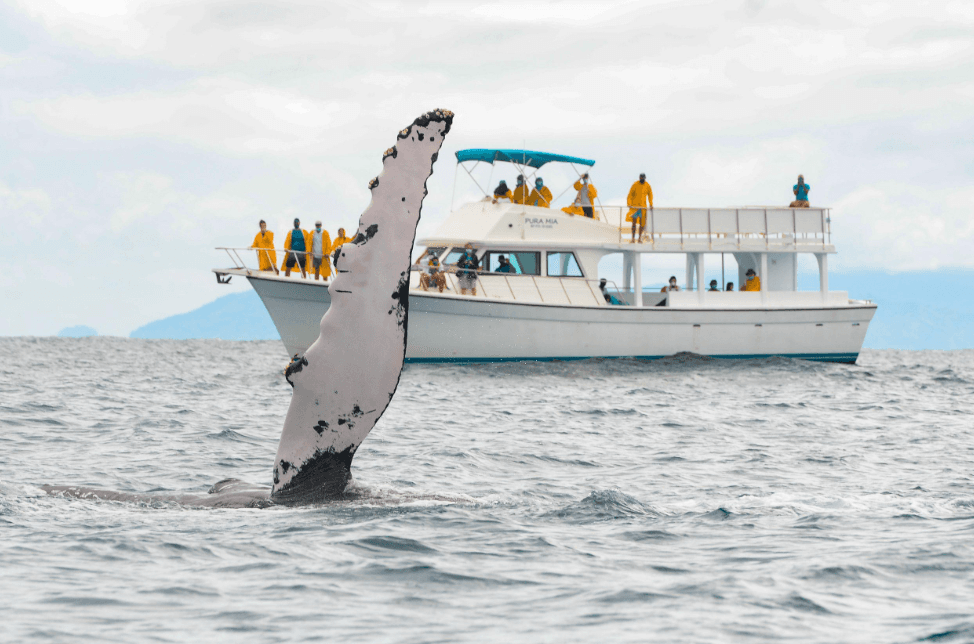
Humpback whales are large baleen whales known for their long pectoral fins, distinctive tail flukes, and varied surface behaviors. During a trip, visitors may have the opportunity to observe several types of activity.
Whales surfacing to breathe
Humpback whales periodically surface to breathe. You may notice a visible spray, often called a blow, followed by part of the whale's back appearing above the water.
Tail lifting before a dive
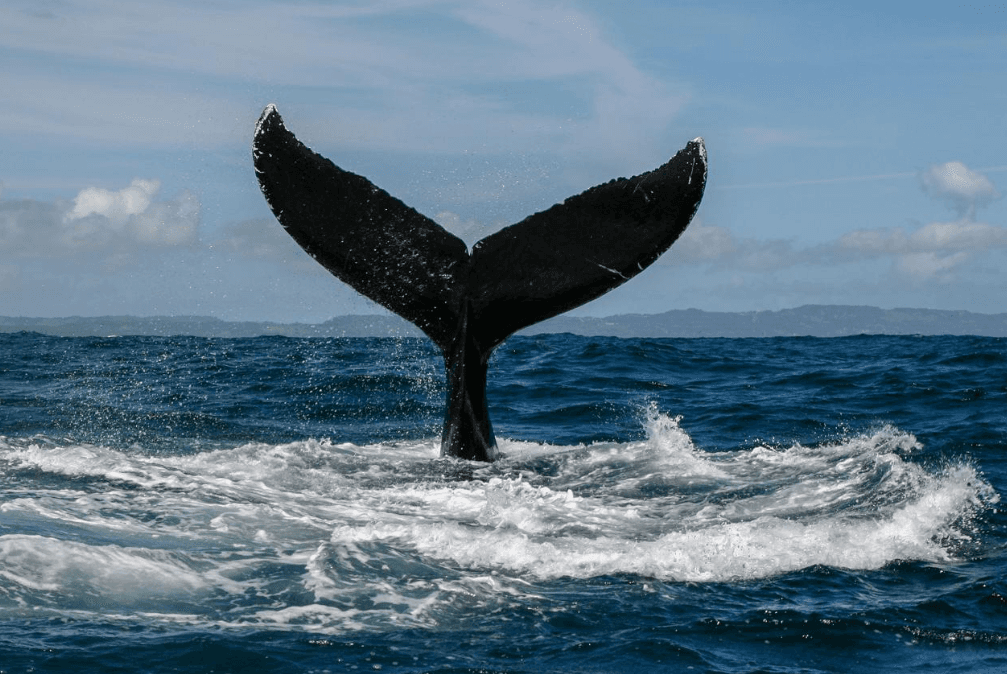
Some whales raise their tail flukes before diving. This behavior offers an excellent opportunity to observe the whale's distinctive markings, although it does not happen during every encounter.
Breaching and splashing
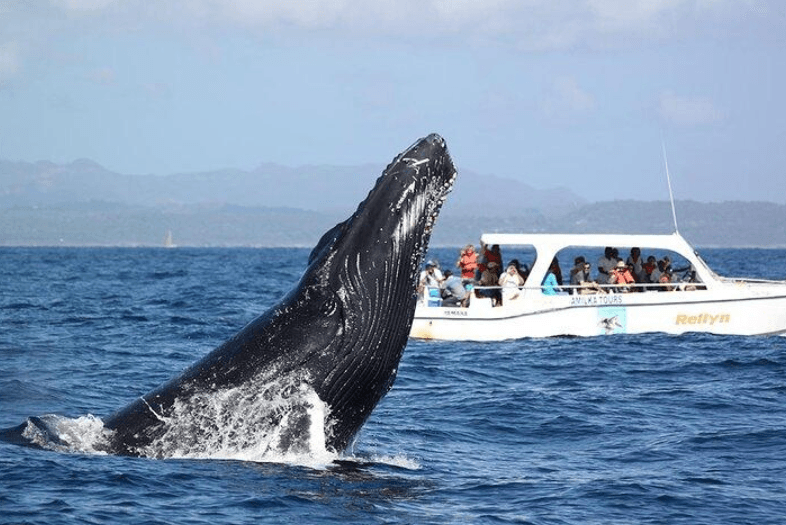
A whale may leap partly or almost entirely out of the water, creating a dramatic splash when it lands. Breaching is memorable to witness, but it is unpredictable and should never be expected on demand.
Mothers and calves
Samaná's waters are important for humpback whale reproduction and the early lives of calves. Depending on the whales present, visitors may encounter a mother with her young.
Wildlife behavior is never guaranteed. The best approach is to enjoy the encounter respectfully and appreciate whatever natural activity occurs during the trip.
What Is the Weather Like in Samaná in January?
January is part of the Dominican Republic's winter travel period, but conditions on the water can differ from conditions on land.
Warm tropical temperatures do not necessarily mean that every boat trip will be calm. Wind, waves, rain, and changing marine conditions can affect the experience.
Before departure, check the local forecast and follow the tour operator's instructions. The operator should make decisions about whether conditions are appropriate for a safe excursion.
For a more comfortable trip, consider bringing:
- Lightweight clothing suitable for warm weather.
- A light outer layer in case of wind or spray.
- A hat and sunglasses that fit securely.
- Sunscreen suitable for your needs.
- Drinking water, if permitted by the operator.
- A waterproof bag for essential belongings.
- Motion-sickness supplies recommended by a healthcare professional, if appropriate.
Do not assume that a sunny morning guarantees calm seas. Prepare for the conditions expected on the day of your trip.
What Time Should You Go Whale Watching in January?
The best departure time depends on the operator's schedule, local marine conditions, and the type of excursion you book.
Some tours operate in the morning, while others may offer different departure options. There is no universal rule that whales will be more active at a particular hour.
When comparing departures, consider your travel distance, the time required to reach the meeting point, and whether the forecast suggests changing conditions.
If you are staying outside Samaná town, allow enough time for road travel and check the exact departure location before leaving your accommodation.
Rather than choosing a time based on an assumed guarantee of whale activity, select a departure that fits the confirmed tour schedule and gives you a comfortable travel plan.
Where Does Whale Watching Depart From?
Samaná town is a common starting point for whale-watching excursions in Samaná Bay, but the precise meeting point depends on the tour operator.
Before booking, confirm:
- The exact departure address or meeting point.
- Whether transportation is included.
- How early you need to arrive.
- Whether parking is available if you are driving.
- The expected return time.
- The operator's procedure for weather-related changes.
If you are staying in Las Terrenas, Las Galeras, or another part of the peninsula, check the journey time before selecting an excursion. A tour that looks convenient online may require additional road travel.
Never rely solely on the general destination name when arranging transportation. Confirm the actual meeting point and departure instructions with the operator.
How to Plan a January Whale-Watching Trip
A little advance planning can help you avoid unnecessary stress and make better use of your time in Samaná.
1. Confirm that the tour operates on your date
Although January is within the usual whale-watching season, individual operators may have different schedules. Check the exact date and departure time before booking.
2. Ask what the price includes
Compare the total price and verify whether transport, refreshments, equipment, fees, or other services are included. Do not assume that every package offers the same inclusions.
3. Review safety arrangements
Ask about the type of boat, passenger capacity, safety equipment, and procedures for changing sea conditions. Choose an operator that follows applicable wildlife-viewing requirements.
4. Leave room in your itinerary
Avoid scheduling an inflexible activity immediately after the expected return time. Trips can be affected by weather, boarding arrangements, and the time needed to reach the departure point.
5. Understand the cancellation policy
Before paying, find out what happens if the operator cancels because of unsafe weather or operational issues. Check the written conditions for refunds or rescheduling.
6. Keep expectations realistic
You may see several whales, one whale, or less activity than you hoped for. These are wild animals, and their movements cannot be controlled for visitors.
Is January Better Than February or March?
January, February, and March all fall within the commonly promoted whale-watching period in Samaná. However, the experience can vary from week to week and from year to year.
Travelers should not assume that one month always offers more whales or better behavior than another. Weather, whale movements, trip schedules, and the particular day all influence what visitors experience.
January may suit travelers who are already planning a winter vacation. February and March may fit other itineraries just as well.
If your priority is a particular travel date, focus on the operator's confirmed schedule, current conditions, and the flexibility of your overall plans rather than relying on an absolute ranking of months.
Responsible Whale Watching in Samaná
Humpback whales are wild animals, and their well-being should remain a priority during every excursion.
Choose an operator that respects applicable regulations and wildlife-viewing guidance. Boats should be managed responsibly, and passengers should follow the crew's instructions.
During the trip:
- Never attempt to touch or feed a whale.
- Do not throw objects into the water to attract wildlife.
- Avoid encouraging a captain to chase or crowd whales.
- Follow all instructions about where to sit and when to move.
- Keep noise and sudden movement under control when instructed.
- Respect the crew's decisions about maintaining appropriate distances.
Responsible viewing helps protect the animals and supports a better experience for future visitors.
Frequently Asked Questions
Can you see humpback whales in Samaná in early January?
January is within the usual whale-watching season, so sightings are possible early in the month. However, whale presence and activity vary, and no particular date guarantees a sighting.
Is whale watching available every day in January?
Availability depends on the operator's schedule, demand, weather, and operating conditions. Confirm your preferred date directly before making plans.
Are whales guaranteed during a January tour?
No. Humpback whales are wild animals, and their behavior cannot be guaranteed. Review the operator's policy for trips when sightings do not occur.
Should I book whale watching in advance?
Booking ahead can help you secure a suitable departure date, especially when your vacation schedule is fixed. Confirm the operator's current availability and cancellation terms before paying.
Can I combine whale watching with another excursion?
Possibly, but it depends on the length of the whale-watching trip, transport times, and the schedule of the other activity. Avoid booking overlapping tours, and confirm all departure and return times in advance.
Is January suitable for first-time whale watchers?
Yes, January can be a good time for first-time visitors because it falls within the established seasonal period. Choose a responsible operator, prepare for marine conditions, and remember that every wildlife encounter is different.
Final Thoughts
January is a promising month to plan whale watching in Samaná, Dominican Republic. It falls within the seasonal period when humpback whales visit the region, offering travelers an opportunity to learn about these remarkable animals in their natural environment.
For the best possible experience, confirm your tour date, meeting point, safety arrangements, and cancellation policy before traveling. Prepare for changing sea conditions, choose a responsible operator, and keep your expectations flexible.
Most importantly, remember that whale watching is a wildlife experience rather than a performance. The opportunity to observe humpback whales responsibly is valuable even when their behavior is brief or distant.
Planning a trip for January 2027 Check current local tour details before booking, and build enough flexibility into your itinerary to enjoy Samaná at a comfortable pace.

Local explorer & expert guide in Visita Haitises.