How Do Humpback Whale Mothers Care for Their Calves A Samaná Guide
Seeing a humpback whale swimming alongside her calf is one of the most memorable wildlife encounters visitors may experience in Samaná Bay, Dominican Republic. The young whale stays close to its mother as it grows, nurses, and develops the strength and coordination needed for life in the ocean.
But how do humpback whale mothers care for their calves Their early development involves nursing, close physical proximity, energy conservation, and learning through experience. Although whales live underwater and behave very differently from humans, the relationship between a mother and her calf is an important part of humpback whale biology.
Samaná Bay is known for its seasonal presence of North Atlantic humpback whales, making it a valuable destination for learning about these marine mammals. In this guide, discover how calves are born, how they receive nourishment, how mothers support their early development, and why these encounters deserve careful observation.
Where Are Humpback Whale Calves Born?
North Atlantic humpback whales migrate between northern feeding grounds and warmer breeding areas in the western North Atlantic and Caribbean region.
During the winter breeding season, humpback whales visit Dominican Republic waters, including the Samaná region. Calving can occur in warm tropical and subtropical waters, where newborn calves begin life in the ocean.
Warm breeding areas provide a different environment from the colder waters where many humpbacks feed during other parts of the year. These seasonal movements are an important part of the whales' life cycle.
Not every whale in Samaná Bay will have a calf, and not every trip will include a mother-and-calf sighting. However, the region's seasonal whale activity provides an opportunity to learn about the early lives of these animals.
How Are Humpback Whale Calves Born?
Humpback whales are mammals, which means they give birth to live young rather than laying eggs.
A newborn calf must quickly adapt to life in the water. It needs to swim, reach the surface to breathe, and remain close enough to its mother to nurse.
Although a calf is born in the ocean, it is not immediately independent. Its mother provides milk and remains an important source of nourishment and protection during the early stages of development.
The first period of life is especially demanding because the calf must grow while learning to coordinate its movements and manage the physical requirements of swimming and breathing.
1. Mothers Feed Their Calves With Rich Milk
One of the most important ways humpback whale mothers care for their young is through nursing.
Like other mammals, humpback whales produce milk for their offspring. Whale milk is rich in fat and nutrients, helping calves grow rapidly during a relatively short nursing period.
A calf receives nourishment from its mother while spending much of its early life close to her. This energy supports growth, body development, and the physical demands of swimming.
Nursing takes place underwater, so visitors watching from a boat may not be able to identify it clearly. A mother and calf swimming together does not necessarily mean that nursing is occurring at that moment.
Milk production also requires substantial energy from the mother. This is one reason the breeding and calving period is an important stage in the annual life cycle of humpback whales.
2. Calves Stay Close to Their Mothers
A young humpback whale depends heavily on proximity to its mother.
Staying nearby helps the calf maintain access to milk and remain associated with the adult during its early development. The mother and calf may travel together as the pair moves through the water.
Observers may notice a calf surfacing near its mother, swimming alongside her, or changing position as the pair moves. Such observations can reveal how closely the animals remain associated.
However, the exact arrangement changes throughout an encounter. A calf may move to a different position, and the pair may briefly appear separated from a particular viewing angle.
Visitors should not interpret every change in position as a sign of danger or distress. Understanding whale behavior requires looking at the wider context rather than drawing conclusions from a single moment.
3. Mothers Help Calves Develop Swimming Skills
Swimming is essential for a whale from the beginning of its life.
A calf must coordinate its movements, travel through the water, and reach the surface to breathe. These activities require strength and developing motor control.
As the calf grows, it gains experience moving through its marine environment. Remaining near its mother allows the pair to travel together while the calf continues to develop.
A calf may appear less coordinated than an adult, but observers should be careful about judging its health or abilities from a brief sighting. Surface behavior alone does not provide enough information to assess an individual animal's condition.
Over time, growth and experience help the young whale become better equipped for the demands of life in the ocean.
4. Mothers Provide an Important Form of Protection
A calf is more vulnerable than a fully grown whale because it is smaller and still developing.
Remaining close to its mother is an important part of the calf's early life. The mother is a large adult that accompanies the young whale as it travels through the marine environment.
This relationship should not be interpreted as a guarantee that a calf will never encounter danger. The ocean contains natural risks, and the behavior of individual whales varies.
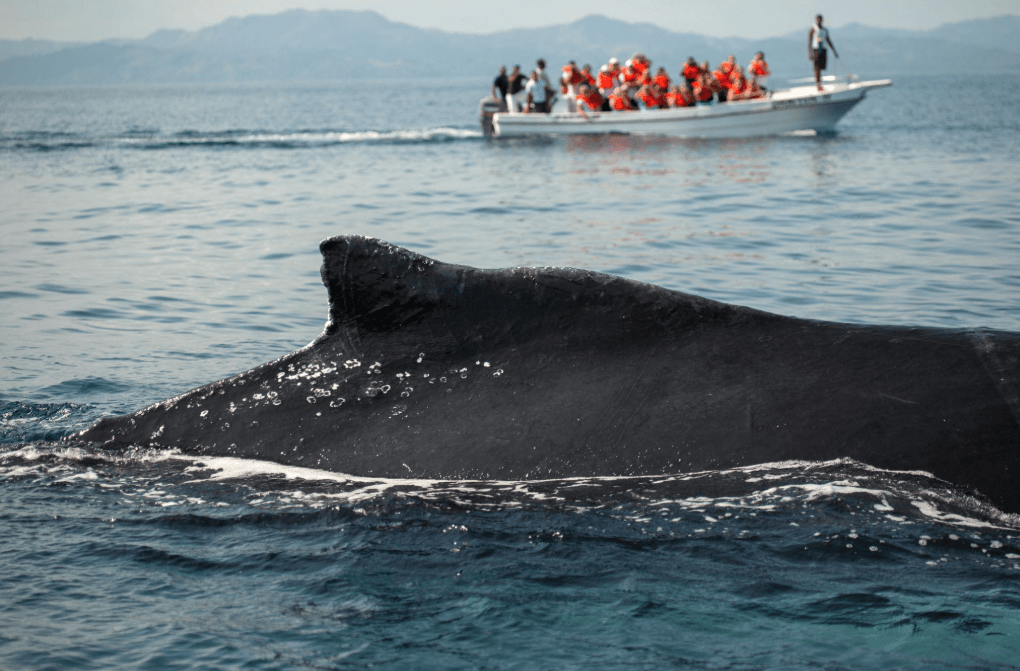
For human observers, the key lesson is that mother-and-calf encounters deserve particular care. Boats should follow applicable wildlife-viewing rules and avoid interfering with the animals' movements.
Visitors should never encourage a captain to approach a calf more closely simply to obtain a photograph.
5. Calves Grow Quickly During Their Early Months
Humpback whale calves undergo substantial growth while nursing.
Milk provides concentrated energy that supports their development, helping them increase in size and build the physical capacity needed for migration and independent life.
Growth rates and the timing of developmental milestones can vary. Factors such as the calf's condition and the mother's energy resources can influence development.
Because whales grow in a marine environment, researchers use a combination of observations, measurements, and other scientific methods to study their development.
A brief whale-watching encounter cannot reveal exactly how old a calf is or how quickly it is growing. Nevertheless, seeing a young whale beside its mother can help visitors appreciate the early life stage that follows birth.
6. How Long Do Humpback Whale Calves Stay With Their Mothers?
Humpback whale calves generally remain with their mothers for months rather than becoming independent immediately after birth.
During this period, the calf nurses and grows while accompanying its mother. The pair's movements are linked to the mother's seasonal journey and the calf's developmental needs.
Eventually, the calf becomes independent. The timing of separation can vary, so it is better to avoid assuming that every mother-calf pair follows exactly the same schedule.
The months following birth are an important period in the humpback whale life cycle. They connect the calving season in warmer waters with the animals' broader annual migration.
7. Why Do Mothers and Calves Visit Samaná Bay?
Samaná Bay is associated with the seasonal presence of North Atlantic humpback whales during the winter breeding period.
The wider Dominican Republic region is part of the Caribbean breeding area used by these whales. Some females give birth during their time in warm waters, while others may be present for other stages of the breeding cycle.
The presence of mothers and calves is one reason the region attracts whale watchers and marine wildlife enthusiasts.
However, seeing a calf is not guaranteed on every outing. Whale movements depend on natural conditions, and a particular boat trip may reveal different animals and behaviors.
Visitors can make the most of the experience by learning about whale biology before their trip and appreciating whatever natural behavior they observe.
8. How Can You Recognize a Mother-and-Calf Pair?
A mother-and-calf pair may be recognized by the presence of a smaller whale swimming close to a larger adult.
The size difference can be a useful clue, particularly when the pair remains together over several observations. However, size alone is not conclusive proof of a family relationship.
Experienced guides may be able to explain the observations they make, but passengers should not expect to identify the relationship with certainty from a single glimpse.
Other details, such as repeated proximity and coordinated movement, can help observers understand what they may be seeing. Even then, visual observations should be interpreted cautiously.
The best approach is to listen to knowledgeable guides and avoid making unsupported claims about an individual whale's age, sex, or condition.
9. Why Mother-and-Calf Encounters Require Responsible Viewing
Watching a mother and calf can be exciting, but their welfare must come before photography or entertainment.
Responsible whale watching means allowing animals to move naturally and complying with applicable viewing rules. Operators should avoid unnecessary approaches and follow any specific requirements that apply to mother-calf pairs.
Passengers can help by:
- Following the captain's instructions throughout the encounter.
- Remaining in safe positions on the boat.
- Never attempting to touch or feed a whale.
- Avoiding pressure on the operator to get closer.
- Taking photographs from a safe distance.
- Respecting wildlife-viewing rules and the needs of other passengers.
A calm, distant observation can be valuable even when the whales do not perform dramatic surface movements.
Responsible viewing allows visitors to appreciate the mother-calf relationship without attempting to influence it.
Frequently Asked Questions
What do humpback whale calves eat?
Humpback whale calves feed on their mothers' milk. The milk is rich in fat and nutrients, supporting the calf's rapid growth during its early months.
How long do humpback whales nurse their calves?
Calves generally nurse for several months. The precise duration varies, so a single fixed timeline should not be assumed for every whale.
Are humpback whale calves born in Samaná Bay?
Humpback whales use the wider Dominican Republic and Caribbean region as breeding habitat, and calving occurs in warm breeding waters. Whether a particular calf was born in Samaná Bay cannot be determined from a typical sighting alone.
Do humpback whale mothers protect their calves?
Mothers remain closely associated with their calves during early development, providing milk and accompanying them as they travel. This relationship is important, although it does not eliminate every natural risk.
Can visitors see baby humpback whales in Samaná?
It is possible to see mother-and-calf pairs during the whale season, but sightings are never guaranteed. Whales are wild animals, and their movements vary.
Is it safe for a boat to approach a whale calf?
Boats should follow current local wildlife regulations and applicable viewing requirements. Passengers should never encourage closer approaches for photographs or attempt to interact with a calf.
Final Thoughts
Humpback whale mothers play an essential role in the early lives of their calves. Through nursing, close association, and accompanying their young as they grow, mothers help calves develop the strength and abilities needed for life in the ocean.
Samaná Bay provides an opportunity to learn about these remarkable marine mammals during their seasonal presence in Dominican Republic waters. If you encounter a mother and calf, observe patiently, follow your guide's instructions, and respect the animals' space.
The most meaningful whale-watching experiences do not depend on getting the closest view. They come from understanding the animals and appreciating their natural lives without disturbing them.

Local explorer & expert guide in Visita Haitises.