Whale Watching in Samaná with Kids: A Family Travel Guide (2027)
Planning a family vacation in the Dominican Republic Whale watching in Samaná with kids can be a memorable way to introduce children to marine wildlife and experience one of the Caribbean’s best-known whale-watching destinations.
Every year, humpback whales visit the waters around Samaná Bay during their seasonal migration. Families may have the opportunity to observe these enormous marine mammals from a boat, learn about their behavior, and enjoy the natural beauty of the Dominican Republic.
However, a successful family whale-watching trip requires more than choosing a departure time. Parents should consider their children's ages, comfort on boats, safety requirements, motion sickness, and ability to follow wildlife-viewing instructions.
This guide explains how to prepare for a family whale-watching experience in Samaná in 2027.
Is Whale Watching in Samaná Suitable for Children?
Whale watching can be an exciting educational experience for children who enjoy animals, nature, and outdoor adventures. Seeing a humpback whale surface, raise its tail, or move through the water can help children appreciate marine wildlife in a way that books and videos cannot fully reproduce.
Nevertheless, not every boat trip is suitable for every child. Conditions can vary, and children may need to remain seated, wear safety equipment, and follow the crew's instructions throughout the journey.
Before booking, parents should ask the operator:
- Is there a minimum age for children?
- Are child-sized life jackets available?
- How long will the trip last?
- Is the boat suitable for young children?
- Are restrooms available onboard?
- What happens if sea conditions become uncomfortable?
- Are there any restrictions for infants or children with mobility needs?
Do not assume that every tour offers the same facilities or accepts children of every age. Confirm the details directly with the operator before paying.
When Is the Best Time to Go Whale Watching with Kids?
Humpback whales visit the Samaná region during the winter and early spring breeding season. Whale-watching excursions are generally associated with the period from January through March, while the broader seasonal window can extend approximately from January to April.
The exact timing of whale activity varies from year to year. Always confirm the expected operating dates and local conditions for your planned visit.
For families, choosing a suitable day matters as much as choosing a month. If your schedule allows flexibility, consider these planning tips:
- Avoid scheduling several demanding activities immediately before the boat trip.
- Leave enough time to reach the departure point without rushing.
- Check the marine weather forecast and follow the operator's advice.
- Keep an alternative land-based activity available in case the trip is postponed.
Remember that whales are wild animals. No responsible operator can guarantee that a particular trip will produce a specific sighting or behavior.
What Children Might See During a Whale-Watching Trip
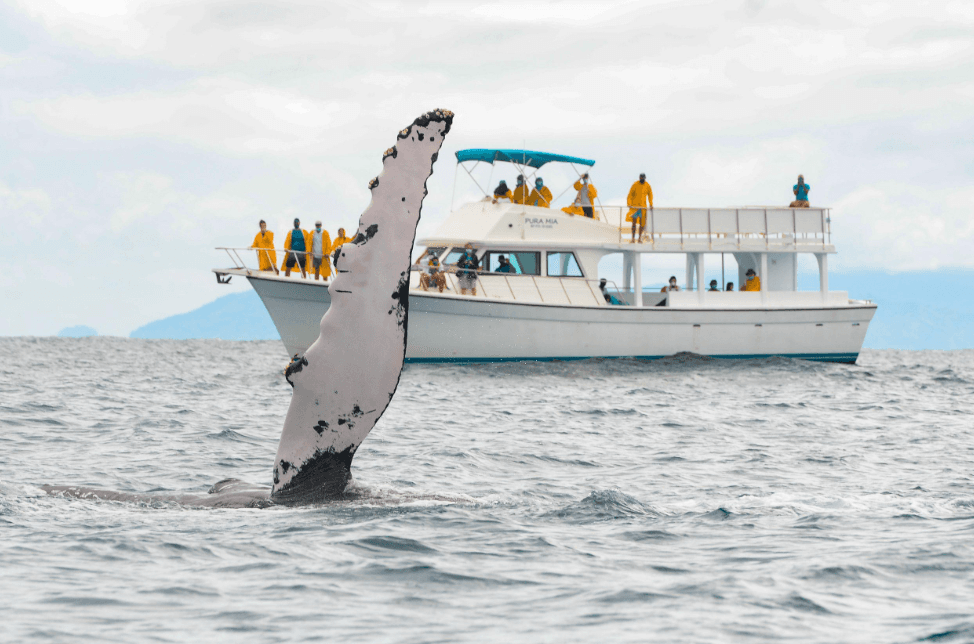
Humpback whales are known for several distinctive behaviors. Depending on conditions and whale activity, families may observe some of the following.
Whales surfacing
A whale may rise to the surface to breathe, revealing part of its head or back. Children can look for the visible spray, commonly called a blow, when the whale exhales.
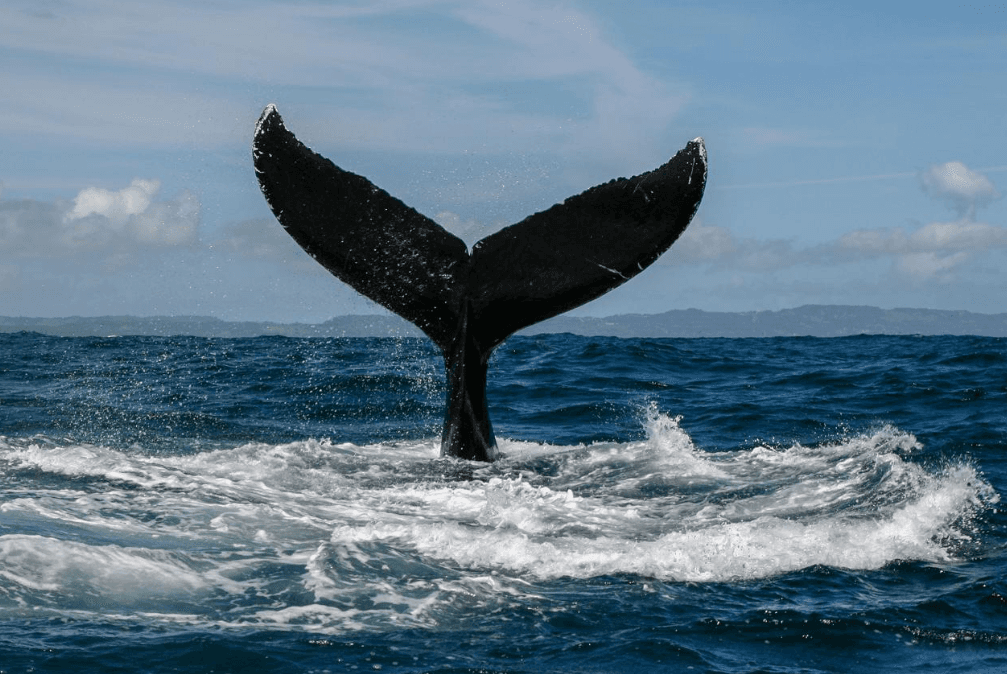
Tail flukes
Before diving, a humpback whale may lift its tail above the water. The pattern and shape of the tail can help researchers identify individual whales.
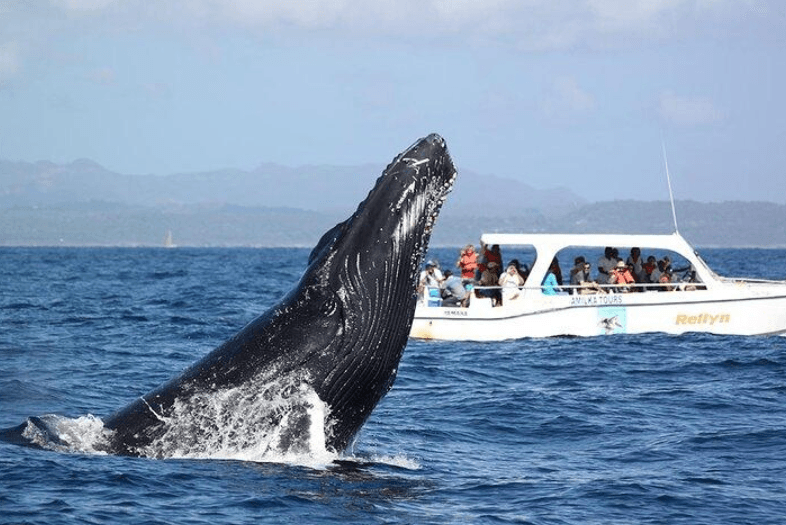
Breaching
Sometimes a whale launches much of its body out of the water before landing with a splash. This behavior is spectacular, but it is not guaranteed.
Mothers and calves
The breeding grounds around the Dominican Republic are important for humpback whales, including mothers and young calves. Sightings depend on the whales present and the conditions on the day.
Prepare children for the possibility that whales may appear only briefly or remain at a distance. Wildlife watching is an exercise in patience, not a staged performance.
How to Choose a Family-Friendly Whale-Watching Tour
The cheapest excursion is not necessarily the best choice for a family. Focus on safety, suitability, clear communication, and realistic expectations.
1. Check age and safety requirements
Ask the operator about age limits, life jackets, boarding arrangements, supervision requirements, and any special restrictions for infants or younger children.
Children should remain under appropriate adult supervision throughout the trip. Follow the captain's and crew's safety instructions at all times.
2. Understand the boat and trip duration
Different boats provide different levels of space, shade, stability, and protection from spray. Ask what type of boat will be used and how long the excursion is expected to last.
A shorter journey may be easier for a child who has never spent much time on a boat, but the most appropriate option depends on the child and the actual tour arrangements.
3. Ask about shade and seating
Caribbean sunshine can feel intense on open water. Find out whether the boat has shaded seating and whether children can remain comfortably seated during the trip.
Do not assume that shade, restrooms, snacks, or refreshments are included unless the operator confirms them.
4. Review cancellation and weather policies
Marine conditions can change. Before booking, understand what happens if the operator cancels because of weather, safety concerns, or other operational issues.
Ask whether rescheduling or a refund is available and review the written policy.
5. Choose a responsible operator
Select an operator that follows applicable wildlife-viewing rules, respects appropriate distances, and does not encourage passengers to touch, feed, chase, or harass whales.
A responsible trip puts the welfare of the animals and the safety of passengers first.
How to Prepare Children for the Boat Trip
A little preparation can help children feel more confident before departure.
Explain what the experience will be like: the boat may move, the wind may feel strong, and whales might not appear immediately. Encourage children to watch patiently and listen to the crew.
For younger children, make the experience interactive. You could ask them to look for a whale's blow, count the seconds between sightings, or observe the shape of a tail without shouting or moving around the boat.
Set expectations in advance. Seeing a whale is exciting, but simply being out on the water and learning about marine life can also make the excursion worthwhile.
If a child becomes tired or frightened, prioritize their comfort and follow the crew's instructions.
What to Bring for Whale Watching with Kids
Pack for sun exposure, possible splashes, and changing comfort levels during the journey.
Family packing checklist:
- Lightweight clothing suitable for warm weather.
- Hats and sunglasses that fit securely.
- Sunscreen appropriate for each family member.
- Drinking water, if permitted by the operator.
- A light waterproof layer or change of clothes.
- Any necessary personal medication.
- Motion-sickness supplies recommended by a healthcare professional, if appropriate.
- A small bag for essential items.
- A camera or phone secured with a suitable strap.
- Snacks, if allowed by the tour operator.
Follow the operator's guidance about bags, food, drinks, and equipment. Keep belongings secured, and avoid carrying unnecessary valuables.
For children who are prone to motion sickness, discuss suitable prevention options with a healthcare professional before travel. Never give a child medication without checking that it is appropriate for their age and circumstances.
Boat Safety Tips for Parents
Safety should remain the priority throughout the excursion.
- Use the required life jacket. Make sure each child has properly fitting safety equipment and wears it as instructed.
- Keep children supervised. Never allow children to wander around the boat unattended.
- Follow boarding instructions. Help children board and disembark carefully, using the assistance provided by the crew.
- Stay seated when instructed. Sudden movements and uneven surfaces can increase the risk of falls.
- Protect children from the sun. Use appropriate sun protection and follow the crew's guidance about hydration and heat.
- Respect the wildlife. Do not encourage children to reach toward whales, throw objects into the water, or make attempts to attract the animals.
- Follow the captain's directions. If conditions change, listen to the crew and follow their safety instructions immediately.
If a child has particular medical, mobility, sensory, or accessibility needs, discuss them with the operator before booking.
Can You Combine Whale Watching with Other Family Activities?
Samaná offers more than whale watching. Depending on your children's ages, energy levels, weather, and travel schedule, you may wish to explore other local attractions during your stay.
Possible options to investigate include:
- Visiting the waterfront and public areas around Samaná town.
- Spending time at a suitable beach.
- Exploring local food and Dominican culture.
- Visiting Cayo Levantado, if transport and conditions suit your family.
- Taking a relaxed walk or enjoying a meal after the excursion.
Do not automatically combine multiple boat trips or demanding excursions into one day. Travel times, sea conditions, departure schedules, and children's energy levels can make a packed itinerary stressful.
Confirm whether any combined excursion is actually offered, how long it lasts, and whether the timing is realistic before booking.
How Much Does Family Whale Watching in Samaná Cost?
Family costs depend on the operator, boat type, number of passengers, children's ages, departure location, and what is included in the package.
When comparing prices, check:
- Adult and child rates.
- Whether infants or young children can participate.
- Transportation to and from the departure point.
- Food and drinks, if offered.
- Any applicable fees.
- Private or shared boat arrangements.
- Cancellation and rescheduling terms.
Request a complete price for your family rather than relying only on a headline price per person. Verify all inclusions and exclusions in writing before confirming your reservation.
Frequently Asked Questions
What is the best month for whale watching in Samaná with kids?
January, February, and March fall within the main whale-watching period commonly promoted for Samaná. The broader season can extend into April, but whale activity and tour operations vary. Confirm dates with a local operator.
Can toddlers go whale watching in Samaná?
Some tours may have minimum-age restrictions, and not every boat is suitable for toddlers. Ask the operator about age requirements, child-sized life jackets, boarding conditions, and trip duration before making a reservation.
Are whale sightings guaranteed?
No. Humpback whales are wild animals, and their behavior cannot be guaranteed. Ask about the operator's sighting and cancellation policies, but do not assume that a refund or another trip is automatically included.
Should children bring a camera?
A camera can make the experience more engaging, but children should use it only when safe and permitted. Secure devices with a suitable strap and avoid leaning over the boat's edge to take pictures.
What if my child gets seasick?
Children who experience motion sickness may feel uncomfortable during a boat trip. Discuss prevention options with a healthcare professional beforehand, tell the operator about any concerns, and follow all safety instructions if symptoms develop.
Is a private tour better for families?
A private tour may provide greater flexibility, depending on the operator and package, but it is not automatically safer or more suitable. Compare the boat, crew, facilities, age requirements, duration, and total cost before deciding.
Final Thoughts: Planning Whale Watching in Samaná with Kids
Whale watching in Samaná can become a memorable family experience when parents plan carefully and set realistic expectations. Choose an excursion appropriate for your children's ages, confirm the operator's safety arrangements, prepare for sun and sea conditions, and teach children to respect wildlife.
The most important part of the experience is not simply seeing the largest whale or capturing the perfect photograph. It is giving children an opportunity to appreciate wild animals and understand why their natural environment deserves protection.
Before your 2027 trip, verify current seasonal dates, departure arrangements, child policies, prices, and weather-related rules directly with your chosen operator. With thoughtful preparation, your family can enjoy a more comfortable and responsible day exploring the waters of Samaná Bay.

Local explorer & expert guide in Visita Haitises.