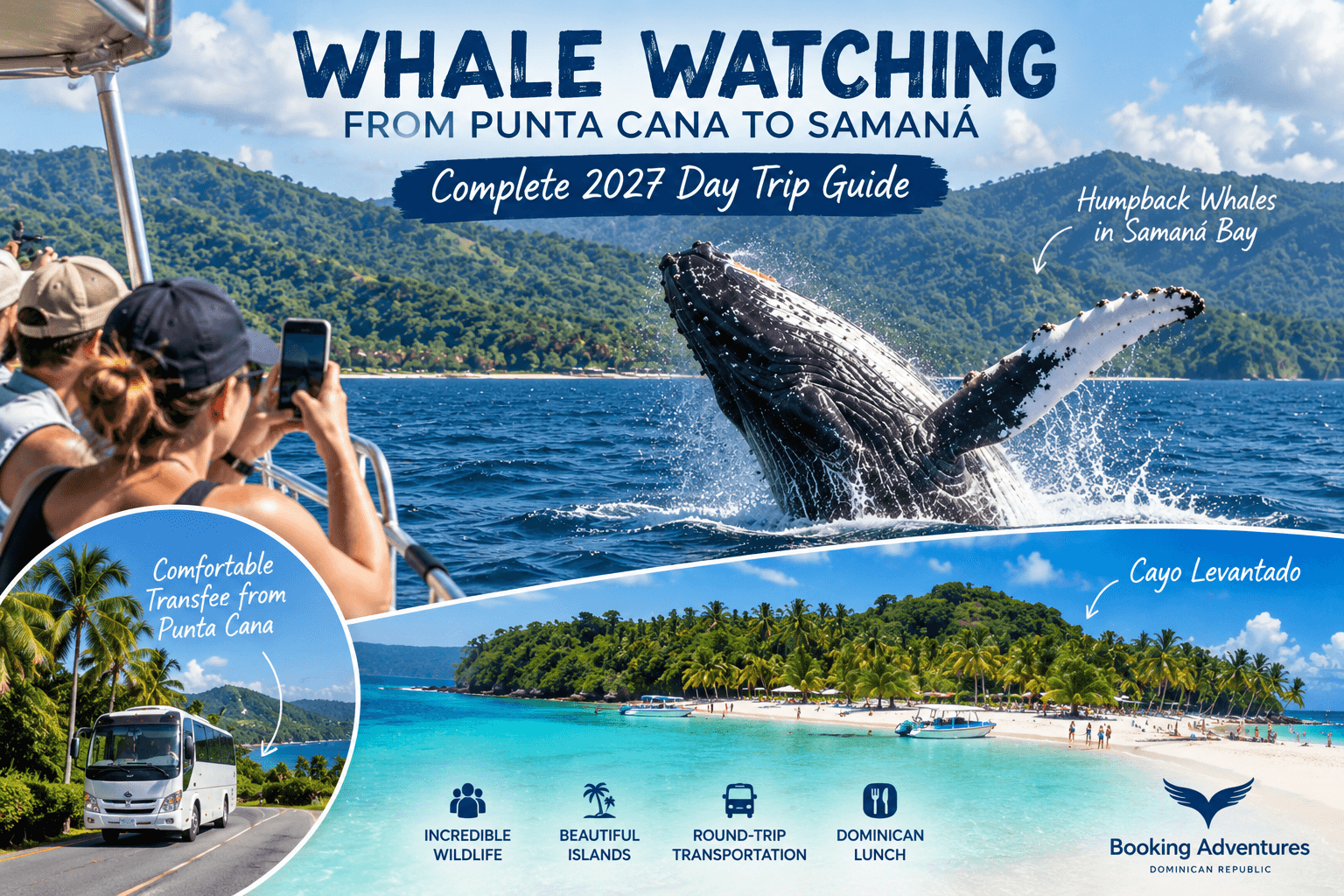
Whale Watching in Samaná 2027: Complete Guide to Humpback Whales
Every winter, something extraordinary happens in the warm waters of northeastern Dominican Republic: humpback whales arrive in Samaná Bay after migrating from colder North Atlantic feeding areas.
For travelers visiting the Dominican Republic between January and March, whale watching in Samaná is one of the country's most remarkable nature experiences.
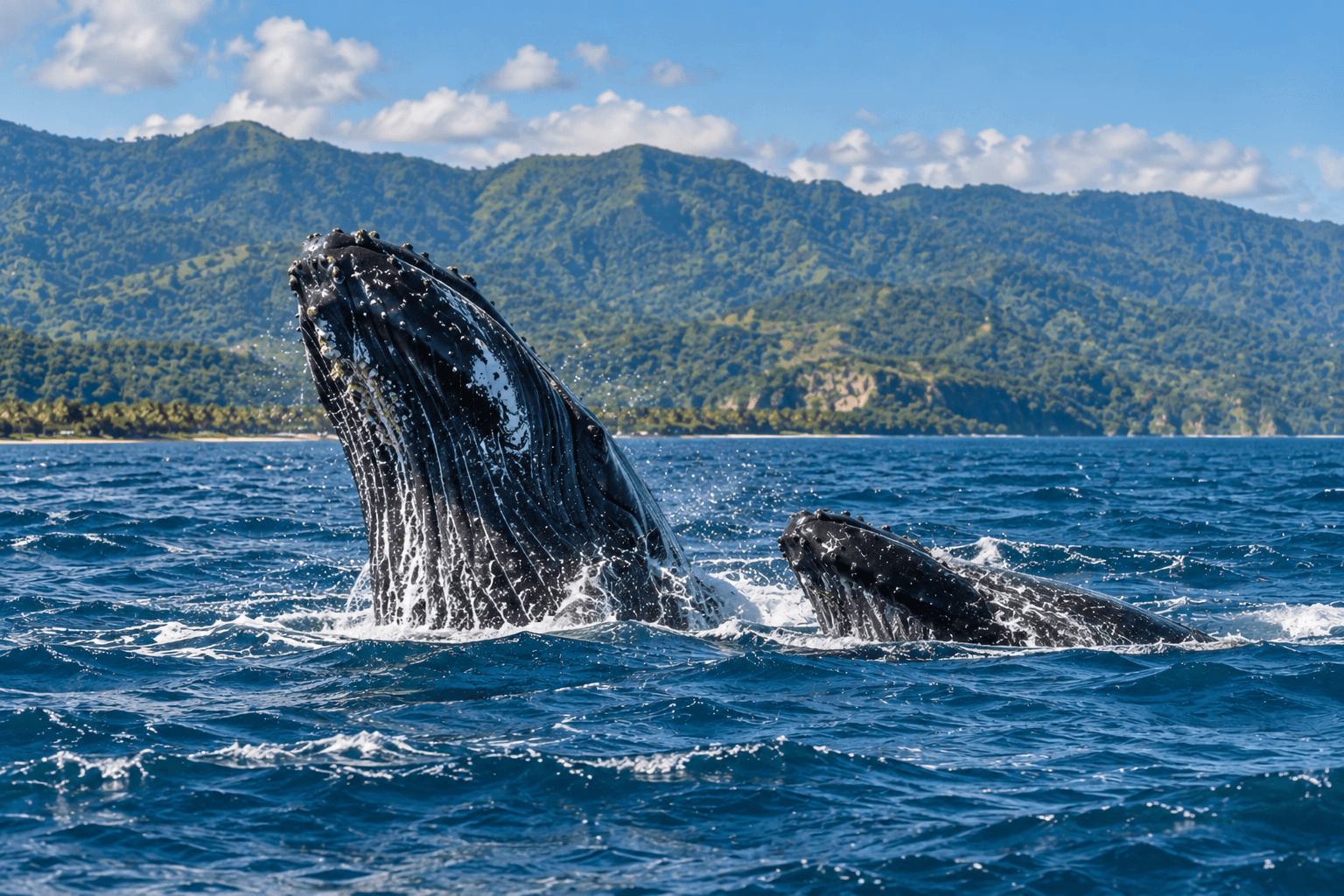
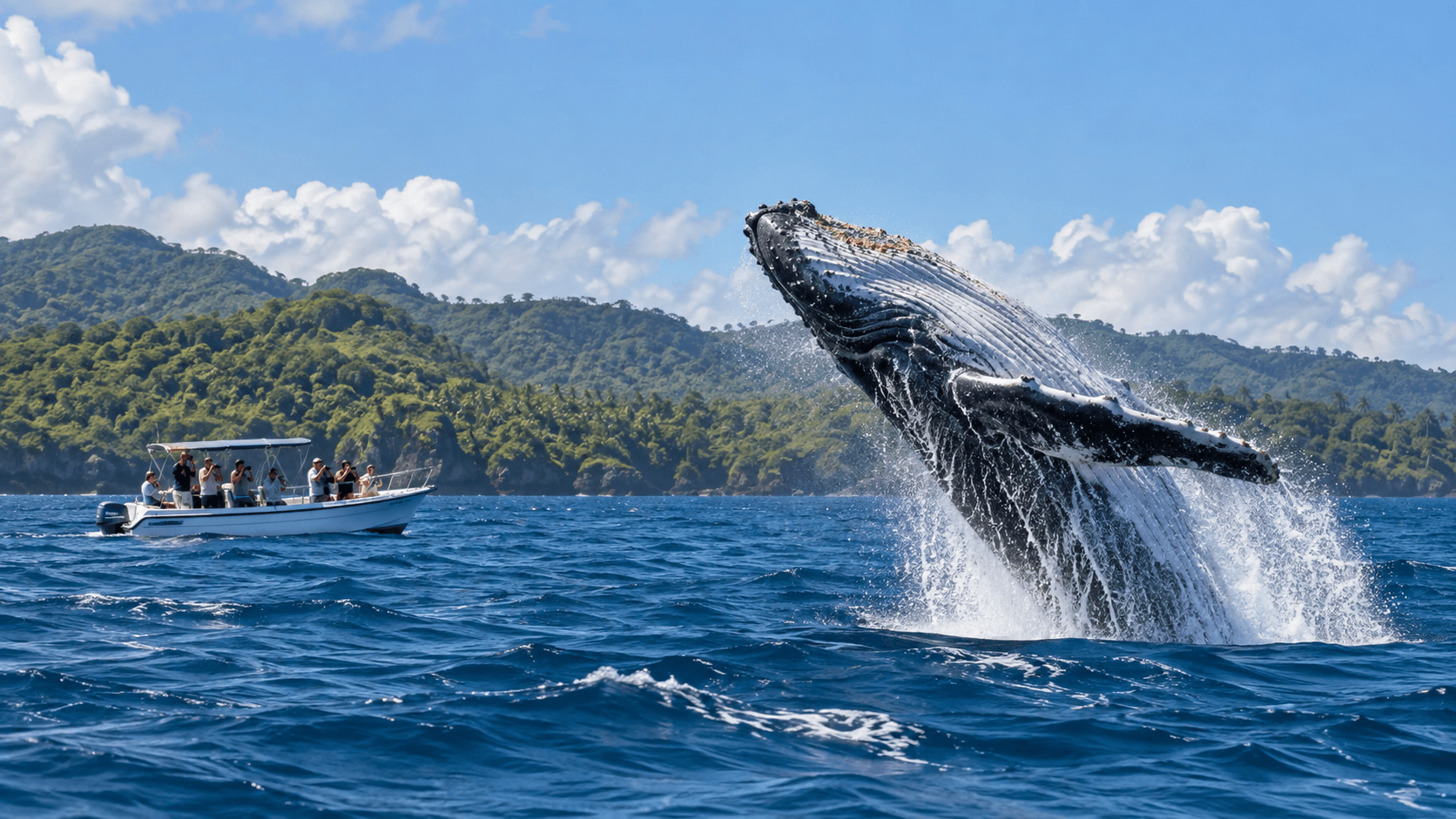
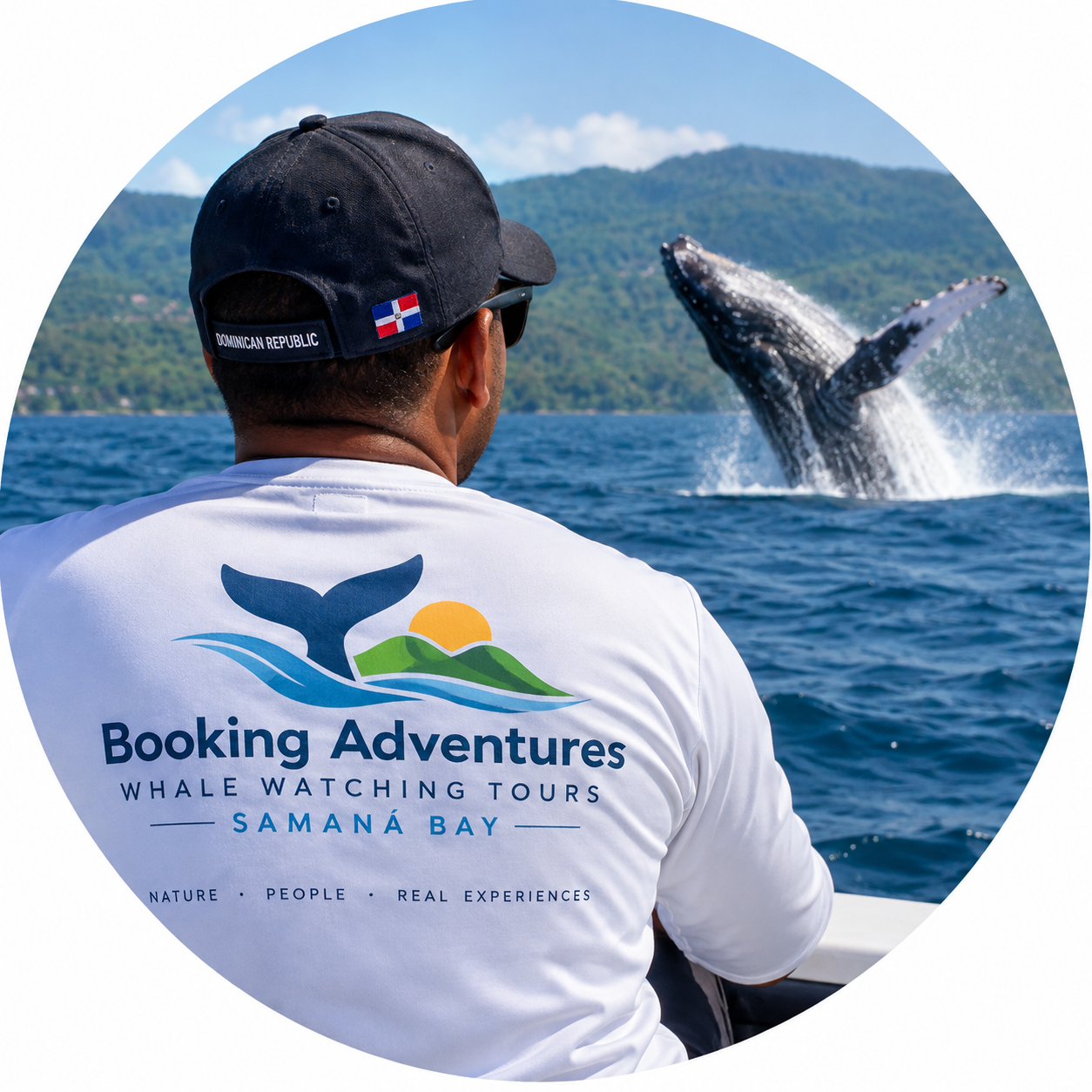
You may see an adult humpback rising to breathe, a huge tail disappearing beneath the water, a mother traveling with her calf, or—if nature is generous—a whale launching its enormous body above the surface in a spectacular breach.
But planning a Samaná whale watching trip raises plenty of questions.
When is the best time to see whales How long does whale season last Should you choose whale watching only or combine it with Cayo Levantado Can you visit from Punta Cana Are whale sightings guaranteed?
This complete Samaná whale watching 2027 guide answers those questions and helps you plan your visit responsibly.
Quick answer: Whale watching in Samaná generally takes place from January through March, with the strongest travel window usually falling between mid-January and late March. Exact 2027 operational dates should be confirmed once the Dominican authorities publish the season information. Dominican Republic Tourism and the International Whaling Commission both identify January–March as the principal whale-watching period.
Samaná Whale Watching 2027: Quick Facts
InformationDetailsDestinationSamaná Bay, Dominican RepublicMain speciesNorth Atlantic humpback whaleWhale seasonJanuary–MarchBest planning periodMid-January through late MarchMain departure pointSanta Bárbara de SamanáPopular combinationWhale Watching + Cayo LevantadoGood for familiesYesSwimming with whales in Samaná BayNoWildlife sightings guaranteed?No—whales are wild animalsRecommended reservation timeBefore arrival during peak seasonMain attractionHumpback whales mating, breeding and caring for calves
Why Do Humpback Whales Come to Samaná?
Every year, humpback whales undertake a remarkable migration between northern feeding grounds and warmer tropical breeding areas.
The waters around the Dominican Republic provide important winter habitat where humpbacks mate, give birth and care for young calves.
Samaná Bay is particularly famous because travelers can reach the whale-watching area on a day excursion rather than needing a multi-day offshore expedition.
The International Whaling Commission describes Samaná as an established Caribbean whale-watching center and notes that humpback whales visit the bay between January and March to mate and give birth.
That combination of accessibility, seasonal whale activity and spectacular tropical scenery has made Samaná one of the best-known whale-watching destinations in the Caribbean.
When Is Whale Watching Season in Samaná in 2027?
For travel planning, consider January through March 2027 the main Samaná humpback whale period.
The official Dominican Republic tourism website also identifies January–March as Samaná's whale season.
Because the whales are migrating wild animals, their arrival and departure do not happen according to a tourist calendar.
Some animals can be observed outside the core season, but travelers planning specifically around whale watching should concentrate on the established winter viewing period.
January
January marks the arrival and buildup of whale activity.
The second half of January is especially attractive for travelers who want to combine whale watching with other Samaná activities before the busiest part of the season.
February
February is one of the strongest months to plan a Samaná whale watching trip.
Many travelers choose February because it falls near the center of the seasonal gathering and provides excellent opportunities to observe different types of humpback whale behavior.
It is also a popular month, so booking ahead is recommended.
March
March can be especially interesting for travelers hoping to observe mothers and calves.
Whale watching generally continues through much of March before the animals gradually begin their northward migration.
Best Month for Whale Watching in Samaná
If your entire trip is being planned specifically around seeing humpback whales, February is a strong overall choice.
However, there is no single date when whale behavior is guaranteed to be better.
Whales are wild animals. Ocean conditions, location, individual behavior and migration patterns change from day to day.
What Can You See During a Samaná Whale Watching Tour?
Every excursion is different.
That unpredictability is one of the reasons whale watching is so exciting.
Possible observations include:
- Whales surfacing to breathe
- Tail flukes before deep dives
- Mothers swimming with calves
- Pectoral fin slapping
- Tail slapping
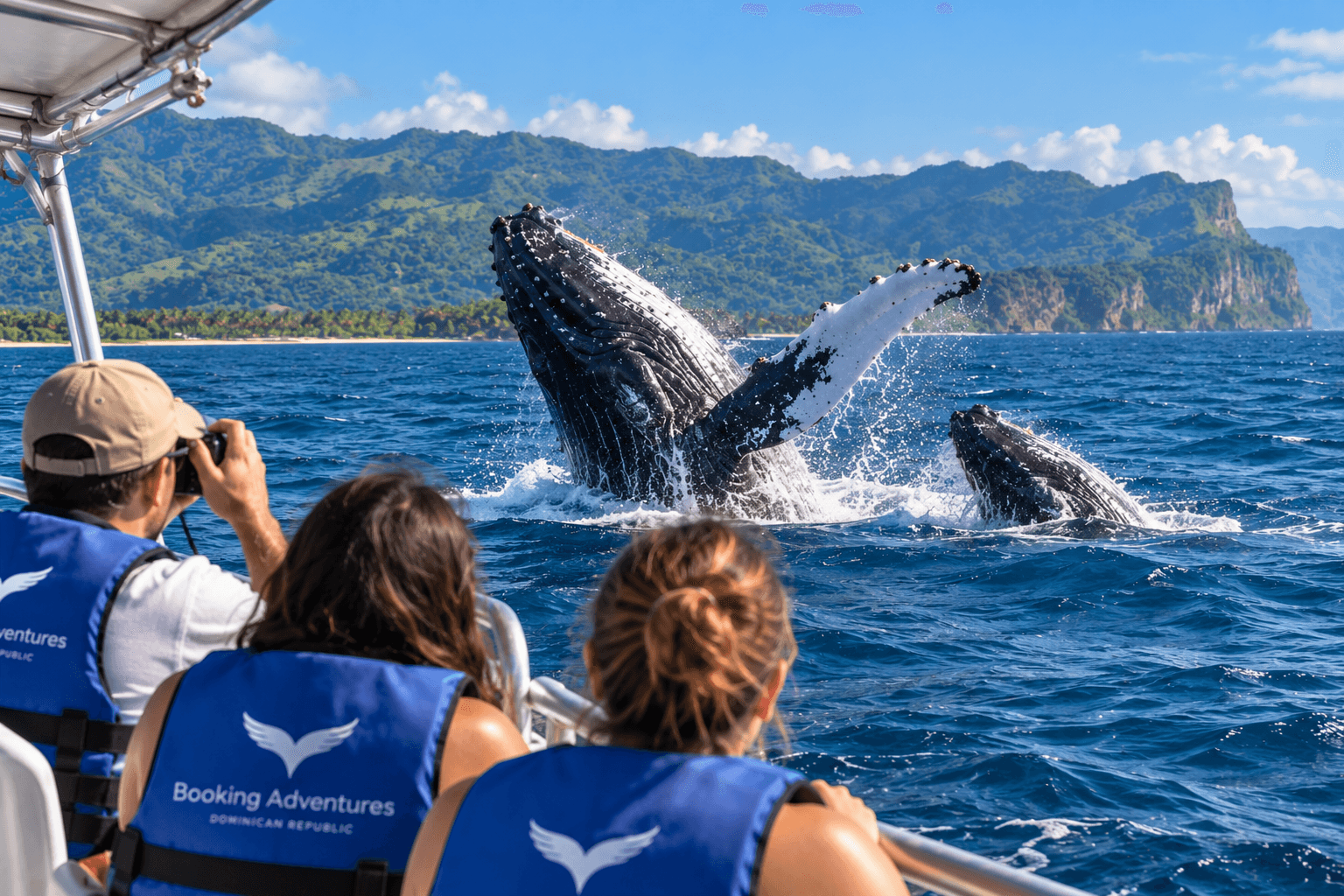
- Breaching
- Groups of adult whales
- Calves practicing surface behavior
- Humpback whale blows visible across the bay
A dramatic breach is unforgettable, but don't judge the quality of a whale encounter only by jumping behavior.
Watching a mother calmly travel with her calf or seeing an enormous tail disappear below the surface can be just as impressive.
Are Whale Sightings Guaranteed in Samaná?
No responsible whale-watching operator should promise a specific whale behavior.
These are wild humpback whales living freely in their natural environment.
Samaná Bay is well known for seasonal humpback whale activity, but nature cannot be scheduled.
Weather, ocean conditions and whale movements can influence each excursion.
This is an important difference between ethical wildlife tourism and an attraction where animal behavior is controlled.
Where Does Samaná Whale Watching Take Place?
Whale-watching excursions operate in Samaná Bay and the surrounding protected marine environment on the northeastern side of the Dominican Republic.
Most visitors join excursions departing from Santa Bárbara de Samaná, commonly simply called Samaná.
From the town's waterfront, boats travel into the bay in search of seasonal humpback whale activity.
The setting itself is part of the experience.
Even between whale encounters, passengers can enjoy views of the mountains, tropical coastline, Samaná Peninsula and surrounding Caribbean landscape.
The Marine Mammal Sanctuary
The Dominican Republic protects important humpback whale habitat through its marine mammal sanctuary.
Whale observation in Samaná is regulated rather than allowing boats to chase whales freely.
According to the International Whaling Commission's Dominican Republic profile, current management measures include limits on the number of vessels observing a whale group, minimum approach distances, speed restrictions and observation-time rules.
These rules exist because the goal is not simply to find whales.
The goal is to observe them without unnecessarily disturbing their natural behavior.
Responsible Whale Watching Rules in Samaná
Visitors may notice that captains do not drive directly toward whales.
That is intentional.
The regulations summarized by the International Whaling Commission include:
- No more than three boats observing a whale group simultaneously
- Boats waiting their turn remaining about 250 meters away
- Minimum distances of about 50 meters from adult whales
- Greater minimum distance—about 80 meters—when calves are present
- Reduced vessel speeds within the sanctuary
- Limited observation time when other boats are waiting
- Life-jacket requirements on smaller vessels
- Inspection and authorization requirements for whale-watching boats
- Swimming with whales prohibited in Samaná Bay
These protections are one reason choosing a responsible authorized whale-watching experience matters.
Can You Swim With Whales in Samaná?
No. Swimming with humpback whales is prohibited in Samaná Bay.
Visitors should be cautious about any excursion advertising swimming, snorkeling or intentionally entering the water with whales inside the Samaná Bay whale-watching area.
Whale watching here is conducted from authorized vessels under regulated observation procedures.
Best Samaná Whale Watching Tour Options
There is more than one way to experience whale season.
Choosing the right excursion depends on how much time you have and what else you want to experience.
1. Whale Watching Only
Best for travelers primarily interested in wildlife.
A dedicated Samaná whale watching tour focuses the experience on finding and observing humpback whales before returning to Samaná.
Recommended internal link: /en/tour/samana-whale-watching-tour
2. Whale Watching + Cayo Levantado
This is one of the most popular combinations.
After whale watching, the excursion continues to Cayo Levantado, a tropical island in Samaná Bay known for beaches, palm trees and clear Caribbean water.
Depending on the tour selected, visitors may have:
- Beach time
- Swimming
- Dominican lunch
- Drinks
- Free time to relax
It is a good option for travelers who want both wildlife and beach time in one day.
Recommended internal link: /en/tour/whale-watching-tour-in-samana
3. Half-Day Whale Watching
Travelers with limited time can choose a shorter excursion focused primarily on humpback whales.
This works especially well for visitors already staying in Samaná.
Recommended internal link: /en/tour/samana-half-day-whale-watching-humpback-whale-watching
4. Private Whale Watching
A private excursion can be attractive for:
- Families
- Couples
- Photographers
- Small private groups
- Travelers wanting more personalized service
Private does not mean that a boat can ignore sanctuary regulations or approach whales more closely.
The same wildlife-protection rules still apply.
Whale Watching and Cayo Levantado: Is It Worth It?
For first-time visitors to Samaná, usually yes.
The combination creates two very different experiences in one trip.
The first part of your day focuses on one of the Caribbean's greatest seasonal wildlife events.
The second allows you to slow down on a tropical island.
Choose whale watching only when whales are your absolute priority or when your schedule is limited.
Choose whale watching + Cayo Levantado if you want a more complete Samaná day trip.
Whale Watching From Punta Cana
Yes, travelers staying in Punta Cana, Bávaro or surrounding resort areas can visit Samaná for whale watching.
Because Punta Cana and Samaná are in different parts of the country, this should be treated as a full-day excursion.
Typical experiences combine:
- Early departure from the Punta Cana area
- Ground transportation toward the departure point
- Boat travel into Samaná Bay
- Whale watching
- Optional Cayo Levantado visit
- Lunch depending on the package
- Return transportation
If you're staying in Punta Cana and whale watching is one of your vacation priorities, reserve an entire day rather than trying to fit another major excursion into the same schedule.
Recommended internal link: /en/tour/whale-watching-cay-raised-from-punta-cana
Whale Watching From Miches
Miches is another useful departure region for visitors staying on the eastern side of the Dominican Republic.
The Dominican Republic's official tourism site specifically highlights whale-watching opportunities connected with Miches during the January–March migration period.
For travelers staying at resorts around Miches, this can reduce the need to travel all the way to central Samaná before beginning the marine portion of the experience.
Whale Watching From Las Terrenas
Travelers staying in Las Terrenas can reach Samaná for a whale-watching excursion.
Because Las Terrenas is located on the Samaná Peninsula, this is much easier than making the journey from Punta Cana or Santo Domingo.
Whale watching can therefore work well as one dedicated day within a longer Samaná Peninsula vacation.
Whale Watching From Las Galeras
Las Galeras is another excellent base for nature-focused travelers.
Visitors can combine their stay around Las Galeras with a whale-watching departure from Samaná and spend other days exploring the beaches and landscapes of the peninsula.
Whale Watching From Santo Domingo
Whale watching is also possible as a long day trip from Santo Domingo.
Expect an early start and a substantial amount of transportation.
If your vacation itinerary allows it, staying overnight in Samaná before or after the excursion can make the overall experience more relaxed.
How Much Does Whale Watching in Samaná Cost?
The price of whale watching in Samaná depends on several factors:
- Departure location
- Group or private excursion
- Whale-watching-only versus combination tour
- Cayo Levantado
- Lunch
- Hotel transportation
- Boat type
- Included entrance or sanctuary-related fees
- Additional activities
A basic excursion departing locally from Samaná will normally cost less than a full-day experience including round-trip transportation from Punta Cana or Santo Domingo.
For that reason, compare what is included, not only the headline price.
Check the live Booking Adventures reservation page for current 2027 pricing before booking.
Morning or Afternoon Whale Watching?
Morning excursions are generally an excellent choice because they leave more of the day available for activities such as Cayo Levantado.
Sea conditions can change throughout the day, so the best departure can also depend on weather.
Whale activity itself is not controlled by a clock.
A whale can breach in the morning, remain relatively quiet later, or do exactly the opposite the following day.
Choose your departure based on the overall itinerary and marine conditions rather than assuming a specific hour guarantees more whales.
What Should You Bring?
Whale watching takes place on open water, so pack differently than you would for a simple beach visit.
Bring:
- Sunscreen
- Sunglasses
- Hat
- Lightweight clothing
- Comfortable footwear
- Camera or phone
- Waterproof phone protection
- Water
- Small towel if visiting Cayo Levantado
- Swimwear for beach combinations
- Light windbreaker or rain layer when appropriate
Avoid carrying unnecessary valuables.
What Camera Is Best for Whale Watching?
You do not need professional equipment to capture great memories.
A modern smartphone can work well, particularly for video.
For dedicated cameras, a moderate telephoto zoom is useful because responsible whale-watching boats maintain regulated distances.
Photography Tip
Don't spend the entire excursion looking through the screen.
Watch the whale's movement.
After a whale surfaces to breathe, be ready for another surfacing or a tail fluke.
Continuous shooting or burst mode can help capture fast behavior such as breaching.
Is Whale Watching in Samaná Good for Children?
Whale watching can be an incredible family experience.
Children have the opportunity to see a huge marine mammal living freely in nature while learning about migration, conservation and ocean ecosystems.
However, parents should consider:
- Length of the trip
- Child's comfort on boats
- Sea conditions
- Sun exposure
- Seasickness
- Life-jacket requirements
- Full-day transportation for departures from Punta Cana or Santo Domingo
Families staying directly in Samaná may find a shorter tour easier with small children.
What About Seasickness?
Samaná Bay is still a marine environment, and movement varies with weather and sea conditions.
If you're prone to motion sickness:
- Eat a light meal before departure
- Avoid excessive alcohol the night before
- Stay hydrated
- Look toward the horizon
- Spend time in fresh air when possible
- Choose a stable vessel when options are available
Travelers who regularly use motion-sickness medication should discuss the appropriate option with their doctor or pharmacist before travel.
What Happens if the Weather Is Bad?
Marine tours depend on safe operating conditions.
Strong winds, rough seas or other unsafe conditions can result in schedule adjustments or cancellations.
This is one reason travelers should provide a valid phone number or WhatsApp contact when booking.
If whale watching is one of the main reasons for visiting Samaná, avoid placing the excursion on the final possible day of your trip. Having some schedule flexibility can help if weather forces a change.
Whale Watching vs Visiting the Whale Museum
If you're visiting outside whale season, consider the Whale Museum in Santa Bárbara de Samaná.
Dominican Republic Tourism describes the museum as an educational alternative outside the main viewing season and notes that exhibits include a roughly 40-foot humpback whale skeleton.
During whale season, the museum can also complement a boat excursion by helping visitors better understand the animals they have seen.
Why Choose Samaná for Whale Watching?
There are whale-watching destinations around the world.
Samaná is special because it combines:
Humpback whales + tropical landscapes + Caribbean climate + accessible day tours + protected marine habitat + Cayo Levantado + Dominican culture.
You can spend the morning scanning the horizon for an enormous humpback whale and later relax beneath palm trees beside the Caribbean Sea.
Few wildlife excursions combine those experiences so naturally.
How to Choose a Responsible Samaná Whale Watching Tour
Before booking, look beyond the cheapest advertised price.
Choose a tour that provides clear information about:
- Authorized whale observation
- Safety equipment
- Experienced captain and crew
- Knowledgeable guides
- Sanctuary regulations
- What's included
- Meeting point
- Transportation
- Cancellation policy
- Weather procedures
Responsible operators should never promise to chase whales, touch them, swim with them in Samaná Bay or guarantee dramatic behavior.
The best wildlife encounter is one where visitors enjoy the experience while the whales remain free to behave naturally.
Should You Book Samaná Whale Watching in Advance?
During the main whale season, booking ahead is recommended—especially if:
- You have only one available day
- You're visiting in February
- You need Punta Cana transfers
- You want a private excursion
- You're traveling with a larger group
- You want whale watching + Cayo Levantado
Booking early gives you more flexibility when choosing the right departure and tour style.
Plan Your Samaná Whale Watching Adventure
There are many beautiful excursions in the Dominican Republic, but only a few are completely dependent on a spectacular natural migration.
Whale watching is one of them.
For only a few months each year, humpback whales gather around the waters of Samaná and the Dominican Republic.
Then they leave.
That limited season is what makes the experience so special.
If you're visiting between January and March 2027, consider giving one day of your Dominican Republic vacation to the ocean.
Watch the horizon.
Look for the blow.
Wait for the enormous dark back to appear.
And when the tail rises above Samaná Bay, you'll understand why travelers return year after year to see the humpback whales.
Book Whale Watching in Samaná
Explore available Samaná whale watching tours, half-day excursions, private experiences and whale watching + Cayo Levantado combinations with Booking Adventures.
Main booking link: /en/tour/samana-whale-watching-tour
Frequently Asked Questions About Whale Watching in Samaná
What is the best time for whale watching in Samaná?
The main whale-watching period is January through March. For travelers organizing a trip specifically around humpback whales, mid-January through March is the strongest planning window.
Will there be whale watching in Samaná in 2027?
Humpback whales migrate to the Dominican Republic seasonally each winter, and travelers can plan around the traditional January–March period. Exact official operating dates for the 2027 season should be checked once announced.
What kind of whales can you see in Samaná?
The main species observed during the seasonal whale-watching period is the North Atlantic humpback whale.
Why do humpback whales come to Samaná?
The warm waters around the Dominican Republic form important breeding habitat where humpback whales mate, give birth and care for calves before migrating north again.
Is February a good month for whale watching in Samaná?
Yes. February falls near the center of the traditional whale-watching season and is one of the most popular months for planning a trip.
Can I see whales from Punta Cana?
Whale watching does not normally take place directly off Punta Cana's resort beaches. Instead, full-day excursions transport travelers toward the Samaná whale-watching area.
Can I combine whale watching with Cayo Levantado?
Yes. Whale watching + Cayo Levantado is one of the most popular Samaná combinations and allows visitors to experience both humpback whales and a Caribbean island during the same excursion.
Can you swim with humpback whales in Samaná?
No. Swimming with whales is prohibited in Samaná Bay under the whale-watching regulations described by the International Whaling Commission.
Are Samaná whale sightings guaranteed?
No. Humpback whales are wild animals, so no responsible operator can guarantee a particular sighting or behavior.
Is whale watching in Samaná suitable for children?
Yes, many families enjoy whale watching. Parents should consider the child's age, comfort on boats, sea conditions, sun exposure and length of the overall excursion.
How long does a whale watching tour take?
Dedicated whale-watching excursions can take several hours, while combinations with Cayo Levantado or transportation from Punta Cana and Santo Domingo can become full-day experiences.
Should I choose whale watching only or whale watching with Cayo Levantado?
Choose whale watching only if wildlife is your priority or you have limited time. Choose the Cayo Levantado combination if you also want swimming, beach time and a more complete day in Samaná.
Where do whale watching tours leave from in Samaná?
Many excursions depart from the waterfront area of Santa Bárbara de Samaná before traveling into Samaná Bay.
Do I need to book whale watching in advance?
Advance reservations are recommended during peak whale season, particularly for February dates, private tours, larger groups and excursions requiring hotel transportation.
Is Samaná one of the best places to see whales in the Dominican Republic?
Yes. Samaná Bay is one of the country's principal accessible whale-watching destinations and has a long-established whale-watching industry centered on seasonal humpback whales.
Local explorer & expert guide in Los Haitises National Park.