Monteverde: Coffee Tour and Sugar Cane El Pueblo
5.0(61)
Da
Dettagli$51
Imagine standing high in the mountains of Costa Rica, surrounded by cool mist, emerald-green vegetation, and the fresh scent of the cloud forest. Ahead of you lies an enormous volcanic landscape shaped by thousands of years of geological activity. Wisps of steam rise from the depths of an active crater while the surrounding forest comes alive with birdsong, hummingbirds, colorful plants, and native wildlife.
This is the experience waiting for you on the Poás Volcano National Park Flora and Fauna Tour.
Located in Costa Rica's Central Volcanic Range, Poás Volcano National Park is one of the country's most remarkable natural destinations. The volcano rises to approximately 2,708 meters above sea level, and its protected landscape combines volcanic terrain, high-altitude cloud forest, unique vegetation, and abundant wildlife. The park is home to one of Costa Rica's most impressive volcanic sights: the immense main crater, which measures roughly 1,320 meters across and reaches around 300–320 meters in depth.
Rather than simply visiting a viewpoint, this guided nature experience gives you an opportunity to appreciate Poás from several perspectives. You can observe the dramatic volcanic landscape, explore the surrounding forest, learn about the ecosystems that thrive at high altitude, and discover how geology and biodiversity are connected.
With an expert local naturalist guide accompanying you, the experience becomes much more than sightseeing. Every trail, plant, bird call, and volcanic feature can become part of the story.
Whether you are visiting Costa Rica for the first time, staying in San José or Alajuela, traveling with family, or simply looking for an easy and scenic nature adventure, this Poás Volcano tour offers a memorable way to experience one of Costa Rica's iconic natural wonders.
Poás is not an ordinary mountain.
It is an active volcano whose landscape continues to be shaped by powerful geological forces. The national park protects approximately 6,506 hectares of highland ecosystems and volcanic terrain, with habitats ranging from cloud forest to areas of shorter vegetation and sparse plant life around the crater.
That diversity is one of the reasons a visit to Poás feels so different from a conventional rainforest excursion.
As you move through the protected area, the scenery can change quickly. Dense vegetation gives way to more open volcanic surroundings, while cool mountain air replaces the warmer conditions found in Costa Rica's lowlands. The forest is filled with epiphytes, bromeliads, tree ferns, and other high-altitude plants adapted to the distinctive environment.
Your guide helps transform these details into an engaging natural-history experience.
Instead of simply walking past the vegetation, you learn to notice it. Instead of hearing an unfamiliar bird call and moving on, you have the opportunity to understand which species may be nearby. And instead of looking at the crater as a beautiful photograph, you gain a deeper appreciation for the volcanic processes that created the landscape.
The result is an immersive Costa Rica nature tour that combines volcano sightseeing, cloud-forest exploration, wildlife observation, photography, and environmental education.
The main crater is the unforgettable centerpiece of a visit to Poás Volcano.
After entering the national park and beginning your guided experience, the journey leads toward the crater lookout. As the landscape opens before you, the scale of the volcano becomes immediately apparent.
The main crater is approximately 1.32 kilometers in diameter and about 300 meters deep. Within this enormous volcanic depression is a hot, acidic lagoon associated with the volcano's ongoing activity. Fumaroles and volcanic gases contribute to the dramatic appearance of the crater area.
Seeing an active volcano at close range creates a completely different feeling from viewing one from a distant mountain road.
You can stand at the designated viewpoint and take in the immense crater while your guide explains what you are seeing. The colors, textures, steam, volcanic formations, and surrounding mountains combine to create a landscape that can feel almost otherworldly.
It is one of those moments when photographs rarely communicate the full sense of scale.
The crater seems enormous in person. The surrounding mountains and forest provide a dramatic frame, while the cool high-altitude atmosphere adds to the experience. On clear days, the views can be especially impressive, but even changing mountain weather contributes to the unique character of Poás.
For photographers, this is an obvious highlight.
For nature lovers, it is an opportunity to observe the relationship between volcanic activity and the ecosystems surrounding it.
For families, it offers an exciting educational experience that can make geology feel real and tangible.
And for travelers simply searching for something unforgettable to do in Costa Rica, standing before the main crater of Poás can become one of the defining memories of the trip.
Although the crater is the headline attraction, the surrounding cloud forest is an equally important part of the Poás experience.
At high elevation, moisture, cool temperatures, and frequent cloud cover create conditions where specialized plants flourish. The forest can feel completely different from the tropical landscapes many travelers imagine when they think of Costa Rica.
Instead of broad lowland rainforest, you encounter a cooler mountain ecosystem filled with mosses, bromeliads, ferns, epiphytes, shrubs, and high-altitude trees.
Walking through this environment can feel peaceful and almost dreamlike.
Mist may drift between the trees. Tiny birds move quickly through the vegetation. Leaves glisten with moisture. The sounds of the forest become more noticeable as you slow down and pay attention.
This is why the guided aspect of the tour matters.
A naturalist guide can help you see details that might otherwise be overlooked. A plant that appears ordinary at first may have a fascinating adaptation to high-altitude conditions. A distant bird call may reveal the presence of a species that you would never have noticed on your own.
The goal is not simply to cover distance.
It is to experience the forest.
One of the most rewarding aspects of this tour is discovering the remarkable plant life that surrounds the volcano.
Poás National Park contains several distinct habitats, including cloud forest, humid forest, shorter or stunted forest, and areas with sparse vegetation closer to the crater. This creates a rich botanical environment where different plant communities respond to changes in elevation, temperature, moisture, soil, and volcanic conditions.
Among the plants associated with the park are tree ferns, bromeliads, and the distinctive poor man's umbrella, along with other highland species.
For travelers who are not professional botanists, these plants can still make the experience fascinating.
Your guide can explain how plants survive in a cool, humid environment, why epiphytes grow on trees, how forest vegetation responds to changing conditions, and why protected volcanic ecosystems are important for Costa Rica's biodiversity.
The result is a more meaningful nature walk.
Instead of seeing a wall of green, you begin to recognize different layers of the ecosystem.
You may notice plants growing high above the forest floor, moss covering branches, ferns emerging from shaded areas, and colorful flowers attracting hummingbirds and other pollinators.
Every section of the trail offers another opportunity to look closer.
Poás is also a rewarding destination for birdwatchers.
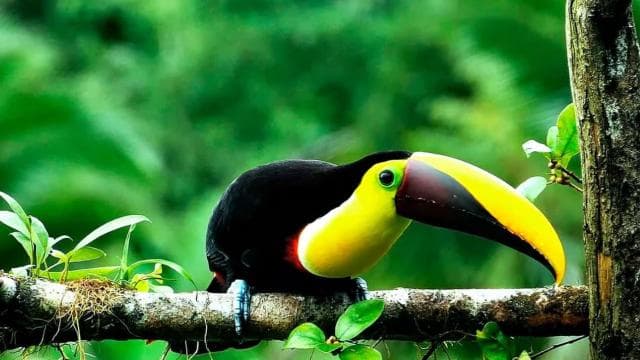
The protected area supports a variety of bird species, including hummingbirds and other highland birds. Official park information lists species such as hummingbirds, quetzals, robins, sparrows, and other mountain birds among the wildlife associated with the area.
Because many birds are small and fast-moving, wildlife observation is often about patience.
Your guide can help you slow down and listen.
A sudden movement among leaves may reveal a tiny hummingbird. A distinctive call may indicate a bird hidden somewhere in the canopy. A flash of color may be visible for only a few seconds before the animal disappears into the forest.
These moments are part of what makes a guided wildlife walk so rewarding.
You never know exactly what you may encounter.
Rather than promising guaranteed sightings, the experience focuses on discovering the natural environment and increasing your chances of noticing the wildlife that inhabits it.
Bring binoculars if you enjoy birdwatching. Even if you are a casual observer, binoculars can make small birds and distant wildlife much easier to appreciate.
And remember to keep your camera ready.
Some of the best wildlife moments happen unexpectedly.
Birds are not the only animals that inhabit the protected landscape.
Poás National Park has recorded mammals including squirrels, weasels, porcupines, rabbits, and shrews, alongside its diverse bird population.
Wild animals are naturally unpredictable, so sightings depend on weather, season, time of day, and animal behavior. That uncertainty is part of the adventure.
A guided walk encourages you to become more observant.
You may notice movement in the vegetation, tracks along a trail, a distant animal call, or signs that wildlife has recently passed through the area.
Even when an animal remains hidden, learning about the species that inhabit the forest adds another dimension to the visit.
The experience becomes less about checking wildlife off a list and more about understanding the ecosystem as a living environment.
That philosophy makes this tour especially appealing to travelers who value nature and responsible wildlife observation.
Exploring Poás with a knowledgeable local guide gives you access to insights that are difficult to gain from a self-guided visit.
Your English- and Spanish-speaking naturalist guide can explain the geological history of the volcano, the formation of its crater, the characteristics of the surrounding ecosystems, and the wildlife that calls the area home.
The guide also helps connect individual observations to the larger story of Costa Rica's natural environment.
A bromeliad is no longer just a plant.
A fumarole is no longer simply steam rising from the crater.
A hummingbird is no longer just a quick flash of color.
Each becomes part of a larger ecological and geological story.
This educational element makes the tour particularly valuable for families, couples, photographers, nature enthusiasts, and travelers who want to understand rather than simply observe.
One of the most fascinating things about Poás is the contrast between its powerful geology and delicate biodiversity.
The volcano represents enormous natural forces.
The forest represents adaptation and resilience.
At the crater, you are reminded that Costa Rica's landscape is still geologically active. Around the volcano, however, life has found ways to flourish despite challenging conditions.
Plants grow in cool, wet environments.
Birds move through the canopy.
Mammals live among the vegetation.
Tiny organisms contribute to the health of the soil.
This interaction between geology and biology is one of the central themes of a visit to Poás Volcano National Park.
It is also what makes the destination ideal for an educational nature tour.
For travelers staying in San José or Alajuela, Poás Volcano offers a convenient opportunity to experience a dramatically different environment without committing to a long multi-day expedition.
The journey into the mountains takes you away from urban surroundings and into a cooler, greener world.
As you approach the highlands, the scenery changes.
Roads climb through mountain communities and agricultural landscapes before the protected volcanic environment becomes the focus of the journey. The surrounding Poás region is known for its mountain climate, agriculture, forests, and strong connection with the volcano.
This makes a Poás excursion an excellent choice for travelers who want to add nature and adventure to a Costa Rica itinerary based around the capital region.
You can enjoy the dramatic scenery of an active volcano without needing an extreme hiking expedition.
The experience is focused on accessibility, interpretation, scenery, and discovery.
Not every memorable Costa Rica adventure requires a demanding hike.
This Poás Volcano tour is designed around a relatively accessible experience, allowing travelers to appreciate spectacular scenery without undertaking a strenuous mountain expedition.
The combination of a guided nature walk and crater viewing makes the experience suitable for many different types of travelers.
Families can enjoy the educational aspects.
Couples can share a peaceful mountain experience.
Solo travelers can discover the landscape with the assistance of a knowledgeable guide.
Older travelers who prefer shorter walks can appreciate the focus on accessible sightseeing rather than physically demanding trekking, while travelers who love photography can take advantage of the dramatic volcanic and forest scenery.
As with any outdoor activity, comfortable walking shoes are recommended because natural paths can be uneven, and weather conditions at high elevation can change quickly.
The reward is significant: extraordinary scenery without requiring an extreme physical challenge.
One of the first things many visitors notice at Poás is the temperature.
The summit environment is considerably cooler than Costa Rica's tropical lowlands. Official information lists an average temperature around 12°C in the park, although actual conditions can vary.
That cool mountain air is part of the charm.
After spending time in warmer parts of Costa Rica, arriving in the highlands can feel refreshing.
You may want a warm layer when you begin the experience, particularly if clouds or rain move through the area.
Weather can also change rapidly in the mountains, which is why bringing a rain jacket or poncho is a smart choice.
The changing conditions can create beautiful atmospheric scenes, too.
Clouds moving across the forest.
Sunlight breaking through mist.
Moisture sparkling on leaves.
Steam rising from the volcanic landscape.
These details can transform a simple nature walk into an unforgettable visual experience.
If you enjoy photography, bring your camera or smartphone.
Poás offers an extraordinary variety of subjects within a relatively compact experience.
The main crater provides the dramatic centerpiece.
The cloud forest offers texture and atmosphere.
Plants provide close-up details.
Birds and other wildlife create opportunities for spontaneous images.
Mountain scenery adds depth to landscape photographs.
The changing weather can make the same viewpoint look completely different from one moment to the next.
For the best experience, avoid rushing from one viewpoint to another.
Give yourself time to observe.
Listen to the forest.
Watch the movement of clouds.
Look for birds in the vegetation.
Pay attention to the colors and textures of the volcanic landscape.
Sometimes the most memorable photograph is not the largest panorama but a small detail that captures the atmosphere of the place.
A common mistake when planning a visit to Poás is to think of the destination only as a crater viewpoint.
The volcano is undeniably spectacular, but the surrounding ecosystem is equally important.
The national park protects a complex high-altitude environment where volcanic geology, cloud forest, wildlife, water resources, and specialized plant life come together.
Official park information highlights the area's diverse habitats and significant biological resources, while Costa Rica's protected-area authorities identify Poás as one of the country's major natural attractions.
That means your experience can be as much about the journey as the destination.
The crater gives you the dramatic moment.
The forest gives you the atmosphere.
The wildlife gives you surprise.
The guide gives you understanding.
Together, they create a much richer Costa Rica travel experience.
This tour is especially appealing if you enjoy learning while you travel.
Perhaps you have always wondered how volcanoes shape landscapes.
Maybe you want to understand why cloud forests are so biologically rich.
Perhaps you enjoy identifying birds.
Or maybe you simply want to see one of Costa Rica's most famous natural attractions with someone who can explain what you are seeing.
The Poás Volcano National Park Flora and Fauna Tour brings these interests together.
Instead of separating geology and wildlife into different experiences, it combines them in one scenic journey.
You can look into the crater, then explore the forest.
You can learn about volcanic activity, then search for birds.
You can admire panoramic views, then examine the plants growing along the trail.
Every part of the experience complements another.
Costa Rica is famous for adventure, but adventure does not always have to mean adrenaline.
Sometimes the best adventure is stepping into an environment that feels completely different from your everyday surroundings.
At Poás, the adventure is discovery.
You climb into the highlands.
You enter a protected forest.
You approach an active volcanic crater.
You listen for birds.
You search for wildlife.
You breathe cool mountain air.
You stop for photographs.
And you let the landscape set the pace.
The result is an experience that feels adventurous without being exhausting.
It is active enough to be engaging, yet peaceful enough to be relaxing.
Families traveling in Costa Rica often look for activities that combine fun with education.
Poás is an excellent setting for that combination.
Children can see a real volcano rather than simply reading about one.
They can learn how volcanic landscapes form, observe unusual plants, look for birds, and discover how animals adapt to their environment.
The experience can turn a vacation day into an outdoor classroom.
Parents can enjoy the scenery while younger travelers stay engaged through wildlife spotting and geological discoveries.
Because the experience is not centered on strenuous hiking, it can also be easier to incorporate into a broader family itinerary.
Of course, parents and guardians should always consider individual mobility, weather conditions, and children's comfort when planning any outdoor excursion.
For couples, Poás offers something completely different from a beach day or city excursion.
Imagine walking together through a misty cloud forest, listening to birds in the canopy, and eventually arriving at a dramatic volcanic viewpoint.
The combination of scenery and atmosphere creates plenty of memorable moments.
You can take photographs together, enjoy the cool mountain air, and share the experience of seeing an active volcano.
It is an ideal addition to a Costa Rica honeymoon, anniversary trip, romantic getaway, or simply a vacation where you want to experience something extraordinary together.
The quieter forest environment also provides a welcome change from busy tourist areas.
Travelers interested in ecology will find plenty to appreciate at Poás.
The park is a protected environment containing multiple habitats and a wide range of plant and animal life. Its ecosystems also demonstrate how elevation and volcanic conditions influence biodiversity.
A guided tour encourages responsible observation.
You are not simply visiting a scenic attraction.
You are entering a protected natural environment where conservation matters.
Following park regulations, staying on designated paths, avoiding disturbance to wildlife, and respecting the surrounding vegetation all contribute to preserving the destination for future visitors.
That makes the experience especially meaningful for eco-conscious travelers.
Every part of Poás tells a story.
The crater tells the story of volcanic activity.
The forest tells the story of adaptation.
The birds tell the story of biodiversity.
The cool climate tells the story of elevation.
The vegetation tells the story of moisture and soil.
The trails tell the story of people seeking to understand and protect this extraordinary environment.
A naturalist guide helps you read these stories.
Instead of simply seeing a crater, you begin to understand the geological forces behind it.
Instead of simply seeing a forest, you begin to understand the ecological relationships within it.
Instead of simply seeing a bird, you begin to appreciate its place in the mountain ecosystem.
That is what turns a sightseeing excursion into a genuine learning experience.
There are many ways to experience Costa Rica, but this tour brings several of the country's defining qualities together in one destination.
Poás is one of Costa Rica's most important volcanic landmarks and remains an active volcanic system. Its enormous crater and volcanic features provide an extraordinary natural spectacle.
The surrounding protected landscape includes cloud-forest habitats filled with specialized plants and wildlife.
The park provides habitat for numerous birds and mammals, making it a rewarding destination for nature observation.
A local naturalist guide adds context to the scenery, geology, flora, and fauna.
The experience focuses on scenic walking and observation rather than extreme physical exertion.
Volcanic landscapes, misty forests, mountain scenery, plants, and wildlife provide abundant photographic subjects.
Poás is an attractive excursion for travelers based around the San José and Alajuela areas who want to experience Costa Rica's highlands and volcanic landscapes.
The best way to approach this experience is with curiosity.
Do not simply ask, "What will I see"
Ask:
What created this crater?
Why does the forest look different here?
Which birds live at this elevation?
How do plants survive in the cloud forest?
Why does volcanic soil support such diverse ecosystems?
What happens beneath the surface of an active volcano?
Your guide can help answer these questions while you explore.
That is what makes the tour more than a photo opportunity.
It becomes a chance to connect with Costa Rica's natural environment.
Costa Rica has a reputation for spectacular beaches, tropical forests, waterfalls, and adventure activities. Yet the country's volcanic highlands reveal another side of its natural character.
Poás is cooler.
Quieter.
More atmospheric.
More geological.
The landscape feels powerful but peaceful at the same time.
One moment you may be focused on a steaming crater.
The next, you may be watching a hummingbird move between flowers.
Then you may find yourself surrounded by cloud forest, with mist drifting through the trees.
That constant contrast is what makes Poás so memorable.
It is a destination where immense geological forces and delicate living ecosystems exist side by side.
Long after your trip ends, certain travel moments remain vivid.
Standing before the Poás crater can be one of them.
The scale of the volcanic depression.
The unusual colors.
The cool mountain air.
The mist moving through the forest.
The sound of birds.
The excitement of searching for wildlife.
The feeling of standing beside an active volcano.
These are not simply attractions to check off a list.
They become memories connected to a place.
And because the experience combines nature, geology, wildlife, and scenic exploration, it appeals to travelers who want more from Costa Rica than a standard sightseeing stop.
A destination as complex as Poás deserves more than a quick visit.
With an expert naturalist guide, you can slow down and appreciate the details.
Your guide can help identify plants, explain wildlife behavior, describe volcanic features, and put the surrounding environment into context.
The tour is available with English- and Spanish-speaking guidance, helping international visitors feel comfortable while learning about the destination.
Personal assistance is also included as part of the experience, allowing you to focus on enjoying the landscape rather than worrying about the small details.
A bottle of water, entrance fee, parking fee, and travel insurance are included according to the tour information, creating a convenient package for travelers who want a guided Poás experience.
The right preparation can make your visit even more enjoyable.
Because Poás is located at high elevation, temperatures can be significantly cooler than in San José or Costa Rica's coastal regions.
Wear comfortable walking shoes with good grip.
Bring warm layers.
Carry a rain jacket or poncho, particularly during wetter periods.
Keep your camera or smartphone accessible.
If you enjoy birdwatching, bring binoculars.
And most importantly, come prepared for changing mountain weather.
Clouds and rain are part of the highland environment, but they can also create some of the most atmospheric scenery of the day.
Visiting a national park is also an opportunity to practice responsible tourism.
Poás is a protected natural area managed for conservation, biodiversity, and visitor enjoyment. Costa Rica's conservation system emphasizes sustainable management and protection of natural resources within protected areas.
During your tour, respect designated trails and viewing areas.
Do not feed wildlife.
Avoid touching plants or removing natural materials.
Keep noise levels low when observing birds and animals.
Follow your guide's instructions and park regulations.
Responsible behavior helps protect the environment while ensuring that other visitors can enjoy the same sense of discovery.
From the moment you enter the national park, the scenery begins to change.
The air becomes cooler.
The forest becomes denser.
The landscape becomes more mountainous.
The sounds of the city disappear.
Then comes the crater.
A vast volcanic depression opens before you.
Steam and volcanic features remind you that the landscape is still active.
After taking in the crater, your attention turns back toward the forest.
Now the details become clearer.
Leaves.
Ferns.
Bromeliads.
Bird calls.
Mountain plants.
Wildlife signs.
The experience moves naturally between the dramatic and the delicate.
That is the essence of the Poás Volcano National Park Flora and Fauna Tour.
It is a journey from volcanic power to forest life, from panoramic scenery to tiny natural details, and from simple sightseeing to meaningful discovery.
If your Costa Rica itinerary includes San José, Alajuela, or the Central Valley, a visit to Poás Volcano National Park can add a completely different dimension to your trip.
You do not need to be an experienced hiker.
You do not need specialized equipment.
You do not need to spend days deep in the wilderness.
You simply need a sense of curiosity and an appreciation for nature.
The combination of a spectacular active volcano, high-altitude cloud forest, native wildlife, unique flora, and expert interpretation makes this experience one of the most rewarding ways to explore Costa Rica's volcanic highlands.
Poás is a place where nature feels powerful, alive, and surprisingly close.
Come for the crater.
Stay for the forest.
Listen for the birds.
Look for wildlife.
Learn from the landscape.
And leave with a deeper appreciation for the extraordinary natural world of Costa Rica.
A Costa Rica vacation should contain moments that make you stop and look around.
The Poás Volcano National Park Flora and Fauna Tour is designed to create exactly those moments.
Stand before an enormous active volcanic crater.
Walk beneath the cool canopy of a cloud forest.
Discover unusual highland plants.
Search for hummingbirds and native wildlife.
Learn from an experienced naturalist guide.
Capture photographs of landscapes unlike anything you may see elsewhere.
And experience the refreshing atmosphere of Costa Rica's volcanic mountains.
Whether you are a first-time visitor, a dedicated nature lover, a wildlife enthusiast, a photographer, a couple seeking a memorable day together, or a family looking for an educational adventure, Poás offers an experience that can become one of the highlights of your Costa Rica journey.
The volcano is waiting.
The forest is alive.
And an unforgettable day in the Costa Rican highlands is ready to begin.
The experience is designed as a relatively short and accessible guided nature excursion rather than a strenuous full-day trek. The exact duration can vary depending on the tour schedule, park operating conditions, weather, and time spent observing the crater and surrounding nature.
Travelers should allow enough time for the guided volcano and nature experience, including the crater viewpoint and exploration of the surrounding highland environment.
Poás Volcano National Park is located in Costa Rica's Central Volcanic Range, within convenient reach of the Central Valley and the cities of San José and Alajuela.
The volcano reaches approximately 2,708 meters above sea level, creating a significantly cooler mountain environment than many of Costa Rica's tropical lowland destinations. (sinac.go.cr)
Yes. Viewing the impressive main crater is one of the principal highlights of the experience.
However, crater visibility depends on weather, volcanic conditions, and official park operating conditions. Cloud and mist can sometimes obscure the view, so clear visibility should not be considered guaranteed. SINAC notes that conditions at the viewpoints can change and that the principal attractions may not always be visible. (sinac.go.cr)
Yes. Poás is an active volcano and remains a geologically dynamic environment.
Its enormous main crater and volcanic features are among the main reasons travelers visit the national park. Because it is an active volcanic area, visitors must always follow current instructions from park officials and guides. (sinac.go.cr)
Yes. The supplied tour description focuses on an accessible guided nature walk rather than a demanding technical hike.
Travelers should still be comfortable walking on potentially uneven paths and spending time outdoors at high elevation. Comfortable walking shoes are recommended.
Poás can be an excellent destination for families interested in nature, volcanoes, wildlife, and outdoor education.
Children can see a real volcanic crater, learn about geology, observe plants, and search for birds and other wildlife.
Parents should consider each child's walking ability, tolerance for cool or rainy weather, and ability to follow national park safety rules.
The experience can be suitable for many older travelers because it emphasizes scenic sightseeing and a relatively accessible nature experience rather than strenuous trekking.
However, individual mobility should always be considered. Visitors should be comfortable walking on natural or uneven surfaces and coping with cool mountain weather.
No advanced hiking experience is required for this experience.
The tour is designed around a guided volcano and nature walk, not a demanding mountain expedition.
Comfortable footwear is important, but specialized climbing or hiking equipment is not required.
Wear comfortable outdoor clothing and dress in layers.
Because Poás is located at high elevation, temperatures can be considerably cooler than in Costa Rica's lowlands. The park reports an average temperature of approximately 12°C. (sinac.go.cr)
Recommended clothing includes:
Yes.
A rain jacket or poncho is strongly recommended because weather in the highlands can change quickly.
Even when the forecast looks favorable, mountain clouds and rain can develop during the day.
No lunch is listed among the supplied tour inclusions.
The included services are the Poás Volcano National Park entrance fee, guided volcano and nature walk, English- and Spanish-speaking naturalist guide, water bottle, travel insurance, parking fee, and personal assistance.
If meals are important for your itinerary, confirm the current tour schedule and meal arrangements before booking.
Yes. The supplied tour information states that a water bottle is included.
Nevertheless, travelers who need additional water should bring their own supply.
Official park information advises visitors to carry water, and water available within the park should not be assumed to be potable. (sinac.go.cr)
Yes. The supplied tour information specifically lists the entrance fee to Poás Volcano National Park as included.
Poás also operates through an official visitor reservation system, so travelers should follow the latest park-entry requirements when planning their visit. (serviciosenlineasa.sinac.go.cr)
Yes.
The tour includes an expert local naturalist guide who speaks English and Spanish.
The guide provides information about the volcano, geology, forest ecosystem, flora, fauna, wildlife, and natural history throughout the experience.
Wildlife sightings are naturally unpredictable, but Poás is home to a variety of birds and mammals.
Possible wildlife includes hummingbirds and other highland birds, as well as mammals such as squirrels, weasels, rabbits, skunks, and armadillos. Official park information documents a diverse range of fauna within the protected area. (sinac.go.cr)
Because these are wild animals, sightings cannot be guaranteed.
Yes.
Birdwatching is one of the enjoyable activities available during the guided nature experience.
Poás provides habitat for hummingbirds and numerous other highland birds.
Bring binoculars if you have them, and listen carefully for bird calls while walking through the forest.
The highland environment contains specialized vegetation adapted to cool, humid conditions.
Depending on the area visited, you may encounter ferns, bromeliads, mosses, highland trees, and other cloud-forest vegetation.
The park's official information identifies distinctive vegetation including the poor man's umbrella and oak species within its protected ecosystems. (sinac.go.cr)
Your naturalist guide can help identify plants and explain their role in the ecosystem.
The tour takes place in a high-altitude mountain environment where rain and cloud cover are possible.
A rain jacket or poncho is recommended.
Weather can also affect visibility at the crater. If conditions change, always follow instructions from your guide and park officials.
Safety and official park operating decisions take priority over sightseeing.
Yes.
Photography is one of the major attractions of the experience.
You can photograph the volcanic crater, cloud forest, mountain scenery, plants, and—if encountered—wildlife.
Keep your camera or smartphone protected from rain and mist.
When photographing wildlife, maintain a respectful distance and never disturb animals for a better picture.
No, binoculars are not required, but they are highly recommended for travelers interested in wildlife and birdwatching.
They can make it much easier to observe small or distant birds without approaching them.
Dopo la prenotazione, il nostro team ti contatterà via WhatsApp / Email per confermare l'orario esatto di ritiro.
Se hai scelto un punto di incontro centrale, presentati all'orario di partenza stabilito.