How Deep Can Humpback Whales Dive Understanding Their Diving Abilities
Humpback whales are famous for their spectacular surface displays, including breaches, tail slaps, and powerful blows. Yet much of their lives takes place beneath the ocean's surface, where they travel, rest, interact, and sometimes remain underwater for extended periods.
One fascinating question is how deep humpback whales can dive. These large marine mammals can descend well below the surface, even though they must return to the surface to breathe air.
Their diving abilities depend on several factors, including their activity, physical condition, and environment. Understanding how humpback whales dive provides another way to appreciate these animals, particularly during the seasonal whale-watching period in Samaná Bay, Dominican Republic.
How Deep Can Humpback Whales Dive?
Humpback whales are capable of diving hundreds of meters underwater, although the depth varies considerably between dives.
There is no single maximum depth that describes every humpback whale. Recorded dive depths depend on the individual whale, the population being studied, the activity taking place, and the tracking equipment researchers use.
Many dives are relatively shallow, particularly when whales are traveling near the surface. Other dives can be much deeper, especially when whales are exploring underwater areas or searching for prey.
It is important to distinguish a typical dive from a maximum recorded dive. The deepest observed dives do not represent what a whale does on every journey underwater.
Humpbacks are not generally considered the deepest-diving whales. Some other cetaceans, including sperm whales, are specialized for much deeper dives.
Why Do Humpback Whales Dive Underwater?
Humpback whales dive for different reasons, and their behavior changes with their surroundings.
To travel underwater
A whale may descend while moving between locations or change its depth as it travels. Underwater movement can be part of ordinary travel rather than a sign that the animal is searching for food.
To explore their environment
Diving allows whales to move through different layers of the ocean. Researchers study these movements to understand how whales use their habitat and how their behavior changes with environmental conditions.
To rest
Humpback whales need periods of rest, but resting does not always mean remaining motionless at the surface. They can display slow movements and periods of reduced activity while underwater.
Their resting behavior varies, and scientists continue to investigate how whales balance rest with the need to surface for breathing.
To feed
In feeding areas, humpbacks may dive to reach concentrations of krill or small fish. Some feeding dives involve coordinated movements and changes in depth.
However, humpbacks that visit Samaná Bay during the breeding season are not necessarily engaged in the same feeding activities observed on their northern feeding grounds.
How Do Humpback Whales Handle Underwater Pressure?
Pressure increases as depth increases. For every additional 10 meters of seawater, pressure rises by roughly one atmosphere.
This means a whale descending to 100 meters experiences approximately 11 atmospheres of absolute pressure, including the pressure at the surface. The exact value depends on water density and local conditions.
Humpback whales have several adaptations that help them cope with pressure changes during dives.
Flexible chest structures
The rib cage and lungs of diving mammals can change shape as pressure increases. As a whale descends, the lungs compress and air is redistributed within the respiratory system.
This helps reduce some pressure-related risks associated with diving. The mechanics are more complex than simply holding air in the lungs, and the details differ among marine mammal species.
Oxygen storage
Whales store oxygen in their blood and muscles. Hemoglobin in the blood and myoglobin in muscle tissue bind oxygen, helping make it available during a dive.
These reserves support the body's tissues while the whale is underwater and cannot breathe.
Changes in circulation
Diving mammals can adjust blood flow so that oxygen is prioritized for important organs, including the brain and heart, when needed.
These physiological responses help whales use their available oxygen efficiently. They do not eliminate all limits on dive duration or depth.
How Long Can a Humpback Whale Stay Underwater?
Humpback whales can remain underwater for several minutes, and some dives last longer depending on the activity and circumstances.
Dive duration is not fixed. A whale moving calmly near the surface may behave differently from one making repeated dives or performing energetically demanding activities.
After a dive, a humpback typically surfaces to breathe through its paired blowholes. It may take several breaths before diving again, although the number and timing of breaths vary.
Researchers use electronic tags and other monitoring methods to study dive duration, depth, and surface intervals. Such data help scientists understand how whales use their habitat without assuming that every individual follows the same pattern.
What Happens to a Humpback Whale's Lungs During a Dive?
Humpback whales breathe air using lungs, just as humans do. They cannot extract the oxygen they need directly from seawater.
As a whale descends, increasing pressure changes the volume of air in its respiratory system. The lungs and chest structures can compress, helping the animal tolerate changes in pressure.
Whales also rely on oxygen stored in their blood and muscles. Their bodies manage oxygen use differently from humans during extended underwater activity.
When a whale returns to the surface, it exhales and inhales through its blowholes. The visible plume often called a whale's blow can include warm, moist air and droplets produced as the breath meets cooler surrounding air.
A whale's lungs do not allow it to breathe underwater. It must return to the surface to exchange gases.
Can You See Humpback Whales Diving in Samaná Bay?
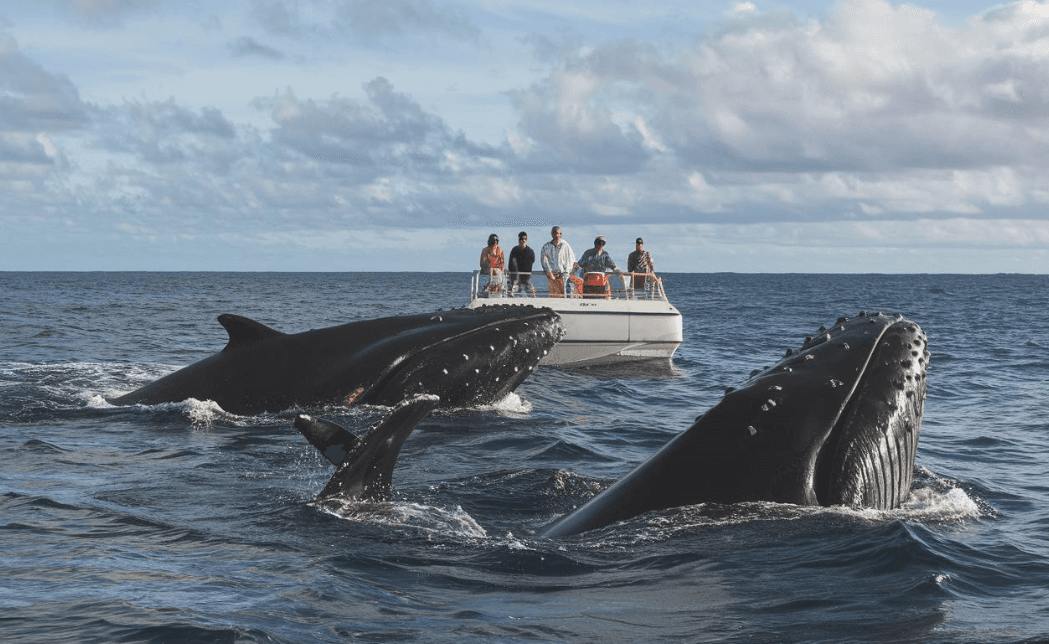
Yes. Visitors on whale-watching trips in Samaná Bay often see humpbacks surface, breathe, and then disappear underwater.
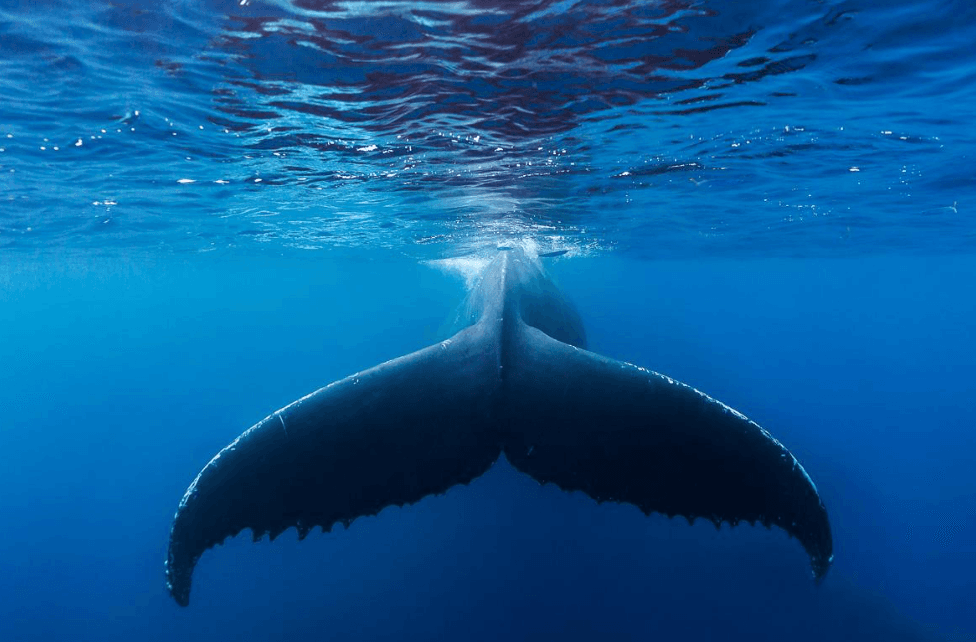
A whale may dive without showing its tail, or it may lift its flukes before descending. A raised tail can sometimes provide a useful clue that the whale is beginning a deeper dive, but not every dive includes this display.
During a trip, you might observe:
- A whale surfacing to breathe.
- Several breaths before a dive.
- A gradual descent beneath the surface.
- A tail-fluke display before some dives.
- A period when the whale is no longer visible.
Once a whale disappears underwater, observers generally cannot tell its exact depth simply by looking at the surface.
Dive behavior can also change during an encounter. A whale may return quickly or remain submerged for longer, so guides cannot guarantee exactly when it will reappear.
Do Humpback Whales Dive Deep During Their Breeding Season?
Humpbacks visiting Samaná Bay are part of the North Atlantic population that migrates to Caribbean waters during the winter breeding season.
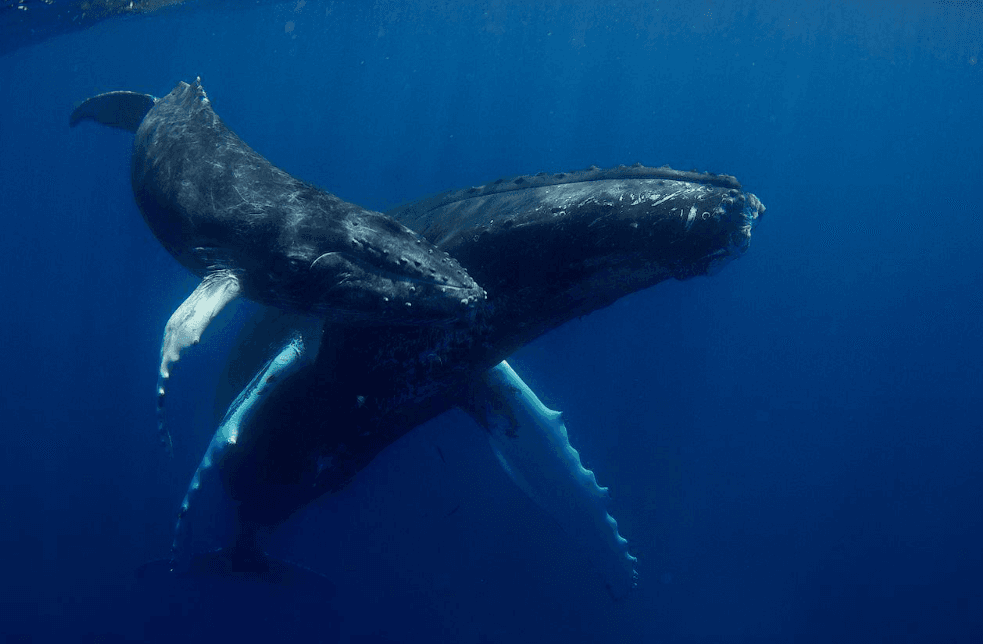
Their behavior in breeding areas can differ from their behavior in northern feeding areas. In the Caribbean, whales may spend time traveling, interacting with other whales, and engaging in reproductive activities.
In feeding areas, they may make dives associated with finding prey at different depths.
This distinction matters because dive behavior depends on what a whale is doing and where it is. A deep dive is not automatically a sign that a whale is feeding, just as a shallow dive does not necessarily mean it is resting.
Samaná Bay is especially known for seasonal surface encounters, but the whales' underwater behavior remains an important part of their lives even when visitors cannot see it.
How Do Scientists Measure Whale Dive Depth?
Researchers use several methods to study how deep whales dive and how long they remain underwater.
Electronic tags
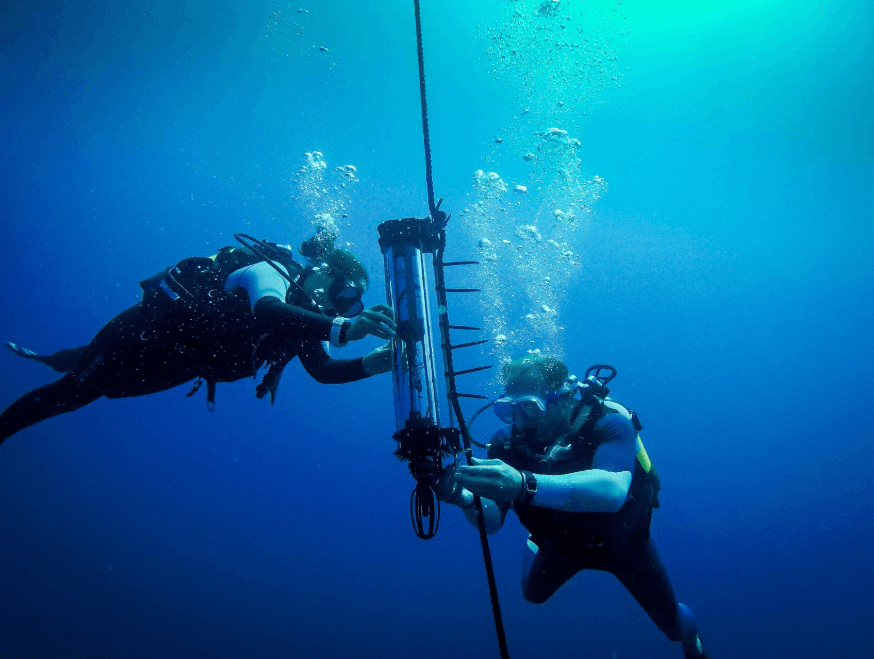
Specialized tags can record depth, movement, and sometimes other information. Depending on the equipment, data may be transmitted or recovered later.
Tagging studies must follow appropriate scientific and animal-welfare protocols.
Acoustic monitoring
Hydrophones and other acoustic equipment help researchers investigate sounds made by whales and their underwater environment. Acoustic data do not automatically reveal exact dive depth, but they can complement other measurements.
Visual observation
Researchers and experienced observers record surfacing intervals, tail-fluke displays, and other visible behaviors. These observations can help describe patterns, although they cannot establish exact underwater depth on their own.
Combining different methods
Using multiple research methods allows scientists to build a more complete picture of whale behavior. Each method has limitations, so researchers interpret results in the context of the equipment used and the circumstances of the study.
Are Deep Dives Dangerous for Humpback Whales?
Diving is a normal part of humpback whale behavior. Their bodies are adapted to underwater movement, pressure changes, and periods without breathing.
However, diving does not make whales immune to danger. Entanglement in fishing gear can restrict movement or breathing, and collisions with vessels can cause serious injuries. Underwater noise and other human activities may also affect whale behavior.
The risks vary according to location and circumstances. It would be misleading to describe every deep dive as dangerous or to assume that a whale diving out of sight is in distress.
Responsible whale watching is important because boats can affect animals if they approach too closely or interfere with their movement. Operators should follow local rules and avoid attempting to chase a whale when it dives.
Frequently Asked Questions
How deep can humpback whales dive?
Humpback whales can dive hundreds of meters, but depth varies by individual and activity. A maximum recorded depth should not be confused with a typical dive.
Can humpback whales reach the ocean floor?
It depends on the depth of the water. Humpbacks can dive deeply, but they cannot reach the bottom of every part of the ocean, and they are not among the most specialized deep-diving whales.
How long can humpback whales stay underwater?
Some dives last several minutes, while others can be longer. Duration depends on activity, conditions, and the individual whale.
Do humpback whales breathe underwater?
No. Humpback whales are mammals that breathe air. They must surface to use their blowholes and exchange gases.
Why do humpback whales raise their tails before diving?
A whale may raise its tail flukes as it angles downward for a deeper dive. However, not every dive involves a tail display, and the behavior does not always reveal how deep the whale will go.
Can whale-watching visitors see a whale's underwater dive?
Visitors can often see a whale enter the water and may see its tail before it disappears. Without specialized equipment, they generally cannot determine the animal's exact depth underwater.
Final Thoughts
Humpback whales are capable divers with adaptations that help them cope with underwater pressure and manage their oxygen supplies. Their dives support a range of activities, from traveling and resting to finding food in feeding areas.
For visitors to Samaná Bay, watching a whale surface and then disappear beneath the ocean can be a reminder that much of its life remains hidden below the waterline. Understanding dive behavior makes each encounter more meaningful, even when the whale is out of sight.
Choose a responsible whale-watching operator, respect local wildlife rules, and allow whales to dive and travel without interference. These simple practices help protect the animals that make Samaná such a remarkable destination.

Local explorer & expert guide in Visita Haitises.