How Can You Tell the Difference Between a Humpback Whale Sighting and a False Alarm in Samaná Bay?
Imagine looking across Samaná Bay in the Dominican Republic when something suddenly appears on the water. A dark shape rises above the surface, a splash catches your attention, or a white puff appears in the distance. Could it be a humpback whale?
For first-time whale watchers, identifying a possible sighting can be surprisingly challenging. The ocean is constantly changing, and waves, reflections, floating objects, and other marine activity can sometimes resemble signs of a whale.
During the humpback whale season, Samaná Bay offers opportunities to observe these remarkable animals in their natural environment. Learning what to look for can help visitors recognize potential sightings, follow their guide's observations, and avoid jumping to conclusions.
This guide explains how to distinguish possible whale sightings from common visual distractions while remembering that a distant shape or splash alone is not enough to confirm a whale's presence.
Why Can Whale Sightings Be Difficult to Identify?
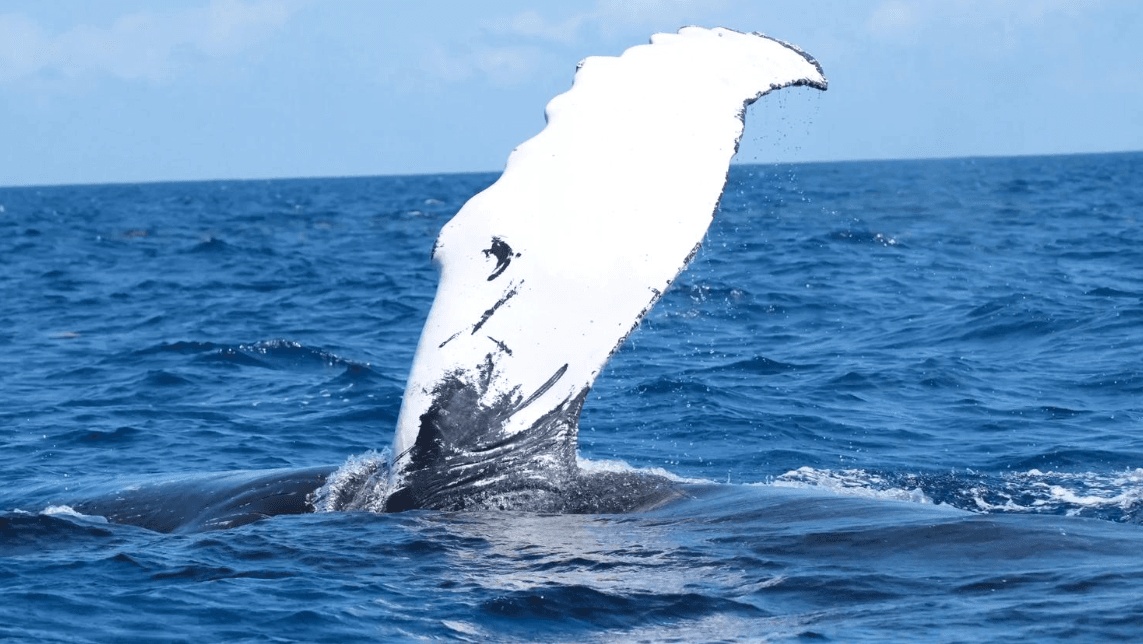
Humpback whales spend much of their time underwater, so observers often see only brief parts of an animal. A whale may expose its back, release a visible blow, lift its tail, or disappear beneath the surface before everyone on the boat gets a clear view.
Distance makes identification even more difficult. A small dark shape near the horizon may be challenging to interpret, particularly when the water is choppy or the light is changing.
Several factors can make a possible sighting uncertain:
- The animal is visible for only a short time.
- Waves partly hide the shape.
- The viewing distance makes details difficult to distinguish.
- Sunlight creates glare on the water.
- Several boats or moving objects compete for attention.
- Observers expect to see a whale and interpret an unclear shape too quickly.
These challenges are normal. Even experienced wildlife observers sometimes need additional visual evidence before identifying what they have seen.
1. Look for a Recognizable Whale Blow
One possible clue is a whale's blow, which occurs when it exhales at the surface.
A humpback whale's blow may appear as a short plume above the water. Depending on the viewing distance, wind, lighting, and atmospheric conditions, it can look like a white puff or a brief spray.
However, not every white splash or plume is a whale blow. Waves breaking, wind-driven spray, and other water disturbances can create similar visual impressions.
To assess a possible blow, look for context. Does the plume appear where a guide has already identified a whale Is there a large animal surfacing nearby Does the same area produce another recognizable whale sighting?
A single white mark is a reason to look more carefully, not definitive proof.
2. Check Whether a Dark Shape Has Whale-Like Features
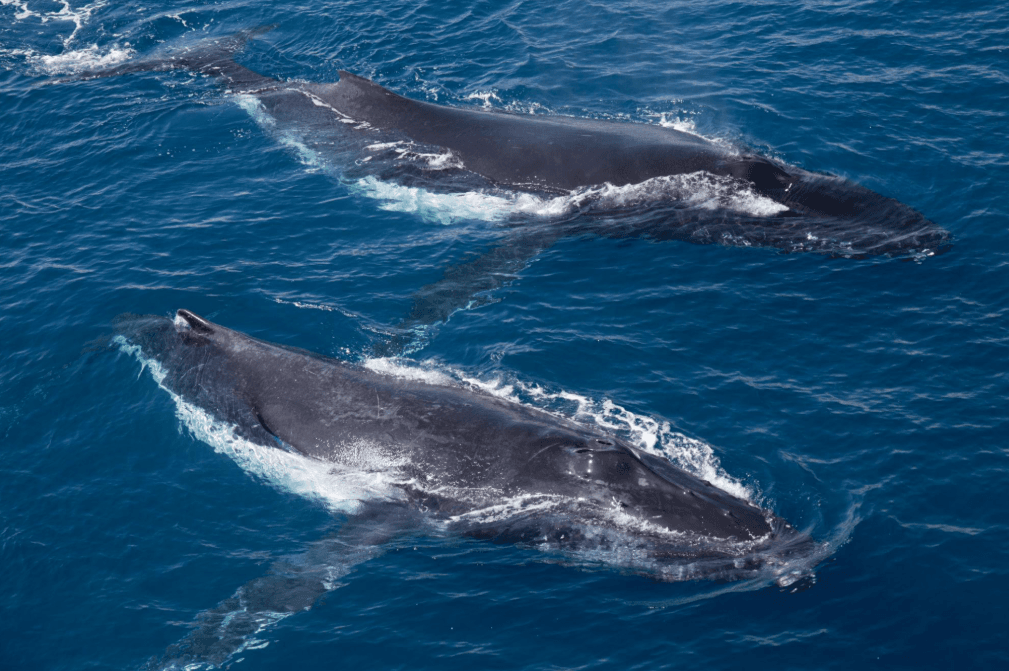
A humpback whale may appear as a broad, dark shape at the surface. Depending on its position, you might see part of its back, head, or tail.
A wave can also form a dark line or curved shape, so the outline alone may be misleading.
Look for a combination of clues:
- Scale: Does the shape appear consistent with a large marine animal?
- Form: Can you distinguish a solid animal-shaped body rather than a thin, shifting line of water?
- Context: Is there a blow or another recognizable whale feature nearby?
- Repeated evidence: Does the observation develop into a clearer view of the same animal?
Do not rely on apparent size alone. Distance and perspective can make objects seem much larger or smaller than they really are.
If the shape remains unclear, describe it as an uncertain observation rather than confidently labeling it a whale.
3. Do Not Confuse Every Splash With a Whale
The surface of Samaná Bay can produce splashes for many reasons. Waves may collide, wind may disturb the water, and moving objects can leave visible disturbances behind them.
A whale can also create a splash when part of its body contacts the water. The difference is that a splash by itself does not establish which event caused it.
After noticing a splash, look for additional evidence without assuming the cause. A recognizable back, blow, or tail associated with the same animal may help confirm the sighting.
If no further evidence appears, the source may remain unknown.
This is particularly important when taking photographs. A picture of a splash may document an interesting moment, but it does not necessarily prove that a whale was present.
4. Understand Why Floating Objects Can Be Misleading
Floating seaweed, pieces of driftwood, and other objects can attract attention when they appear briefly between waves.
At a distance, a floating object may resemble a dark patch on an animal's back. As the boat moves, changing angles can make the object look different.
Look for an identifiable body shape and additional signs before deciding what you are seeing. If the object remains on the surface and moves independently of any recognizable animal, it may simply be floating material.
Avoid leaning over the side of the boat or attempting to approach an unidentified object. Let the crew manage navigation and any closer observation.
5. Use Binoculars When Appropriate
Binoculars can help you examine distant features, although they cannot guarantee identification.
If your guide points out a possible whale, binoculars may make it easier to distinguish an animal's outline from the surrounding water. They can also help you notice features that are difficult to see with the naked eye.
For a more comfortable viewing experience:
- Keep both feet stable and follow the crew's safety instructions.
- Hold the binoculars steadily with both hands.
- Begin by locating the object with your eyes before looking through the binoculars.
- Avoid using binoculars while moving around the boat.
- Follow your guide's directions about where to look.
If the sea is rough, prioritize balance and safety over trying to get a better view.
6. Listen to Your Whale-Watching Guide
Local guides can help visitors interpret what they see and understand the difference between a possible sighting and a confirmed observation.
They may recognize a whale's blow, identify a visible body part, or direct attention toward an area where an animal has surfaced.
They can also explain when a sighting is uncertain. For example, a guide may notice a distant disturbance but wait for clearer evidence before confirming that it is a whale.
As a visitor, you can help by communicating what you observed. Instead of shouting that a whale is definitely present, try saying, "I noticed a dark shape near the right side of the boat."
This gives the guide useful information without turning an uncertain observation into a claim of fact.
7. Give Yourself Time to Observe
A brief glimpse can be exciting, but taking a moment to observe carefully often provides a better understanding of what is happening.
When you notice something unusual, pause and look for additional clues. Is there a recognizable animal Can you see a blow or a tail Does the guide identify the same feature?
You do not need to identify every object on the water. Sometimes the most accurate conclusion is simply that you saw an unexplained disturbance.
This approach also makes photography more meaningful. Instead of trying to capture every movement, pay attention to the scene and take photographs when you have a reasonable opportunity.
Common Whale-Watching Misidentifications
What you noticeWhat it could beHow to assess itA white puff above the waterA whale blow or wind-driven sprayLook for a recognizable whale nearbyA dark line on the surfaceA whale's back or a waveLook for a solid, animal-shaped outlineA sudden splashWhale activity or a breaking waveSearch for additional identifying evidenceA dark object floatingDriftwood, seaweed, or another objectExamine its form and context from a safe positionA brief shape near the horizonA distant animal or an optical illusionAsk the guide to help assess the sighting
These are observation guidelines, not a substitute for expert identification. Some sightings may remain uncertain even after careful observation.
How to Avoid False Confidence When Photographing Whales
Photographs are useful for documenting wildlife, but a single image can remove important context. A cropped picture of a splash or dark shape may look convincing without showing enough detail to identify its source.
To document a possible sighting responsibly:
- Take a wider photograph that includes the surrounding water when practical.
- Capture several images if the animal remains visible.
- Avoid describing an uncertain object as a confirmed whale in your captions.
- Ask your guide if you are unsure what appears in your photograph.
- Never sacrifice safety or disturb wildlife to obtain a better image.
If you later share your photographs online, accurate descriptions help other travelers understand what was actually observed.
Frequently Asked Questions
Can waves look like whales in Samaná Bay?
Yes. Waves can form dark, curved shapes and produce splashes that resemble parts of a whale. Look for additional evidence before deciding that a whale is present.
Does a white splash always mean a whale is nearby?
No. Wind-driven spray and breaking waves can create white splashes. A whale blow or other recognizable feature can provide stronger evidence, especially when observed in context.
How can beginners recognize a humpback whale?
Beginners should look for recognizable features such as a large body at the surface, a visible blow, or a tail fluke. A guide can help interpret distant or brief sightings.
Are binoculars necessary for whale watching?
No. Binoculars are optional, but they may help you examine distant features. Always use them safely and follow the crew's instructions.
Should I tell the guide whenever I see something unusual?
Yes, you can point out an observation, even if you are uncertain. Describe what you saw and where it appeared rather than claiming that it was definitely a whale.
Can a photograph confirm a whale sighting?
Sometimes a clear photograph can provide useful identification evidence, but an unclear image may not be sufficient. The surrounding context and recognizable animal features matter.
Final Thoughts
Recognizing a humpback whale in Samaná Bay takes attention, patience, and a willingness to distinguish what you know from what you suspect.
A dark shape, a splash, or a white puff may be worth investigating, but none automatically confirms a whale sighting. Look for recognizable features, consider the surrounding conditions, and listen to your guide's interpretation.
Most importantly, enjoy the process of observing the marine environment without feeling that every unusual movement must be a whale. Careful observation can make your excursion more informative while supporting a respectful approach to wildlife.
Planning your Samaná whale-watching adventure? Choose a responsible operator, follow onboard safety guidance, and keep your eyes open for the real signs of these remarkable marine mammals.

Local explorer & expert guide in Visita Haitises.