What Do Humpback Whales Eat Understanding Their Diet and Feeding Habits
Humpback whales are among the ocean's most recognizable marine mammals, but their enormous size raises an interesting question: what do these whales actually eat?
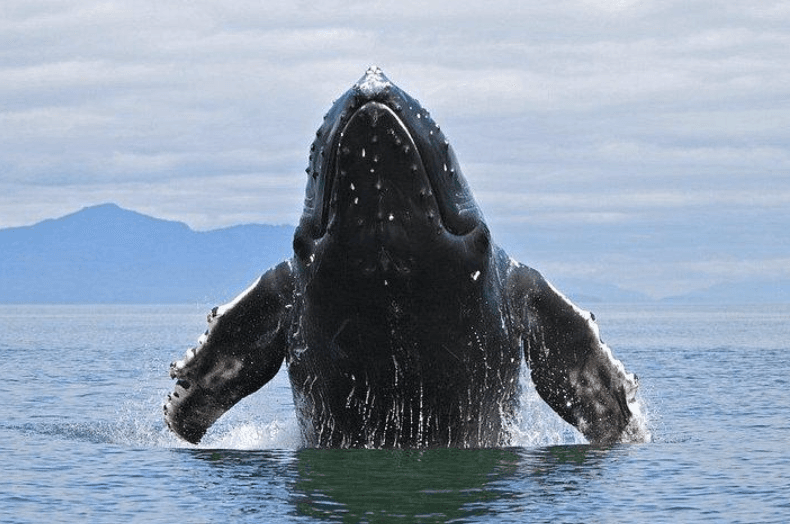
Despite their impressive bodies, humpback whales primarily feed on relatively small prey, including krill and small schooling fish. They consume these animals using specialized feeding techniques that allow them to take in large amounts of food when suitable prey is available.
For travelers interested in the humpback whales of Samaná Bay in the Dominican Republic, understanding their diet provides another way to appreciate these remarkable animals. Although whales are commonly observed in the region during the breeding season, much of their intensive feeding takes place in colder waters elsewhere in the North Atlantic.
This guide explains what humpback whales eat, how they capture their prey, where feeding takes place, and why their diet is important to the wider marine ecosystem.
What Do Humpback Whales Eat?
Humpback whales are carnivores. Their diet consists mainly of small marine animals, particularly krill and small fish.
The exact foods they consume depend on where they are feeding and which prey species are available. Humpback whales can adapt their feeding behavior to take advantage of suitable concentrations of prey.
Their diet may include:
- Krill: Small, shrimp-like crustaceans that can occur in dense groups.
- Small schooling fish: Depending on the region, these may include herring, capelin, sand lance, and other suitable fish species.
- Other small prey: The exact composition varies with location and prey availability.
Humpback whales do not eat large marine mammals as a normal part of their diet. Instead, they feed on smaller animals that can occur in large enough concentrations to make feeding worthwhile.
Their feeding strategy demonstrates how a very large animal can obtain energy from comparatively small organisms by consuming them in substantial quantities.
1. Why Do Humpback Whales Eat Krill?
Krill are small crustaceans that play an important role in many marine food webs. They feed on microscopic organisms, including phytoplankton, and are themselves an important food source for a variety of larger animals.
For humpback whales, dense concentrations of krill can provide a rich source of energy.
Rather than capturing individual krill one by one, a whale can feed where these animals occur in large groups. This allows the whale to take in many small prey items during a feeding event.
The availability of krill varies with ocean conditions, season, and location. Humpback whales therefore cannot rely on the same prey concentrations everywhere they travel.
Krill are particularly important in some feeding regions, but they are not the only food humpback whales consume. Fish can also make up a substantial part of the diet, depending on the whale population and local ecosystem.
2. Do Humpback Whales Eat Fish?
Yes. Small fish are an important part of the diet of many humpback whales.
Fish such as herring, capelin, and sand lance are examples of prey consumed in suitable feeding regions. The specific species available depend on the location and ecosystem.
Schooling fish can provide an efficient food source because large numbers of individuals may gather closely together. Humpback whales can exploit these concentrations using specialized feeding movements.
The whales do not have to catch fish with teeth in the way some predators do. Instead, they take prey-filled water into their mouths and use baleen plates to retain the food while water flows out.
This feeding system is one of the defining features of baleen whales.
3. How Do Humpback Whales Catch Their Food?
Humpback whales use several feeding strategies. One well-known technique is called lunge feeding.
During lunge feeding, a whale accelerates toward a concentration of prey and opens its mouth to engulf a large volume of water containing fish or krill.
The whale then uses its mouth and throat structures to manage the water and prey as it closes its mouth. Baleen plates help retain the food while water is expelled.
Lunge feeding requires substantial energy, so it is most useful when prey is concentrated enough to make the effort worthwhile.
Humpback whales may also cooperate or coordinate their movements when feeding. Some populations use bubble-net feeding, a technique in which whales produce bubbles that can help concentrate or contain schooling fish before a feeding lunge.
Not every humpback whale uses every feeding technique, and bubble-net feeding is not a behavior that should be expected in every location.
4. What Is Baleen, and How Does It Help Whales Eat?
Humpback whales belong to a group known as baleen whales. Instead of having teeth designed for chewing prey, they have rows of baleen plates hanging from the upper jaw.
Baleen is made primarily of keratin, the same structural protein found in human hair and fingernails.
The plates form a filtering system. When a whale takes in water containing prey, the baleen helps trap food while water passes back out of the mouth.
This enables the whale to consume many small animals without having to catch each one individually.
Baleen is not a set of teeth, and humpback whales do not chew their prey like humans. Their feeding anatomy is adapted to gathering and swallowing relatively small marine animals.
The system is highly effective when suitable prey is available in sufficient concentrations.
5. Where Do Humpback Whales Find Their Food?
Humpback whales travel between feeding areas and breeding areas during their annual migrations.
Many North Atlantic humpback whales feed in colder northern waters during the warmer part of the year. These regions can provide productive feeding grounds where fish and krill are available.
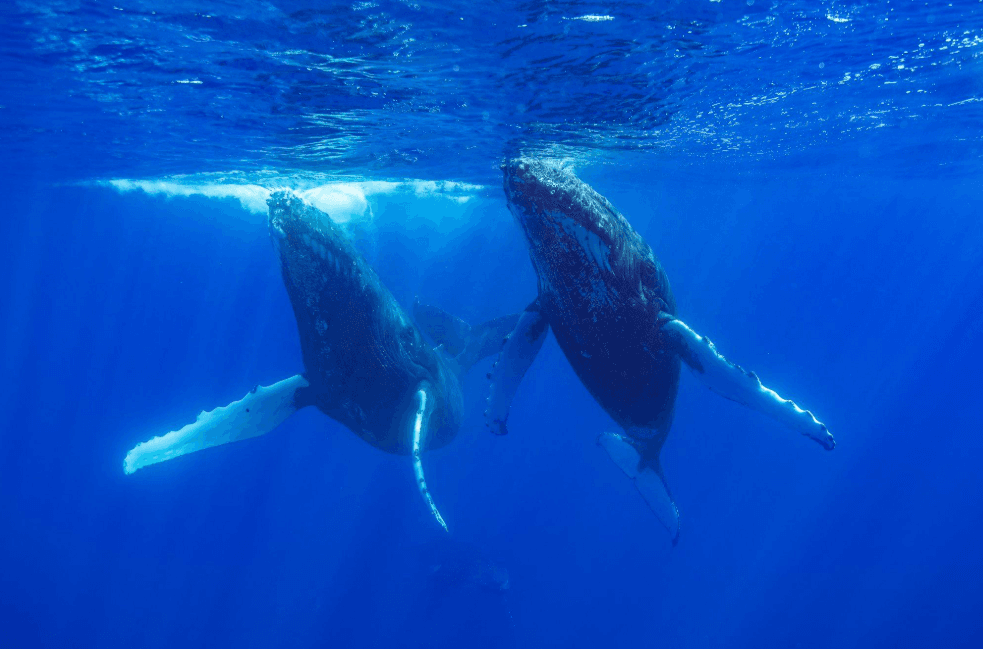
During the winter breeding season, many whales migrate toward warmer waters in the Caribbean, including the waters used by humpbacks visiting the Dominican Republic.
This seasonal movement creates an important distinction: a place where whales are commonly seen is not necessarily a place where they do most of their feeding.
Samaná Bay is known for its seasonal whale-watching opportunities, but the whales seen there are part of a wider migratory population. Much of their annual energy intake comes from feeding in productive northern waters.
The migration connects different marine ecosystems and allows whales to use different habitats for different stages of their life cycle.
6. Do Humpback Whales Eat While They Are in Samaná Bay?
Humpback whales visiting the Caribbean breeding grounds generally spend much less time feeding than they do on their northern feeding grounds.
During the breeding season, their activities are associated with reproduction, mating, and calving. They rely heavily on energy accumulated during previous feeding periods.
This does not mean that every whale in the region is always fasting or that feeding can never occur. Feeding opportunities and behavior can vary.
However, the main purpose of the seasonal migration to the Caribbean is not to exploit the dense northern feeding grounds. The whales travel to warmer waters as part of their breeding cycle.
For visitors, this explains why whale watching in Samaná is primarily an opportunity to observe the animals in their breeding habitat rather than to watch their most intensive feeding activity.
7. How Much Food Does a Humpback Whale Eat?
Humpback whales can consume substantial quantities of prey during periods of active feeding, but the amount varies considerably.
Factors affecting food intake include the whale's size, energy requirements, prey type, prey density, and the time available for feeding.
A whale feeding in a dense concentration of prey may take in large amounts during repeated feeding events. When prey is scarce or widely dispersed, obtaining the same amount of energy can require more effort.
For this reason, there is no single daily food quantity that accurately describes every humpback whale in every environment.
Researchers estimate feeding rates using different methods, including observations of feeding behavior, measurements of prey availability, and studies of whale energy requirements.
The broader point is that feeding is crucial to the whale's energy budget. The food consumed during productive periods helps support migration, reproduction, and other demanding activities.
8. Why Do Humpback Whales Need So Much Energy?
Humpback whales are large, active animals. Swimming over long distances, maintaining body functions, reproducing, and raising calves all require energy.
Their feeding grounds provide opportunities to build energy reserves. Those reserves become particularly important during migration and the breeding season, when feeding may be reduced.
Female whales also require energy to support pregnancy, milk production, and the growth of their calves.
The timing of feeding and migration therefore forms an important part of humpback whale biology. A whale's ability to find sufficient prey in its feeding habitat can influence its condition during later stages of the annual cycle.
Understanding this connection helps explain why changes in prey availability and marine ecosystems matter to whale populations.
9. How Does Climate Change Affect Humpback Whale Food?
Ocean ecosystems are influenced by temperature, currents, sea ice, plankton production, and many other environmental factors.
Changes in these conditions can affect where prey species live, when they become abundant, and how densely they gather. These changes may influence the feeding opportunities available to humpback whales.
The effects are not identical everywhere. Some regions may experience shifts in prey availability or distribution, while other areas may respond differently.
Researchers monitor whale populations and marine ecosystems to understand how environmental changes influence feeding and migration.
It is important not to assume that every change in whale sightings is caused by climate change. Whale movements can also vary with prey distribution, individual behavior, weather, and other factors.
Protecting marine ecosystems and supporting scientific research can help improve understanding of these complex relationships.
10. What Does a Humpback Whale's Diet Tell Us About the Ocean?
Humpback whales are connected to marine food webs through the prey they consume.
Krill depend on smaller organisms, including phytoplankton, while schooling fish rely on various food sources within the ecosystem. Humpback whales draw energy from these animals and, in turn, are part of a broader ecological system.
Their feeding behavior also illustrates how the distribution of prey can influence the movement of large marine animals.
When food is abundant in one area and limited in another, whales may adjust their feeding locations or behavior. These relationships make humpback whales interesting subjects for research into ocean ecology.
Learning about whale diets is therefore not just about what one species eats. It is also a way to understand the links between plankton, small fish, large predators, and the wider marine environment.
Frequently Asked Questions
What is the main food of humpback whales?
Humpback whales mainly eat small marine animals, particularly krill and small schooling fish. The exact diet depends on the region and the prey available.
Do humpback whales eat plankton?
They do not generally feed directly on phytoplankton in the way that some small marine animals do. Instead, they consume prey such as krill and small fish that are part of the marine food web.
Do humpback whales have teeth?
Adult humpback whales have baleen plates rather than functional teeth used for feeding. Baleen helps them filter prey from water.
Do humpback whales feed in Samaná Bay?
Humpback whales visiting Samaná Bay are primarily associated with the Caribbean breeding season. They generally rely heavily on energy reserves accumulated during feeding periods elsewhere, although feeding behavior can vary.
What is lunge feeding?
Lunge feeding is a technique in which a whale moves rapidly toward a concentration of prey, takes in a large volume of water and food, and uses its baleen to retain the prey as water flows out.
Do humpback whales eat seals or dolphins?
Seals and dolphins are not part of the normal diet of humpback whales. Their typical prey consists of small marine animals such as krill and fish.
Why is food availability important for humpback whales?
Food provides the energy required for growth, migration, reproduction, and other activities. Changes in prey abundance can influence the opportunities whales have to obtain enough energy.
Final Thoughts
Humpback whales eat mainly krill and small fish, using baleen plates and specialized feeding techniques to capture prey from the water. Their feeding habits are closely connected to ocean conditions, prey distribution, and their annual migration.
Although Samaná Bay is best known as a seasonal destination for observing humpback whales during the breeding period, the animals depend on productive feeding grounds elsewhere in the North Atlantic to obtain much of the energy they need.
Understanding what humpback whales eat reveals an important part of their biology and highlights how closely these remarkable animals are connected to the health of the ocean.

Local explorer & expert guide in Visita Haitises.