Monteverde: Jungle Zipline & Tarzan Swing with Transfer
5.0(50)
Od
Zobraziť detaily$95
When the sun disappears over Costa Rica’s Caribbean coast, the rainforest does not go to sleep. It comes alive.
A different world begins to emerge beneath the darkness—one filled with mysterious calls, rustling leaves, glowing eyes, delicate movements, and creatures that remain hidden during daylight. The Manzanillo Night Hike in the Forest offers an opportunity to step into this fascinating nighttime ecosystem and discover the rainforest from an entirely different perspective.
Located within the remarkable Gandoca-Manzanillo Wildlife Refuge, this guided night walk takes travelers into the forest after dark in search of Costa Rica’s nocturnal wildlife. Accompanied by a knowledgeable local naturalist, you will explore forest trails using a flashlight to look for frogs, snakes, tarantulas, insects, and other creatures that become active once night falls.
This is much more than an ordinary hike. It is an immersive encounter with the rainforest, where sound becomes just as important as sight and every movement in the vegetation can create a moment of anticipation.
As your eyes gradually adjust to the darkness, your guide will help you understand the hidden world around you. You will learn how nocturnal animals survive, hunt, communicate, camouflage themselves, and adapt to life in an environment where visibility is limited.
For travelers searching for an authentic Costa Rica night tour, a Manzanillo rainforest night walk, or an opportunity to experience Costa Rica’s nocturnal wildlife, this adventure provides an intimate way to explore one of the country’s most biologically rich coastal environments.
Costa Rica is famous around the world for its biodiversity. Visitors often explore its forests during daylight, looking for monkeys in the canopy, colorful birds among the branches, sloths resting in trees, and butterflies moving through sunny clearings.
But the rainforest after sunset is completely different.
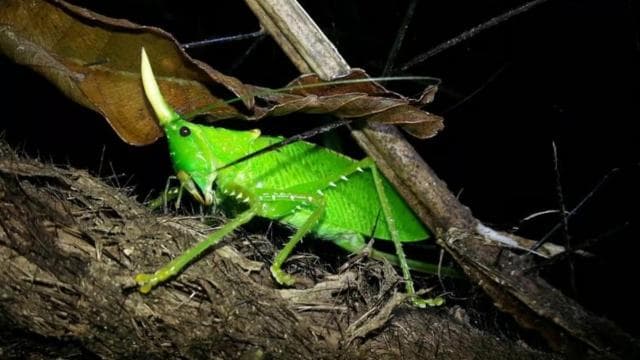
Many animals that are difficult or impossible to spot during the day become active at night. Frogs begin calling from wet vegetation. Insects move through the forest floor and under leaves. Nocturnal predators begin searching for food. Snakes may become more active, while spiders and tarantulas emerge from their hiding places.
The Manzanillo night hike gives you the chance to witness this transformation firsthand.
Rather than simply walking through a dark forest, you will learn how to observe it. Your guide helps identify animal sounds, movement, tracks, hiding places, and other clues that an untrained visitor could easily overlook.
A tiny reflection in the beam of a flashlight may reveal a pair of eyes watching from the vegetation. A strange sound from the forest floor may lead to a camouflaged frog. A movement along a branch may reveal a snake that blends almost perfectly with its surroundings.
Every walk is different because wildlife encounters in a natural environment can never be completely predicted.
That element of discovery is part of what makes a Costa Rica rainforest night tour so memorable.
The Gandoca-Manzanillo Wildlife Refuge is one of the special natural areas along Costa Rica’s Caribbean coast. Its forests, wetlands, coastal environments, and surrounding ecosystems support a remarkable variety of wildlife.
During the day, the area has a peaceful tropical character. At night, its atmosphere changes dramatically.
The sounds of insects and amphibians become more noticeable. Leaves move in the darkness. The forest seems to become deeper and more mysterious. With a flashlight in hand and a naturalist guide leading the way, you can begin exploring this nighttime environment safely and thoughtfully.
The refuge provides a natural setting for learning about tropical ecosystems without needing to travel deep into a remote wilderness.
Instead, the experience focuses on observation, education, and connection with nature.
For visitors staying along Costa Rica’s Caribbean coast, this is an excellent way to add something different to a traditional daytime sightseeing itinerary. Rather than spending another evening at your accommodation, you can experience the forest when its nocturnal residents are most active.
The contrast between a daytime rainforest visit and a nighttime forest walk is remarkable.
During daylight, your attention may naturally be drawn toward the canopy and colorful scenery. After dark, your focus shifts toward the trail directly ahead, the sounds surrounding you, and the small details revealed by your guide’s flashlight.
The result is a slower, more attentive way of experiencing Costa Rica’s wilderness.
Walking through a rainforest after dark can feel completely different from hiking during the day.
The darkness creates a sense of anticipation. You may hear something moving before you can see it. You may notice a frog calling from somewhere nearby but have no idea where it is hiding. Your guide may suddenly stop and point a flashlight toward a leaf, branch, tree trunk, or patch of vegetation.
Then you see it.
A nocturnal animal is there, perfectly adapted to its environment.
These moments are at the heart of the Manzanillo Night Hike in the Forest.
The experience is led by a local guide with knowledge of the surrounding ecosystem and its wildlife. Rather than rushing along the trail, the walk encourages careful observation.
Your guide can explain what you are seeing and help you understand why these animals behave differently at night.
You may learn about:
The educational element makes this experience especially valuable for travelers who want more than photographs.
You leave with a better understanding of the rainforest itself.
One of the biggest attractions of a Costa Rica night hike is the opportunity to search for animals that are rarely seen during a typical daytime excursion.
The Manzanillo forest is home to a variety of creatures that become active after dark. Depending on natural conditions and wildlife activity, your guide may help you look for frogs, snakes, tarantulas, insects, and other nocturnal species.
Frogs are among the most exciting animals to discover during a tropical night walk.
After sunset, many frogs become much easier to hear and observe. Their calls can come from ponds, vegetation, tree trunks, leaves, or hidden areas along the forest floor.
Your guide can help distinguish different calls and explain how frogs communicate.
For many visitors, hearing a frog before finally locating it creates one of the most exciting moments of the hike.
Once the flashlight reveals the animal, you may be surprised by how small, colorful, or well-camouflaged it is.
Snakes are another fascinating part of nighttime rainforest exploration.
Some snake species are nocturnal and use the cover of darkness to hunt or move through their environment. Their camouflage can make them remarkably difficult to notice without a trained guide.
A naturalist knows where to look and understands the behavioral clues that may indicate an animal is nearby.
Seeing a snake in its natural environment can be an unforgettable wildlife experience, especially when you understand more about its role in the ecosystem.
The tropical rainforest is also home to spiders, tarantulas, insects, and countless smaller organisms that become active at night.
For some travelers, these tiny creatures are just as fascinating as larger animals.
A night hike provides an opportunity to slow down and appreciate the biodiversity that is often overlooked. The rainforest is not only about monkeys, sloths, and colorful birds. Much of its ecological richness exists at a much smaller scale.
Your guide can help you discover these hidden inhabitants and explain how they contribute to the forest ecosystem.
The Manzanillo night walk is an experience that engages more than your eyes.
At night, the rainforest becomes a sensory environment.
You hear insects buzzing, frogs calling, leaves moving, and distant sounds traveling through the trees. You feel the humidity of the tropical air. You smell wet vegetation and earth. You see only what your flashlight reveals, making every discovery feel more significant.
This heightened awareness changes the way you experience nature.
Instead of simply looking at a landscape, you become an observer.
You listen.
You wait.
You search.
You follow your guide’s attention.
Then suddenly, the beam of light reveals something unexpected.
This makes the tour particularly appealing to travelers who enjoy nature, photography, wildlife observation, and outdoor adventures.
It is also an excellent choice for anyone who has already experienced Costa Rica during the day and wants to discover a completely different side of the country.
A major advantage of joining a guided rainforest night walk is the knowledge of the local naturalist.
The tropical forest can be difficult to interpret without experience. Many animals are extremely well camouflaged, and some are so small that visitors could easily walk past them without noticing.
A knowledgeable guide changes that.
Your guide understands the environment and knows what signs to look for. They can identify sounds, point out hidden animals, explain behaviors, and provide context about the ecosystem.
Instead of simply seeing a frog, you can learn why it is active at night.
Instead of simply spotting a spider, you can understand its role in the forest.
Instead of simply hearing an unfamiliar sound, you can learn which animal may have produced it.
This educational approach transforms the excursion from a simple walk into a genuine nature experience.
For families, couples, solo travelers, photographers, and wildlife enthusiasts, having an expert guide can make the difference between simply entering the forest and truly understanding it.
Costa Rica’s Caribbean side is known for lush tropical scenery, rich biodiversity, beaches, and a relaxed atmosphere. But there is another side to this region that becomes visible only after sunset.
The Gandoca-Manzanillo area offers an ideal environment for discovering tropical nature away from the conventional daytime sightseeing experience.
A night hike allows you to experience the forest without the distractions of busy attractions.
There are no dramatic viewpoints required.
No large-scale entertainment.
No need for an elaborate itinerary.
Instead, the attraction is the forest itself.
The experience is built around curiosity and discovery.
Every few steps may reveal something new. Every sound may encourage you to look more carefully. Every stop along the trail becomes an opportunity to learn.
This is the kind of travel experience that can remain in your memory long after your Costa Rica vacation ends.
Imagine entering the forest as the last traces of daylight disappear.
The temperature begins to cool slightly. The sounds of the surrounding area change. Your guide checks the trail ahead and turns on the flashlight.
The beam moves across the vegetation.
At first, you see nothing unusual.
Then your guide stops.
A frog is calling somewhere nearby.
You look toward the vegetation.
The light moves slowly.
There it is.
A small creature sitting quietly among the leaves.
A few minutes later, the group continues walking. Another sound comes from deeper in the forest.
This time, it is something different.
The anticipation builds.
That feeling of not knowing what you might encounter next is one of the defining characteristics of a night wildlife tour in Costa Rica.
Unlike attractions where every moment is planned, wildlife encounters happen naturally.
You cannot predict exactly what will appear.
That uncertainty makes the experience exciting.
The Manzanillo Night Hike is particularly suited to travelers who enjoy learning through direct experience.
If you are fascinated by wildlife, tropical forests, ecology, photography, or outdoor exploration, this adventure provides an opportunity to combine those interests.
You do not need to be an expert naturalist.
You do not need to know the names of tropical frogs or understand rainforest ecology before arriving.
Curiosity is enough.
Your guide provides the knowledge while you provide the attention and enthusiasm.
The experience is designed around discovery rather than competition. There is no need to rush along the trail or complete a demanding physical challenge.
Instead, the goal is to observe and appreciate.
This makes the tour a rewarding addition to a Costa Rica itinerary for travelers who want to experience nature in a more personal way.
The small-group nature of this experience is another reason travelers appreciate the Manzanillo night hike.
Wildlife observation is often more enjoyable when the group can move carefully and quietly. Smaller groups make it easier to hear the guide, ask questions, stop when wildlife is spotted, and enjoy individual moments of discovery.
Instead of feeling like one person in a large crowd, you can become part of a shared exploration.
Everyone is looking in the same direction.
Everyone is listening.
Everyone is waiting to see what appears next.
When the group finally discovers a nocturnal animal, the reaction is often shared excitement.
These moments create memories that photographs alone cannot fully capture.
Photography can be challenging at night, but the opportunity to photograph Costa Rica’s nocturnal wildlife can be incredibly rewarding.
Bring your camera if you enjoy wildlife photography.
You may encounter frogs, insects, spiders, reptiles, or other forest creatures that provide unusual photographic subjects.
Even if you are not a professional photographer, taking a few photographs can help preserve the memory of the experience.
Because lighting conditions are naturally limited, it is important to follow your guide’s instructions and avoid disturbing wildlife simply to obtain a photograph.
The priority is always observing animals respectfully in their natural environment.
A good wildlife photograph is wonderful.
But seeing an animal behaving naturally in the forest is the real reward.
A daytime hike gives you a broad view of the rainforest.
A night hike encourages you to look closer.
During the day, the forest may appear bright and open. At night, your field of vision becomes limited. The flashlight reveals only a small area at a time.
This creates a completely different relationship with the environment.
You become more patient.
You notice smaller details.
You listen more carefully.
You become aware of movement.
You start to understand that the rainforest is constantly active, even when humans cannot easily see what is happening.
The Manzanillo Night Hike in the Forest is therefore not simply a nighttime version of a regular hiking tour.
It is a completely different way of experiencing the ecosystem.
The experience includes a local guide, flashlight, and boots, helping you prepare for a walk through a tropical forest environment.
The flashlight is particularly important because visibility after dark is naturally limited. It allows the group to safely navigate the trail while also helping identify wildlife.
Participants should also come prepared with suitable outdoor clothing and closed-toe footwear. Travelers who prefer to use their own hiking shoes can bring them.
Because rainforest conditions can be humid and muddy, clothing that can get dirty is recommended.
A reusable water bottle is also useful for staying hydrated throughout the experience.
Being properly prepared allows you to focus on the adventure rather than worrying about your equipment.
Comfortable clothing is important for a rainforest night walk.
Choose practical outdoor clothing that allows you to move easily. Because conditions in tropical forests can be humid and damp, lightweight clothing is generally comfortable.
Closed-toe shoes are recommended for walking along natural trails.
Participants should also be prepared for the possibility of mud or wet conditions. This is why the tour information specifically recommends clothing that can get dirty.
The goal is not to arrive dressed for a formal evening.
It is to arrive prepared for an authentic outdoor adventure.
Even though the hike takes place at night, Costa Rica’s tropical climate can remain warm and humid.
Bringing water is therefore an important part of preparing for the experience.
A reusable water bottle is recommended, allowing you to stay hydrated while also reducing unnecessary single-use plastic.
Keeping water easily accessible is especially helpful during outdoor activities in humid environments.
A little preparation can make your night hike significantly more comfortable.
Travelers are drawn to this experience because it offers something that cannot easily be recreated elsewhere.
The opportunity to walk through a tropical forest at night, search for nocturnal animals, and learn directly from a local naturalist creates a strong sense of connection with the environment.
Guests particularly appreciate the immersive character of the experience.
Instead of simply viewing wildlife from a distance, you become part of the search.
The forest is dark.
Your guide knows where to look.
The sounds around you provide clues.
And every wildlife encounter feels earned.
For many visitors, these unexpected discoveries become some of the most memorable moments of their Costa Rica vacation.
The Manzanillo night tour also provides an opportunity to understand how ecosystems function after dark.
Nocturnal animals have developed extraordinary adaptations that allow them to survive in darkness.
Some rely on sensitive hearing.
Others use smell.
Some have exceptional night vision.
Others depend on camouflage.
Frogs use calls to communicate.
Predators use darkness to approach prey.
Insects become active when temperatures and conditions are more favorable.
The forest is full of interactions that are rarely visible to visitors during daylight.
Your guide helps turn these observations into an educational experience, giving you a deeper appreciation of Costa Rica’s biodiversity.
For many travelers, one of the best parts of exploring Costa Rica is the opportunity to spend time in nature.
The Manzanillo night hike offers a more intimate alternative to crowded attractions.
The experience is focused on the forest, wildlife, and the people sharing the adventure with you.
There is no need for elaborate entertainment.
The natural environment provides everything.
The darkness itself becomes part of the attraction.
The sounds become part of the experience.
The anticipation becomes part of the story.
This is ideal for travelers looking for a genuine outdoor experience rather than a highly commercialized attraction.
Some travel memories come from famous landmarks.
Others come from unexpected moments.
A frog appearing in the beam of your flashlight.
A snake hidden among leaves.
A tarantula moving across the forest floor.
An unfamiliar sound echoing through the trees.
The quiet excitement of a group stopping together to observe something that most people would never notice.
These are the moments that make a Costa Rica rainforest night walk special.
The Manzanillo Night Hike creates an opportunity to experience those moments naturally, guided by someone who understands the forest and knows how to help visitors appreciate its hidden life.
If your idea of Costa Rica includes more than beaches and daytime sightseeing, the Manzanillo Night Hike is an adventure worth adding to your itinerary.
It offers an opportunity to explore the country's tropical biodiversity from a completely different perspective.
You will walk through the forest after dark, search for nocturnal animals, listen to the sounds of the jungle, and learn about the fascinating adaptations that allow wildlife to thrive at night.
With a local naturalist guide, flashlight, and suitable outdoor equipment, you can experience the rainforest in an authentic and memorable way.
The forest does not become empty when the sun goes down.
It becomes different.
And this Manzanillo Night Hike in the Forest gives you the chance to discover exactly how different it can be.
There is something deeply exciting about entering a rainforest after sunset.
You know that wildlife is moving around you, even when you cannot immediately see it. You know that every sound could be a clue. You know that the next beam of light might reveal something extraordinary.
That sense of discovery is what makes this experience so compelling.
Whether you are a dedicated wildlife enthusiast, a nature-loving couple, a curious solo traveler, or simply someone looking for a unique thing to do in Costa Rica, this guided night hike offers an unforgettable way to experience the Caribbean rainforest.
Leave the ordinary sightseeing behind.
Step into the darkness.
Listen carefully.
Look closely.
And discover the hidden nocturnal world of Gandoca-Manzanillo.
The Manzanillo Night Hike in the Forest is designed to introduce travelers to the rainforest at the time of day when many of its most fascinating residents become active. Rather than following a fast-paced sightseeing schedule, the experience focuses on careful observation, interpretation, and discovery.
Your adventure takes place in the Gandoca-Manzanillo Wildlife Refuge, a remarkable natural area on Costa Rica’s Caribbean coast. Once darkness settles over the forest, you will begin exploring the trails with a local guide who understands the area's wildlife and nighttime ecosystem.
The pace of the experience allows you to stop, listen, search, and observe. Your guide may use the flashlight to examine leaves, branches, tree trunks, vegetation, and areas of the forest floor where nocturnal animals are commonly found.
You should not expect every walk to produce exactly the same wildlife sightings. That is part of the appeal.
Wild animals are free to move through their natural habitat, and encounters depend on weather, temperature, humidity, seasonal conditions, and animal activity. What you can expect is an authentic opportunity to search for wildlife with someone who knows how to interpret the forest.
This makes every night walk its own adventure.
The experience begins with preparation for the forest environment. Travelers should arrive wearing comfortable outdoor clothing and closed-toe shoes suitable for walking on natural trails.
Boots are available as part of the experience, although participants can bring their own hiking shoes if preferred.
Once everyone is ready, your local guide leads the group into the forest.
The transition from daylight to darkness creates an immediate change in atmosphere. Familiar surroundings take on a completely different character. Trees become silhouettes, sounds seem louder, and the beam of your flashlight becomes your window into the rainforest.
Your guide will help you move through the environment while explaining what you may encounter.
The walk is not simply about reaching a particular destination.
The forest itself is the destination.
Every section of trail can reveal something new.
A sound may lead to a frog.
A movement in the vegetation may reveal an insect.
A carefully directed beam of light may uncover a spider or tarantula.
A branch may hide a snake that would be almost impossible for an inexperienced observer to notice.
The excitement comes from never knowing exactly what the next few minutes will bring.
One of the defining features of this Costa Rica night wildlife tour is the opportunity to observe animals that are most active after sunset.
Your naturalist guide can help identify species and explain their behavior while keeping the focus on respectful wildlife observation.
Costa Rica is famous for its amphibian diversity, and nighttime is one of the best periods to look for frogs.
Many frogs become active after dark and use calls to communicate. Their sounds may appear to come from everywhere at once, creating one of the characteristic soundscapes of a tropical rainforest at night.
Your guide can help locate the source of the calls and explain how amphibians depend on the forest's moisture and vegetation.
For wildlife lovers, finding a frog hidden among leaves can be an especially rewarding moment.
Some snakes and other reptiles are also more active during nighttime hours.
The dense vegetation provides excellent camouflage, which means spotting them requires patience and an experienced eye.
Your guide knows how to search responsibly and can help you understand the role reptiles play in the rainforest food chain.
Observing a snake in its natural habitat can be exciting, but the goal is always to maintain an appropriate distance and allow the animal to behave naturally.
The rainforest is also home to numerous spiders and other invertebrates.
Tarantulas can be particularly fascinating for visitors who have never encountered one in the wild.
Rather than viewing these creatures simply as frightening animals, the night walk provides an opportunity to understand their ecological importance.
Spiders are predators, and they form an important part of the forest's complex food web.
Your guide can help explain these relationships while pointing out creatures that might otherwise remain invisible.
Not every wildlife discovery needs to be large.
In fact, some of the most interesting rainforest encounters may involve tiny insects, spiders, beetles, moths, or other small organisms.
The nighttime forest is full of life at every scale.
Once you begin looking carefully, you may realize that the vegetation around you is constantly moving with activity.
This is one of the most valuable lessons of a guided night walk: biodiversity is not always obvious.
Sometimes you have to slow down to see it.
Darkness presents challenges for wildlife.
Animals cannot rely on the same visual cues available during daylight, so nocturnal species have developed remarkable adaptations.
During the tour, your guide can help you understand how different animals survive in these conditions.
Some species rely heavily on sound.
Others use smell or sensitive movement detection.
Some have eyes adapted to low-light environments.
Others depend on camouflage to remain hidden from predators or prey.
Many nocturnal animals are active during periods when temperatures are more favorable and competition with daytime species is reduced.
These adaptations demonstrate how complex tropical ecosystems really are.
The Manzanillo night hike therefore combines adventure with natural-history education.
You are not merely looking for animals.
You are learning why they live the way they do.
A rainforest can look completely different to an experienced naturalist than it does to a first-time visitor.
To an untrained eye, a section of vegetation may appear ordinary.
To a guide, it may contain clues.
A particular sound.
A movement.
A reflection from an animal's eyes.
A web between branches.
A frog call.
A pattern on a leaf.
These details can indicate where wildlife may be hiding.
The local guide included with the Manzanillo night hike brings valuable knowledge of the environment and helps transform the walk into an educational wildlife experience.
You can ask questions throughout the adventure and gain insights that would be difficult to obtain by exploring alone.
This is especially valuable for travelers who are visiting Costa Rica for the first time and want to understand more about the country's ecosystems.
The experience is particularly appealing to travelers who prefer a more intimate connection with nature.
A small group makes it easier to hear the guide and follow instructions during wildlife encounters. It also creates a more relaxed environment for asking questions and sharing discoveries.
When the guide spots something interesting, the group can pause and observe rather than simply walking past.
This is important during a wildlife experience because patience often produces the best sightings.
A rushed walk may miss animals that are sitting quietly just a few feet away.
A slower approach gives everyone time to look.
The Manzanillo night hike is therefore about quality of observation rather than simply covering a large distance.
The experience includes several practical elements designed to make the forest exploration more comfortable.
A local guide accompanies the experience and provides interpretation throughout the hike.
The guide helps identify wildlife, explain animal behavior, and provide information about the rainforest ecosystem.
A flashlight is included because visibility is essential during the nighttime walk.
It helps illuminate the trail and allows the guide and participants to search vegetation and other areas for nocturnal animals.
Boots are provided for participants who need them.
Travelers who already have suitable hiking footwear can also bring their own hiking shoes.
Having appropriate footwear is particularly useful because tropical forest trails may be damp, muddy, or uneven.
Travelers should plan for their own personal items and transportation requirements.
The tour information recommends bringing your own vehicle for transportation, so participants should make appropriate arrangements for reaching the activity location.
Personal food and drinks are not listed as included, so travelers should bring water and any other personal refreshments they may need.
A reusable water bottle is strongly recommended.
Travelers should also bring personal photography equipment if they want to document their experience.
As with any outdoor adventure, personal expenses and items not specifically identified as included should be planned separately.
Being prepared for the rainforest will help you enjoy the experience more comfortably.
Recommended items include:
If you prefer not to use the provided boots, bring sturdy hiking shoes that you are comfortable wearing on natural trails.
Because the environment can be humid and muddy, avoid wearing clothing or footwear that you cannot comfortably get dirty.
A night hike through a tropical forest is an outdoor adventure, so comfort and practicality should come first.
Wear clothing that allows you to walk comfortably and does not restrict movement.
It is also sensible to choose clothing that can tolerate moisture, mud, or contact with vegetation.
Closed-toe shoes are recommended.
Participants should avoid footwear that is unsuitable for uneven natural surfaces.
The right clothing will allow you to concentrate on wildlife observation rather than worrying about your outfit.
The main focus of this experience is wildlife observation rather than strenuous physical exercise.
However, participants should be comfortable walking through a natural forest environment.
The trails may include uneven surfaces, vegetation, and conditions that differ from paved urban pathways.
Travelers should therefore consider their personal mobility and comfort before booking.
The activity is specifically listed as not suitable for wheelchair users, so travelers with mobility limitations should carefully consider whether the terrain and hiking environment meet their needs.
Because this is a forest experience, participants should also be prepared for natural conditions rather than expecting a completely accessible, paved attraction.
The Manzanillo Night Hike is particularly suitable for travelers who enjoy nature, wildlife, photography, ecology, and outdoor exploration.
It can appeal to:
However, the experience is not suitable for wheelchair users or visually impaired participants, according to the tour information.
Travelers should also be comfortable being outdoors at night and walking through a natural forest environment.
Exploring a rainforest at night without local knowledge can mean missing most of what makes the environment special.
A guide knows what to listen for.
They know where wildlife may be hiding.
They can identify animals and explain what you are seeing.
Most importantly, they can help you observe wildlife responsibly.
A guided experience allows you to focus on discovery rather than navigation.
Instead of wondering whether a sound is important, you can ask your guide.
Instead of walking past a camouflaged animal, you have someone trained to recognize it.
Instead of simply seeing a creature, you can learn about its behavior and ecological role.
This combination of adventure and interpretation makes a guided Manzanillo night walk much more rewarding.
There are many ways to spend an evening in Costa Rica, but few offer the same sense of mystery and discovery as a rainforest night walk.
This experience gives you the chance to:
The forest changes dramatically after sunset. A night hike allows you to experience that transformation rather than seeing the rainforest only during daylight.
Frogs, snakes, tarantulas, spiders, insects, and other creatures can become active after dark.
Your naturalist guide can explain animal behavior, adaptations, and the importance of biodiversity.
Rather than watching wildlife from behind glass or viewing a static exhibit, you are surrounded by the natural environment.
Nighttime wildlife encounters are often very different from the experiences travelers have during conventional Costa Rica tours.
If you are spending time along Costa Rica's Caribbean coast, the Manzanillo area provides an excellent setting for nature-focused activities.
The night hike can complement daytime adventures such as exploring beaches, visiting protected natural areas, walking through rainforest trails, or discovering the region's coastal communities.
A well-balanced Costa Rica itinerary does not have to be filled entirely with daytime activities.
Adding a nighttime wildlife experience creates variety.
You can spend the day enjoying the tropical scenery and then return to the forest after sunset for a completely different experience.
The contrast makes the trip feel more diverse.
One of the most important principles of any wildlife experience is respect for the animals and their habitat.
The purpose of the Manzanillo night hike is to observe wildlife in its natural environment, not to interfere with it.
Participants should follow their guide's instructions throughout the experience.
Avoid touching animals.
Do not attempt to move wildlife for photographs.
Do not make excessive noise when an animal is being observed.
Avoid shining unnecessary light directly into an animal's eyes.
Allow creatures to move freely.
These simple principles help protect wildlife while making the experience better for everyone.
Responsible tourism ensures that future visitors can also enjoy the same remarkable ecosystem.
If you bring a camera, be prepared for challenging conditions.
Night photography in a rainforest is very different from photographing a sunny landscape.
Wildlife may move quickly.
Light levels are low.
Animals may be partially hidden by leaves.
For this reason, patience is often more valuable than expensive equipment.
Listen to the guide.
Wait for the right opportunity.
Follow instructions about where to stand.
Most importantly, do not disturb wildlife for the sake of a photograph.
Your best images may come from moments when the animal naturally remains still.
Even if some photographs are imperfect, the experience itself will still be memorable.
To enjoy the experience fully, arrive prepared and ready to observe.
Drink enough water before the activity and bring additional water with you.
Wear comfortable clothing and closed-toe footwear.
Bring a camera if photography is important to you.
Keep your belongings secure and bring only what you need.
Most importantly, arrive with patience.
A rainforest is not a zoo.
Animals do not appear on demand.
Some nights may produce more sightings than others, but every walk provides an opportunity to learn about the ecosystem.
The more patiently you observe, the more rewarding the experience can become.
One of the greatest strengths of a genuine wildlife experience is its unpredictability.
There is no guarantee that every traveler will see the same species.
One evening may produce a memorable frog encounter.
Another may offer an impressive spider or snake sighting.
Another may be dominated by insects and amphibian sounds.
This is not a weakness.
It is what makes wildlife travel authentic.
The animals are not performing for visitors.
They are living naturally in their environment.
The guide's role is to help you understand and observe that environment responsibly.
This makes the experience much more meaningful than a guaranteed but artificial wildlife encounter.
The Manzanillo night hike can be particularly rewarding for travelers who want to return home with more than photographs.
By observing wildlife in its natural habitat, you can develop a stronger understanding of tropical ecosystems.
You can see how animals interact with their environment.
You can learn why darkness is important for certain species.
You can understand how camouflage works.
You can discover how frogs, snakes, spiders, insects, and other organisms contribute to the forest's biodiversity.
For families traveling with children who are comfortable with nighttime outdoor activities, this can also become a memorable real-world learning experience.
Nature becomes the classroom.
The forest becomes the lesson.
Couples looking for an unusual Costa Rica experience may enjoy the atmosphere of a guided night hike.
Walking through the rainforest after dark creates a sense of adventure and shared discovery.
Instead of another conventional evening activity, you can spend your night listening to the forest and searching for wildlife together.
The experience encourages curiosity and conversation.
You can compare what each person notices and share the excitement when the guide reveals an animal hidden nearby.
It is an excellent choice for couples who prefer nature and adventure over traditional nightlife.
Solo travelers can also enjoy the Manzanillo night walk without needing to explore the forest alone.
The guided format provides the security and social aspect of joining a group while still allowing you to focus on your own interests.
If you enjoy photography or wildlife observation, you can ask your guide questions and learn more about the animals you encounter.
The experience also provides an opportunity to meet other travelers who share an interest in nature and adventure.
For serious wildlife lovers, a nighttime rainforest experience can be one of the highlights of a Costa Rica trip.
Daytime wildlife viewing is rewarding, but nocturnal observation introduces an entirely different collection of behaviors and species.
The challenge of finding animals in darkness makes every sighting more exciting.
You may spend several minutes listening before finally locating the source of a call.
You may discover an animal that is almost invisible until the flashlight catches the right angle.
You may learn that a seemingly ordinary plant contains several tiny creatures.
This level of observation makes the experience particularly attractive to travelers who enjoy ecology and natural history.
Costa Rica's tropical climate can bring changing weather conditions, particularly in rainforest environments.
Rain is part of the natural ecosystem and contributes to the extraordinary biodiversity of the region.
Travelers should therefore be prepared for outdoor conditions and should expect that the forest may be damp or muddy.
Bringing suitable clothing and footwear is important.
If weather conditions become unsuitable for a safe experience, operational decisions may depend on the local conditions and the tour provider's policies.
The best approach is to remain flexible and follow the guide's instructions.
A little rain can even make the rainforest feel more alive, especially when amphibians become active.
The best way to approach this experience is with curiosity rather than a checklist.
You may arrive hoping to see a particular animal.
Perhaps you want to photograph a frog.
Maybe you are fascinated by snakes.
Maybe you have never seen a tarantula in the wild.
Those are great reasons to join.
But leave room for surprises.
The animal you remember most may be something you never expected to see.
The sound that stays in your memory may not belong to a large creature at all.
The most interesting lesson may come from something your guide points out that you would otherwise have ignored.
That is the beauty of a guided rainforest experience.
The location is an essential part of the adventure.
The Gandoca-Manzanillo Wildlife Refuge provides a natural environment where tropical forest and coastal ecosystems contribute to exceptional biodiversity.
Rather than experiencing wildlife in an artificial setting, travelers have the opportunity to explore an actual protected natural landscape.
The setting adds authenticity to the adventure.
The vegetation, sounds, humidity, darkness, and wildlife are all part of one interconnected ecosystem.
Walking through this environment after sunset provides a perspective that a standard sightseeing tour cannot reproduce.
A normal evening during a vacation may involve dinner, shopping, or relaxing at your hotel.
A rainforest night walk gives you a story to tell.
You entered the forest after dark.
You listened to frogs calling through the vegetation.
You searched the trail for movement.
Your guide revealed animals hidden from view.
You experienced the rainforest when many visitors are already indoors.
That is what makes this activity more than another item on an itinerary.
It becomes an experience.
And experiences are often what travelers remember longest.
If you are searching for things to do in Manzanillo Costa Rica at night, a guided rainforest walk offers an exciting and educational choice.
The Manzanillo Night Hike in the Forest combines wildlife observation, tropical nature, local knowledge, and adventure in one immersive experience.
With a local naturalist guide, flashlight, and boots available, you can explore the Gandoca-Manzanillo forest after sunset and search for the creatures that emerge when daylight disappears.
You may encounter frogs calling from the vegetation.
You may discover snakes hidden along the trail.
You may spot tarantulas or other fascinating nocturnal creatures.
You may hear mysterious sounds before discovering where they come from.
And you will gain a deeper appreciation for the remarkable biodiversity of Costa Rica's Caribbean rainforest.
The Manzanillo Night Hike stands out because it combines several elements that travelers value in a Costa Rica adventure:
Nature: Explore a genuine tropical forest environment.
Wildlife: Search for nocturnal frogs, snakes, tarantulas, insects, and other creatures.
Education: Learn from a knowledgeable local naturalist.
Adventure: Experience the forest after dark.
Immersion: Use your senses to discover the rainforest in a completely different way.
Small-group atmosphere: Enjoy a more personal wildlife experience.
Authenticity: Observe animals in their natural environment rather than a staged attraction.
For travelers who want to experience the real character of Costa Rica, these qualities make the tour an excellent addition to a Caribbean coast itinerary.
Yes. Hiking shoes can be brought if you prefer them. Boots are also available as part of the experience.
A flashlight is included, so you do not need to depend on your own for the main activity. You may still bring a personal light if appropriate.
Yes. Water is recommended, and a reusable water bottle is specifically suggested.
Yes. A camera is one of the recommended items to bring, particularly if you enjoy wildlife photography.
Wear comfortable outdoor clothing suitable for a tropical forest. Clothing that can get dirty is recommended.
Closed-toe footwear is recommended for the forest environment.
Travelers are advised to have their own vehicle for transportation, so transportation arrangements should be considered before the tour.
The activity is listed as not suitable for wheelchair users because of the natural forest environment and trail conditions.
The tour information lists the activity as not suitable for visually impaired participants.
Traveling through Costa Rica offers countless opportunities to see beautiful landscapes.
But the most meaningful experiences often come from understanding those landscapes.
The Manzanillo Night Hike encourages that deeper connection.
You are not simply passing through the forest.
You are learning how it functions.
You are discovering which animals become active after sunset.
You are observing behaviors that would remain hidden during daylight.
You are learning why biodiversity matters.
And you are experiencing the rainforest through the guidance of someone familiar with its rhythms.
That combination of adventure and education is what makes this experience particularly valuable.
By the end of the night, you may remember individual animals you saw.
But you may also remember the sounds.
The darkness.
The anticipation.
The moment the flashlight revealed something unexpected.
The explanations from your guide.
The feeling of standing inside a living tropical ecosystem while most of the surrounding world was quiet.
Those details turn an ordinary evening into a travel story.
The Manzanillo Night Hike is an invitation to slow down, look closer, and experience Costa Rica in a way that many visitors never do.
The rainforest has two personalities.
There is the rainforest of daylight—bright, colorful, and full of visible movement.
And there is the rainforest of night—mysterious, quiet, unpredictable, and filled with creatures that reveal themselves only after the sun goes down.
The Manzanillo Night Hike in the Forest gives you access to that second world.
Walk beneath the tropical canopy.
Listen to the nighttime sounds.
Follow the flashlight.
Search the vegetation.
Learn from a local naturalist.
And discover the remarkable wildlife that makes Costa Rica one of the world's most exciting destinations for nature lovers.
If you are ready to experience the rainforest beyond the usual daytime attractions, this guided Manzanillo night walk offers an unforgettable opportunity to see, hear, and understand the natural world after dark.
Add an evening of wildlife discovery to your Costa Rica itinerary and experience the Gandoca-Manzanillo forest from a completely new perspective.
Whether your goal is to photograph nocturnal wildlife, learn about tropical ecosystems, enjoy an unusual outdoor adventure, or simply experience the magic of the rainforest after sunset, this tour offers a memorable way to connect with Costa Rica's natural environment.
The Manzanillo Night Hike is a guided nighttime rainforest experience in the Gandoca-Manzanillo area of Costa Rica. Travelers explore the forest after dark with a local naturalist guide and search for nocturnal wildlife such as frogs, snakes, tarantulas, spiders, insects, and other rainforest creatures.
The experience takes place in the Gandoca-Manzanillo Wildlife Refuge on Costa Rica's Caribbean coast. This protected natural environment provides an excellent setting for observing tropical wildlife after sunset.
Wildlife sightings vary naturally from one evening to another. Depending on conditions, travelers may encounter frogs, snakes, tarantulas, spiders, insects, and other nocturnal animals. The local naturalist guide helps locate and identify wildlife along the forest trails.
The supplied tour information does not specify a minimum age. Families should consider whether children are comfortable walking outdoors at night and through natural forest terrain. Parents should also consider the child's ability to follow the guide's instructions and remain comfortable around insects and other wildlife.
The tour may be suitable for active seniors who are comfortable walking through a natural forest environment. However, it is important to consider personal mobility and fitness because the activity takes place on forest trails rather than fully paved paths.
No. The activity is specifically listed as not suitable for wheelchair users because of the natural forest environment and trail conditions.
The tour information states that the activity is not suitable for visually impaired participants. The experience depends heavily on nighttime visual observation and navigating a natural forest environment.
Yes. A local guide is included. The guided format allows participants to learn about nocturnal animals, their behavior, and their adaptations while exploring the forest.
Yes. A flashlight is included as part of the experience. It is used to illuminate the trail and help search for nocturnal wildlife.
Yes. Boots are included. Travelers can also bring their own suitable hiking shoes if they prefer.
Wear comfortable outdoor clothing suitable for a tropical forest. Closed-toe shoes are recommended, and travelers should choose clothing that can get dirty because forest trails may be damp or muddy.
Yes. Hiking shoes are recommended if you prefer to use your own footwear. The tour also provides boots, so travelers have an alternative suitable for the forest environment.
Yes. Travelers should bring water and a reusable water bottle. Staying hydrated is important when participating in outdoor activities in Costa Rica's tropical climate.
Yes. Bringing a camera is recommended for travelers who want to photograph their wildlife encounters. However, wildlife should always be observed respectfully, and participants should follow their guide's instructions when photographing animals.
The provided tour information recommends having an own vehicle for transportation. Travelers should therefore arrange transportation to and from the activity location before participating.
Rain is a natural part of Costa Rica's tropical rainforest environment. Travelers should be prepared for changing outdoor conditions and wear appropriate clothing and footwear. Operational decisions in severe weather should follow the local tour provider's safety instructions.
No wildlife sighting can be guaranteed because the animals live freely in their natural habitat. The guide will actively search for nocturnal wildlife, but sightings depend on weather, environmental conditions, animal behavior, and natural activity on the day of the tour.
The experience is primarily a wildlife observation walk rather than a strenuous trekking expedition. However, participants should be comfortable walking through a natural forest environment with potentially uneven or muddy terrain.
A local naturalist knows the environment and can recognize animal sounds, movement, tracks, hiding places, and other clues that inexperienced visitors may overlook. A guide also helps participants observe wildlife responsibly and provides valuable information about rainforest ecology.
The tour offers a unique opportunity to experience the rainforest after dark, when many nocturnal animals become active. With a local naturalist guide, flashlight, and boots available, travelers can explore the Gandoca-Manzanillo forest while searching for fascinating wildlife and learning about Costa Rica's biodiversity.
Po dokončení rezervácie vás náš tím bude kontaktovať cez WhatsApp / e-mail pre potvrdenie času vyzdvihnutia.
Pokiaľ ste zvolili centrálne miesto stretnutia, dostavte sa v naplánovaný čas odchodu.