How Do Humpback Whales Breathe While Resting in Samaná Bay?
Humpback whales are among the most fascinating animals visitors can encounter in Samaná Bay, Dominican Republic. Their enormous bodies, powerful movements, and spectacular appearances make whale watching an unforgettable experience. However, one important aspect of their behavior is easy to overlook: how they breathe while resting.
Unlike humans, humpback whales cannot breathe automatically underwater. They are mammals that must return to the surface to take in air through their blowholes. Their breathing patterns are therefore closely connected to their activity, rest periods, and time spent underwater.
Understanding how humpback whales breathe while resting helps visitors appreciate the biology behind a quiet whale encounter. It also explains why a whale may remain at the surface for a while before disappearing beneath the Caribbean Sea.
Why Humpback Whales Must Surface to Breathe
Humpback whales are air-breathing mammals, not fish. Although they spend most of their lives in water, they depend on atmospheric oxygen to survive.
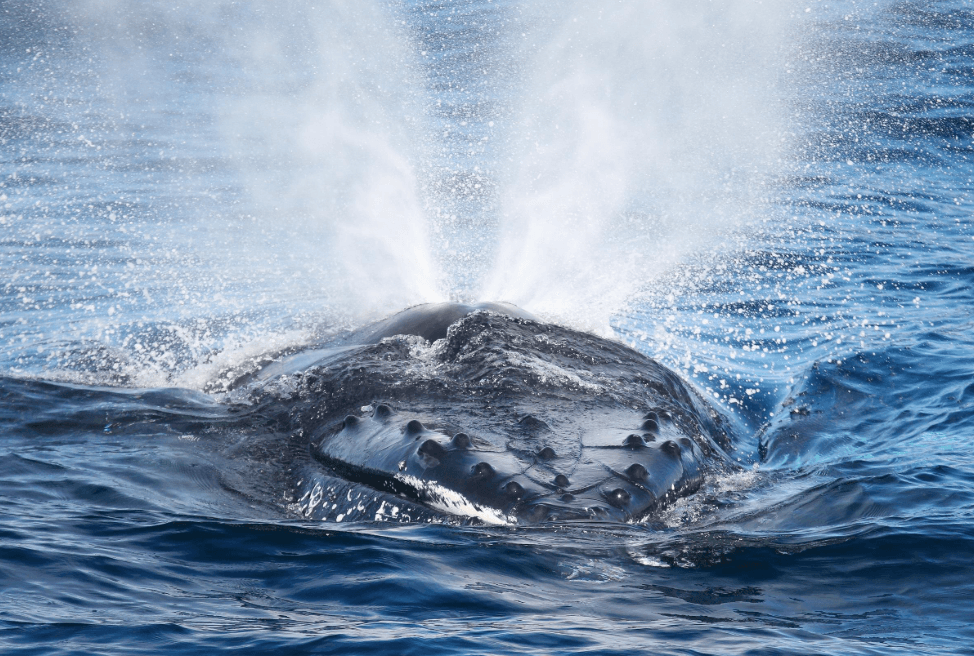
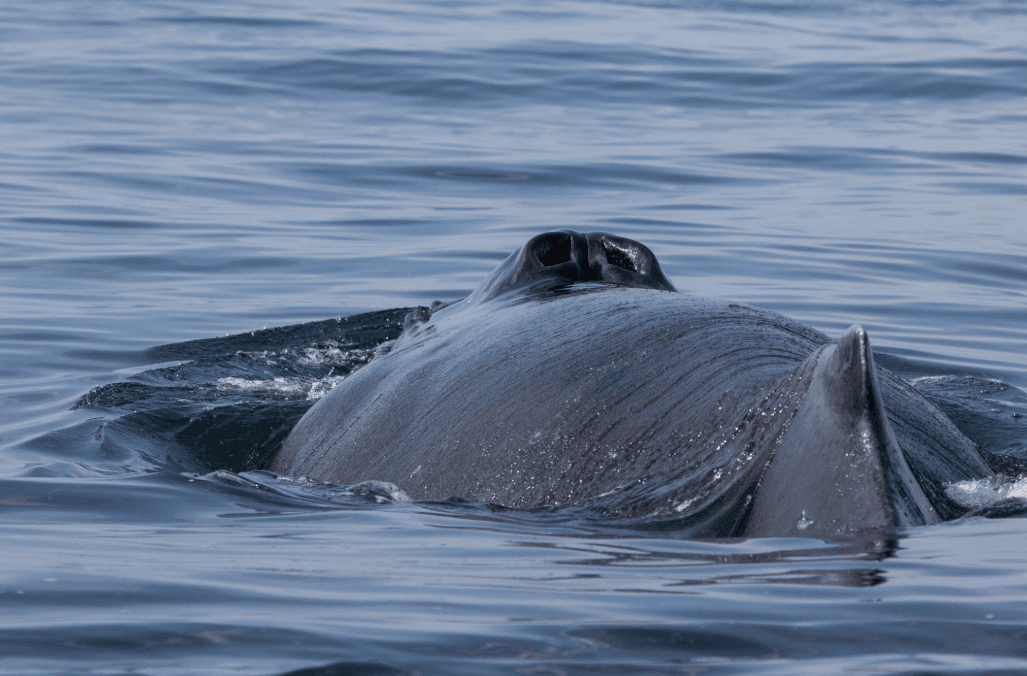
Their blowholes are located on top of their heads, allowing them to breathe without lifting their entire bodies out of the water. When a whale reaches the surface, it forcefully exhales before inhaling fresh air.
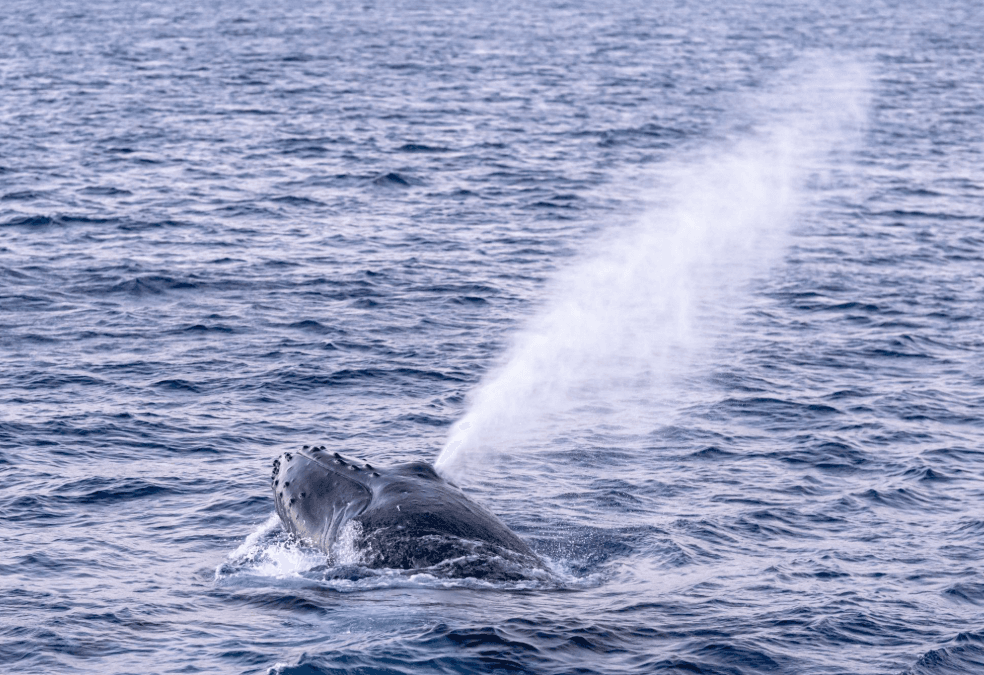
The visible spray commonly called a whale's blow is primarily warm, moist air released during exhalation, along with water droplets around the blowhole. Its appearance can vary depending on lighting, wind, and surrounding conditions.
After breathing, the whale can submerge again and continue its underwater activity.
Do Humpback Whales Breathe Differently While Resting?
A resting humpback whale may move more slowly and spend less time performing active behaviors such as traveling rapidly or breaching. Its breathing pattern can also differ from that observed during sustained swimming or other active periods.
However, rest does not mean that a whale stops needing oxygen. Even when relatively inactive, it must surface to breathe.
Researchers study whale breathing by recording surfacing events, observing dive durations, and monitoring changes in behavior. These observations can help scientists investigate how whales balance rest, movement, and oxygen requirements.
There is no single breathing schedule that applies to every humpback whale. The interval between breaths may change with the animal's activity, circumstances, and individual behavior.
How Can a Whale Rest Without Drowning?
Sleeping and resting underwater present a special challenge for marine mammals. Humpback whales must remain capable of reaching the surface to breathe.
Cetaceans have adaptations that allow them to rest while maintaining the ability to control their breathing. Their breathing is under conscious control, unlike the largely automatic breathing humans experience.
Scientists have studied sleep in several cetacean species and found evidence of unihemispheric slow-wave sleep, in which one brain hemisphere rests while the other remains relatively active. The details of sleep vary among species, and findings from one cetacean should not automatically be assumed to describe every aspect of humpback whale sleep.
For humpback whales, observing a quiet animal at the surface does not by itself prove that it is asleep. It may be resting, drifting, breathing between dives, or engaging in another low-activity behavior.
What Whale Watchers May Notice in Samaná Bay
During the humpback whale season, visitors on responsible whale-watching trips may notice several behaviors associated with breathing and resting.
A calm surfacing
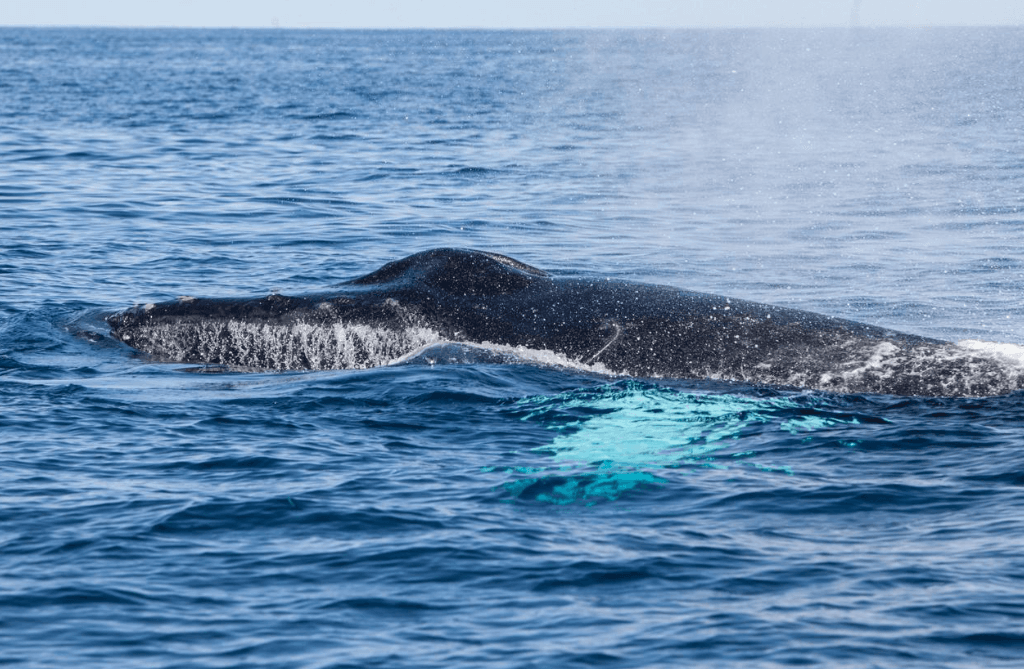
A whale may rise gently until its blowholes clear the water. It can exhale, inhale, and then remain at the surface briefly before submerging.
Several blows in succession
A whale sometimes surfaces repeatedly and produces several visible blows before beginning a longer dive. The number and spacing of breaths vary, so visitors should not expect every surfacing sequence to look the same.
A longer pause at the surface
Some encounters involve a whale remaining visible for an extended period. This may provide an opportunity to observe its back, blow, or dorsal fin. A surface pause alone does not establish that the animal is resting or sleeping.
A quiet disappearance
A whale may submerge without breaching, tail-slapping, or making another dramatic movement. Such quiet behavior is entirely normal and can be just as interesting to observe.
Why Breathing Patterns Change
Several factors can influence a humpback whale's breathing and diving patterns.
Activity level: A whale engaged in more energetic activity may show a different breathing pattern from one moving slowly.
Dive duration: The length of time spent underwater affects when the whale next needs to surface. Dive duration varies considerably according to behavior and circumstances.
Individual differences: Age, condition, behavior, and other factors may contribute to differences between individual whales.
Environmental conditions: Waves, wind, and visibility can affect how easily observers detect a blow or identify the exact moment a whale surfaces. These conditions can make breathing patterns appear less consistent than they really are.
It is important not to interpret every change in breathing as a sign of distress. A reliable assessment requires more context than a single observation from a boat.
Why Samaná Bay Is a Valuable Place to Observe Humpback Whales
Samaná Bay, on the northeastern coast of the Dominican Republic, is well known as a seasonal destination for North Atlantic humpback whales. Many whales migrate to Caribbean breeding and calving grounds during the winter months.
The region offers opportunities to observe whales at the surface, where breathing is visible. Visitors may also encounter mothers and calves, adults traveling through the bay, or whales displaying other natural behaviors.
Because sightings are unpredictable, a whale-watching trip may involve periods of waiting between surfacings. These quiet intervals are part of observing wildlife in its natural environment.
Visitors should follow their guide's instructions and choose operators that comply with applicable whale-watching rules. Maintaining appropriate distances and avoiding attempts to chase or surround whales helps reduce disturbance.
How to Observe Whale Breathing Responsibly
You do not need to see a spectacular breach to appreciate a humpback whale encounter. Watching the animal surface and breathe can reveal important details about its movements and behavior.
Use these simple observation tips:
- Watch for the whale's exhalation as its blowholes emerge above the water.
- Notice whether the whale surfaces once or several times before diving.
- Observe the direction and duration of its movements without assuming that every pause indicates rest.
- Use binoculars when helpful, while following the guide's safety instructions.
- Keep noise and sudden movements to a minimum.
- Never encourage a boat operator to approach too closely or pursue a whale that is moving away.
Patience is especially valuable. A quiet observation may offer a better opportunity to understand natural whale behavior than an encounter dominated by rapid boat movements.
Frequently Asked Questions
How often do humpback whales breathe while resting?
There is no fixed interval. Breathing frequency depends on the whale's activity, dive duration, and individual circumstances. A whale may take several breaths during a surface visit before diving again.
Can humpback whales sleep underwater?
Humpback whales can rest underwater, but they must retain the ability to surface for air. Research on cetaceans indicates that some species use unihemispheric sleep, although the precise details should not be generalized across all species without evidence.
Why does a humpback whale produce a spray when it surfaces?
The visible blow is mainly the whale's exhalation, which contains warm, moist air and droplets of water. Wind and lighting influence how the spray looks to observers.
Does a whale resting at the surface mean it is sick?
No. A whale remaining relatively still at the surface is not necessarily sick or injured. Determining its condition requires additional observations and, when appropriate, assessment by qualified experts.
Can tourists see resting humpback whales in Samaná Bay?
Visitors may see whales moving slowly or remaining near the surface during the breeding season. However, a surface sighting alone cannot confirm that a whale is resting or sleeping.
When is the best time to watch humpback whales in Samaná Bay?
The main seasonal whale-watching period generally runs from January through March, although whales may arrive earlier or remain later. Sightings and behaviors vary from day to day, so no particular time guarantees a specific encounter.
Conclusion
Humpback whale breathing is an essential part of the animals' lives, including periods when they appear calm or inactive. Because they are air-breathing mammals, they must return to the surface even when resting. Their surfacing intervals and diving patterns vary with activity and individual circumstances.
For visitors to Samaná Bay, observing a whale breathe offers a valuable opportunity to learn about marine mammal biology. By watching patiently, listening to knowledgeable guides, and respecting wildlife boundaries, travelers can appreciate these remarkable animals without disturbing their natural behavior.
A quiet surfacing may last only a moment, but it reveals one of the fundamental adaptations that allows humpback whales to thrive in the ocean.

Local explorer & expert guide in Visita Haitises.