How Do Scientists Estimate the Number of Humpback Whales Using Samaná Bay When Some Animals Are Never Seen?
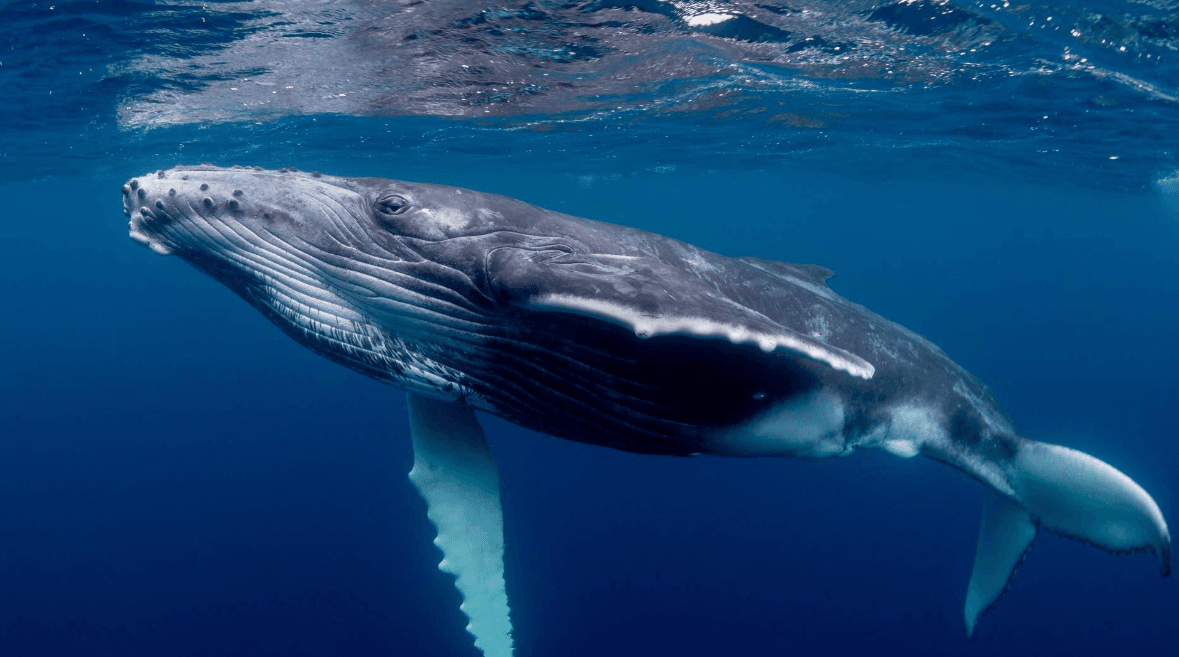
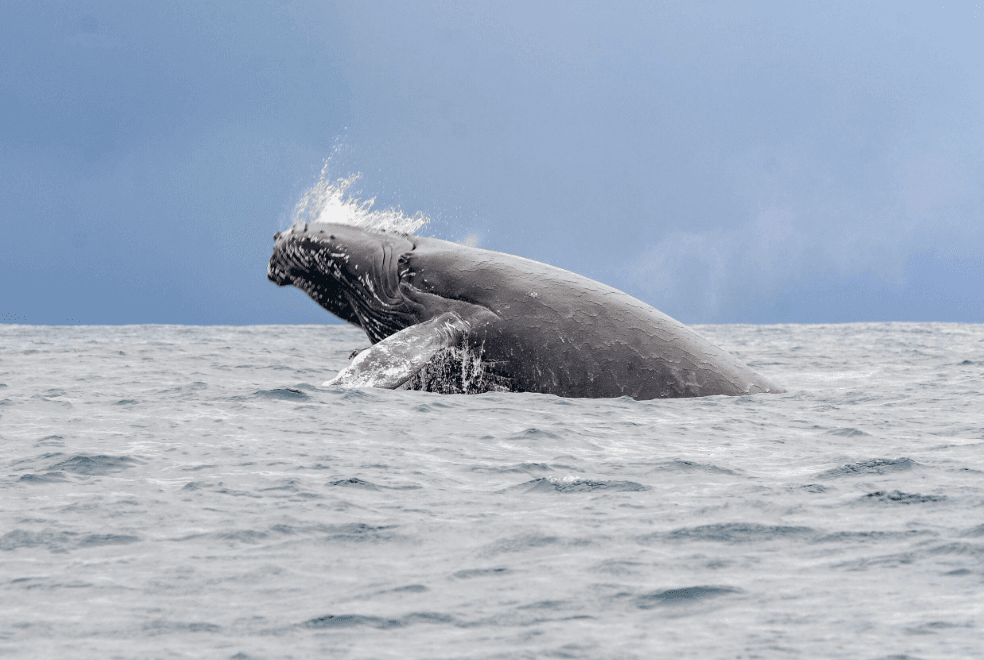
Samaná Bay in the Dominican Republic is a well-known seasonal destination for humpback whale watching. During the North Atlantic winter breeding season, whales can be observed in the surrounding waters, creating opportunities for researchers to study their distribution and abundance.
However, counting every whale that uses the bay is not as simple as recording the animals visible from a boat. Some whales remain underwater, others may be outside the survey area, and some sightings do not provide enough detail to identify individual animals.
Scientists address these challenges by combining standardized surveys, individual identification, detection estimates, and statistical models. These methods help researchers distinguish the number of whales observed from the number that may actually use an area.
Why Is Counting Every Humpback Whale Difficult?
A whale survey records animals detected under particular conditions. It does not automatically capture every animal present.
Several factors make a complete count difficult:
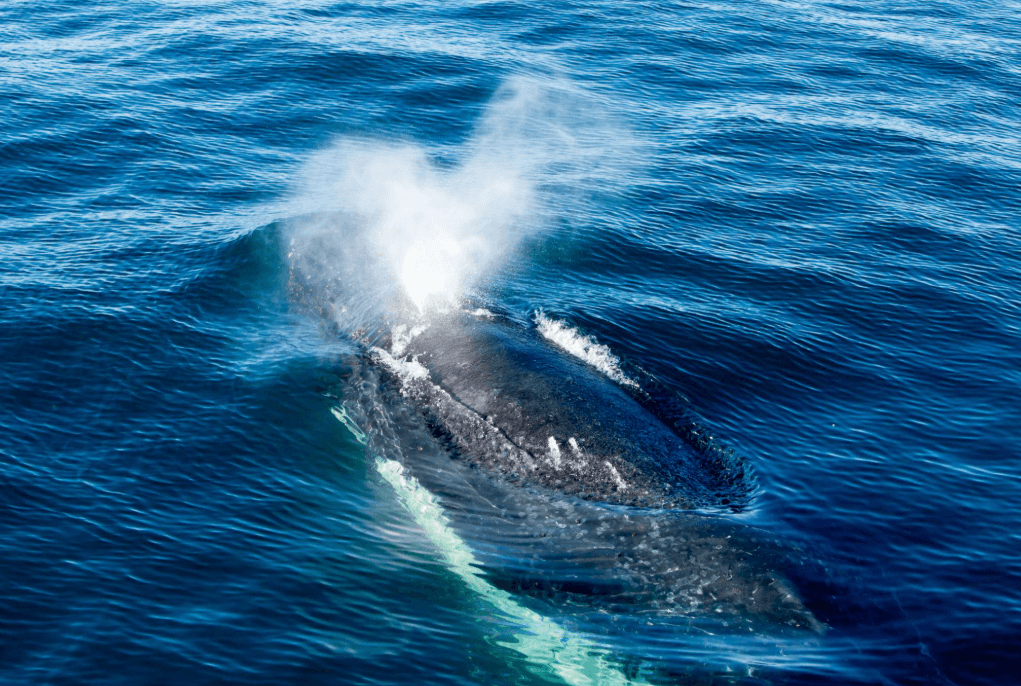
- Time underwater: Whales regularly dive, so observers cannot see them continuously.
- Geographic coverage: Survey vessels cannot inspect every part of a large marine area at the same time.
- Weather and visibility: Waves, glare, rain, and poor visibility can hide animals.
- Movement: Whales can enter or leave the survey area while observations are taking place.
- Repeated sightings: The same whale may be counted more than once during a survey.
- Identification limitations: Some sightings cannot be matched confidently to a known individual.
These factors mean that a raw sighting total may overestimate or underestimate the number of distinct whales, depending on how the data were collected.
Researchers must therefore choose a method that matches their question and the limitations of their observations.
What Is the Difference Between a Whale Count and a Population Estimate?
A whale count is the number of animals recorded during a defined observation period or survey.
A population estimate attempts to infer how many animals belong to the population or use the study area, including animals that were not detected.
For example, a hypothetical survey might record 60 whale sightings. That does not necessarily mean 60 different whales were present. Some sightings could involve animals already recorded earlier.
Likewise, researchers might identify 45 distinct whales from photographs while other individuals remain unidentified.
Neither number alone establishes the total number of whales using Samaná Bay. The appropriate interpretation depends on survey coverage, the possibility of duplicate sightings, and the method used to account for animals that went undetected.
Method 1: Conduct Standardized Whale Surveys
Scientists often begin with a clearly defined survey plan.
A research team may specify the geographic boundaries, survey dates, routes, observation procedures, and information to be recorded. Standardization helps researchers compare results across locations and seasons.
During a survey, observers may record:
- Date and time of each sighting
- Geographic coordinates
- Number of whales observed together
- Direction of travel, when observable
- Weather and sea conditions
- Approximate distance from the survey vessel
- Whether photographs or other identification records were obtained
Consistent methods make it easier to determine how much of the study area was covered and which conditions may have affected detection.
A survey that covers only a small part of the bay cannot automatically represent the entire area. Researchers must consider whether their sampling design supports that broader conclusion.
Method 2: Identify Individual Whales Using Photographs
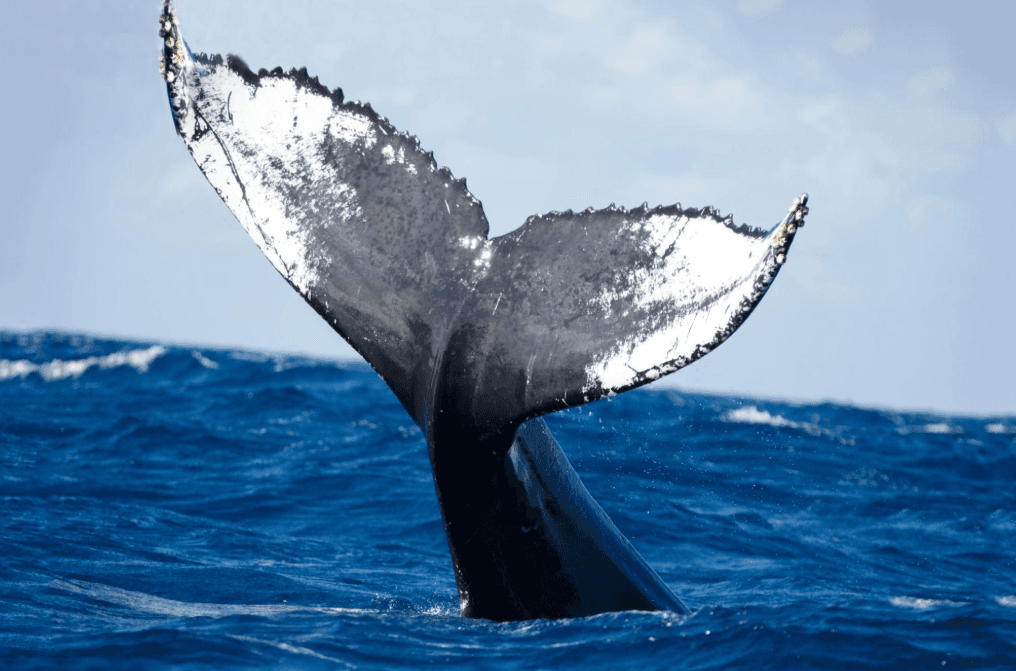
Humpback whales often have distinctive markings on the underside of their tail flukes. Researchers use photographs of these patterns to identify individuals when image quality is sufficient.
Photo-identification can help scientists determine whether a whale photographed on one day was already recorded during an earlier encounter.
This is particularly useful when whales move through the same area repeatedly.
For example, if Whale A is photographed on Monday and matched confidently to an image taken on Wednesday, researchers can recognize that the two records represent the same individual rather than two different whales.
However, not every whale raises its tail fluke, and some photographs are unsuitable for identification. Scientists must therefore account for unidentified sightings rather than assuming every animal can be matched to a catalog.
Photo-identification is a valuable tool, but its usefulness depends on image quality, catalog completeness, and the reliability of matching procedures.
Method 3: Estimate the Probability of Detecting a Whale
Detection probability describes how likely researchers are to observe an animal that is present and available to be detected under the survey conditions.
This probability can vary substantially.
A whale near the surface in calm water may be easier to detect than one that is submerged in rough seas. A whale close to the survey route may also be easier to observe than one farther away.
Scientists can investigate detection using methods appropriate to their survey design. Depending on the available data, they may compare repeated observations, model how detection changes with distance, or use other established approaches.
The important point is that researchers should not assume every whale present has an equal chance of being seen.
Detection estimates can help account for missed animals, but they must be based on suitable data and assumptions. They should not be chosen simply to make a count larger.
Method 4: Use Distance-Sampling Techniques
Distance sampling is one approach used in wildlife surveys to estimate animal abundance while accounting for the fact that detection often decreases with distance from the observer.
In a suitable whale survey, researchers record the distances between detected whales and a defined observation line or route. They then model how detection changes with distance.
The method uses this information, together with survey effort and other assumptions, to estimate how many animals may have been missed.
For example, whales close to a vessel may be detected frequently, while whales farther away may be missed more often. A properly designed distance-sampling study accounts for this pattern instead of treating all areas as equally observable.
Distance sampling requires careful survey design, sufficiently reliable distance measurements, and assumptions appropriate to the data. It is not automatically suitable for every boat-based whale-watching dataset.
Method 5: Use Capture–Recapture Approaches
Photo-identification can also support capture–recapture or mark–recapture methods. In this context, researchers do not physically capture whales; they use identifiable photographs as records of individual animals.
The basic idea is to compare individuals documented during different sampling occasions.
Suppose a first survey identifies a set of whales. During a later survey, researchers photograph another set and determine how many individuals were already recorded in the first survey.
The overlap provides information about how many identifiable animals may exist beyond those recorded in either sample.
However, reliable estimates depend on assumptions about factors such as population closure during the study period, identification accuracy, and differences in the likelihood that individuals will be photographed.
For a mobile species such as the humpback whale, researchers must also consider movement into and out of the study area. Depending on the research question, open-population or spatial models may be more appropriate than a simple closed-population estimate.
Method 6: Account for Whales That Are Seen More Often Than Others
Some whales may be easier to photograph than others. Individuals that spend more time near the surface or repeatedly use heavily surveyed areas may appear in the records more frequently.
This unequal detection can bias estimates if researchers assume every whale has the same chance of being observed.
Scientists may address the issue by using models that allow detection probabilities to vary among individuals or with relevant conditions.
Researchers also need to distinguish the number of unique individuals from the total number of sightings.
For instance, 100 sightings might represent 100 different whales, or they might include repeated records of a smaller number of individuals. The answer depends on the identification evidence and survey design.
Accounting for these differences helps make abundance estimates more defensible.
How Do Scientists Know Whether an Estimate Is Reliable?
A scientific estimate should include information about uncertainty rather than presenting a single number as exact.
Researchers may report confidence intervals or other uncertainty measures to communicate the range of values compatible with the data and model.
They also evaluate:
- Whether the survey covered the intended area
- Whether duplicate sightings were addressed
- How many whales were identified confidently
- Whether observation conditions changed between surveys
- Whether model assumptions were reasonable
- Whether the data were sufficient for the chosen method
A narrow uncertainty interval does not automatically mean an estimate is accurate if the survey design or assumptions are flawed. Reliability depends on the quality of both the observations and the analytical method.
Can Scientists Estimate Every Whale Using Samaná Bay?
Not necessarily. The answer depends on how researchers define the population and the geographic area being studied.
A survey may estimate the number of whales present within a particular area during a defined period. Another study may investigate the number of individuals using the region throughout an entire breeding season.
These are different questions.
Humpback whales are mobile, so an estimate for one survey day should not automatically be interpreted as the total number of whales that visited the bay during the entire season.
Similarly, a seasonal count does not necessarily represent the total population of the wider North Atlantic.
To make meaningful comparisons, researchers must define the time period, geographic boundaries, and population being estimated.
Why Accurate Whale Estimates Matter for Conservation
Reliable abundance estimates can help researchers monitor population patterns and understand how whales use important habitats.
If surveys are conducted consistently over multiple years, scientists may investigate whether observed numbers change over time. They must still consider whether differences reflect actual population changes or changes in survey effort, detection, or whale distribution.
Abundance research can also support decisions about marine management and responsible tourism. Understanding how whales use an area helps inform discussions about vessel activity, habitat protection, and potential disturbances.
For visitors, responsible whale watching remains important. Tour operators should follow applicable rules, maintain appropriate distances, and avoid actions that interfere with natural whale behavior.
Frequently Asked Questions
Do scientists count every humpback whale in Samaná Bay?
Usually, a survey records the whales detected within its coverage and observation period. Estimating the total number using the area requires methods that account for missed animals, repeated sightings, and survey limitations.
Why can a whale be missed during a survey?
Whales may be underwater, outside the survey route, obscured by waves, or too far away to identify. Weather and observation conditions can also affect detection.
Can photographs help scientists avoid counting the same whale twice?
Yes. Clear photographs of distinctive tail-fluke markings can help researchers recognize previously documented individuals. Not every sighting, however, produces an identifiable photograph.
What is detection probability?
Detection probability is the likelihood that an animal will be observed under specified survey conditions when it is present and available to be detected.
Are population estimates exact?
No. Estimates depend on observations, study design, statistical assumptions, and uncertainty. A well-designed study reports that uncertainty rather than suggesting the result is a perfect count.
Does a higher number of sightings mean there are more whales?
Not necessarily. More sightings could reflect more whales, greater survey effort, improved visibility, changes in whale distribution, or repeated observations of the same animals.
Conclusion
Estimating the number of humpback whales using Samaná Bay requires more than counting the animals visible from a boat. Scientists combine standardized surveys, photo-identification, detection estimates, and statistical methods to account for missed whales and repeated sightings.
The most appropriate method depends on whether researchers want to estimate the number of whales present during a survey, the number using the bay over a season, or a broader population.
By distinguishing observed sightings from estimated abundance and reporting uncertainty clearly, researchers can build a more reliable understanding of humpback whale use of Samaná Bay and support informed conservation decisions.

Local explorer & expert guide in Visita Haitises.