How Do Humpback Whales Protect Themselves From Predators?
Humpback whales are enormous marine mammals, but their size does not make them completely immune to danger. Like other wild animals, they face threats from predators, environmental hazards, and human activities throughout their lives.
So, how do humpback whales protect themselves Their survival depends on several factors, including their large bodies, powerful movements, social behavior, and the ability of mothers to protect their young. These strategies can help them respond to threats, although no defense is guaranteed to work in every situation.
Humpback whales live across many of the world's oceans. During the North Atlantic breeding season, they also visit the waters around Samaná Bay in the Dominican Republic. Learning about their natural defenses gives whale watchers a better understanding of the challenges these animals face and why responsible wildlife observation matters.
What Predators Threaten Humpback Whales?
Adult humpback whales are large and powerful, so relatively few animals pose a serious predatory threat to them. However, young calves and vulnerable individuals face greater risks.
Orcas
Orcas, also called killer whales, are among the most important natural predators of humpback whales. Some orca populations hunt marine mammals, and attacks on humpback whales have been documented.
Orcas may target calves or attempt to separate a young whale from its mother. These encounters can be dangerous because a calf is smaller and less experienced than an adult.
Humpback whales do not always respond to orcas in the same way. Their behavior can depend on the number of predators, the presence of a calf, and the circumstances of the encounter.
Other potential threats
Large sharks may pose a threat to young or weakened whales in some circumstances, and scars on whales can sometimes provide evidence of previous encounters with predators.
However, not every scar has a known cause. Scientists must be cautious when interpreting marks on a whale's body because injuries may result from several different sources.
For healthy adult humpbacks, predation is generally less of a concern than it is for calves. Human-related threats, including entanglement in fishing gear and vessel strikes, are also major conservation concerns.
1. Their Enormous Size Provides an Advantage
One of the most obvious advantages humpback whales have is their size.
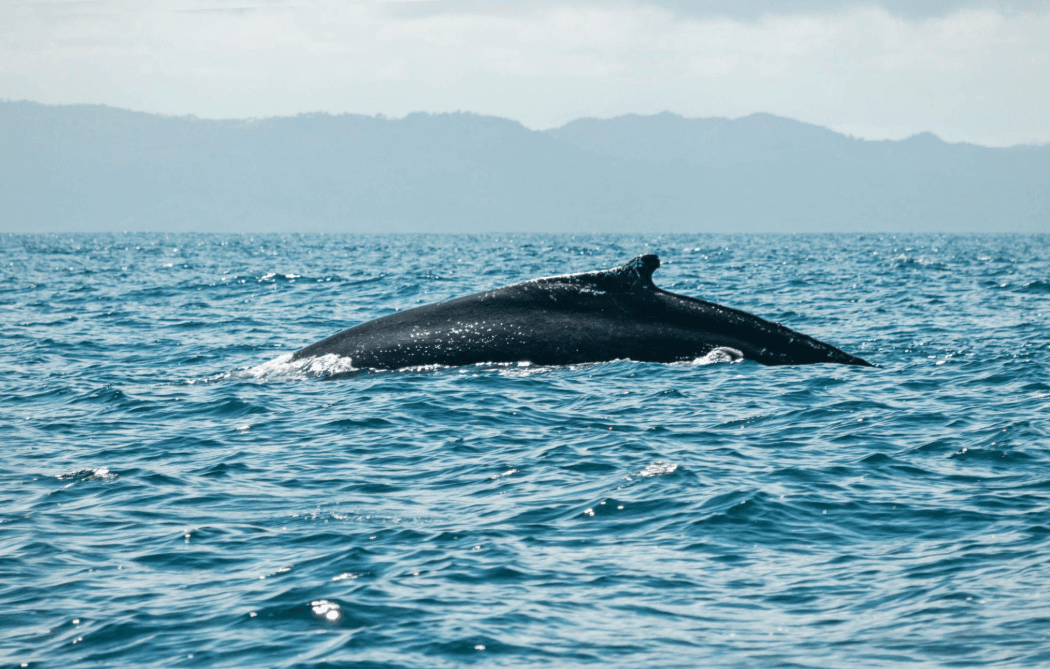
Adults can reach approximately 40–60 feet (12–18 meters) in length. Their large bodies make them difficult and potentially dangerous prey for many predators.
An adult humpback also has substantial muscular strength. Its tail can generate powerful movements, and its body can create considerable force in the water.
Size is not an absolute guarantee of safety, however. Predators may use coordinated approaches, and calves are much more vulnerable than mature adults.
2. Powerful Tail Movements Can Help Them Respond to Threats
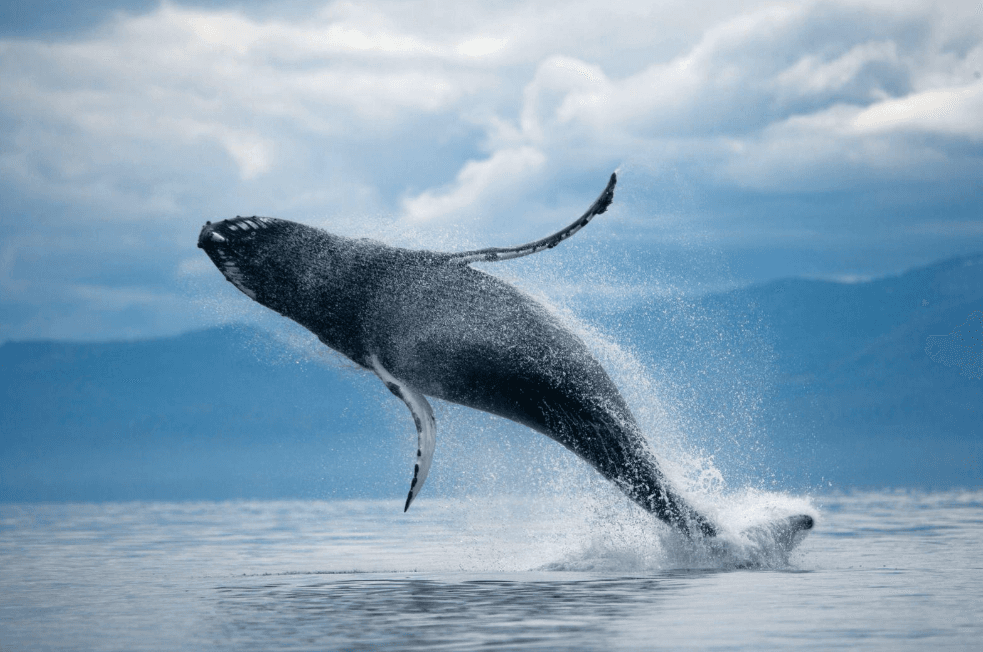
Humpback whales have broad tail flukes that generate propulsion during swimming. These powerful movements also give them the ability to accelerate, change position, and make forceful movements when necessary.
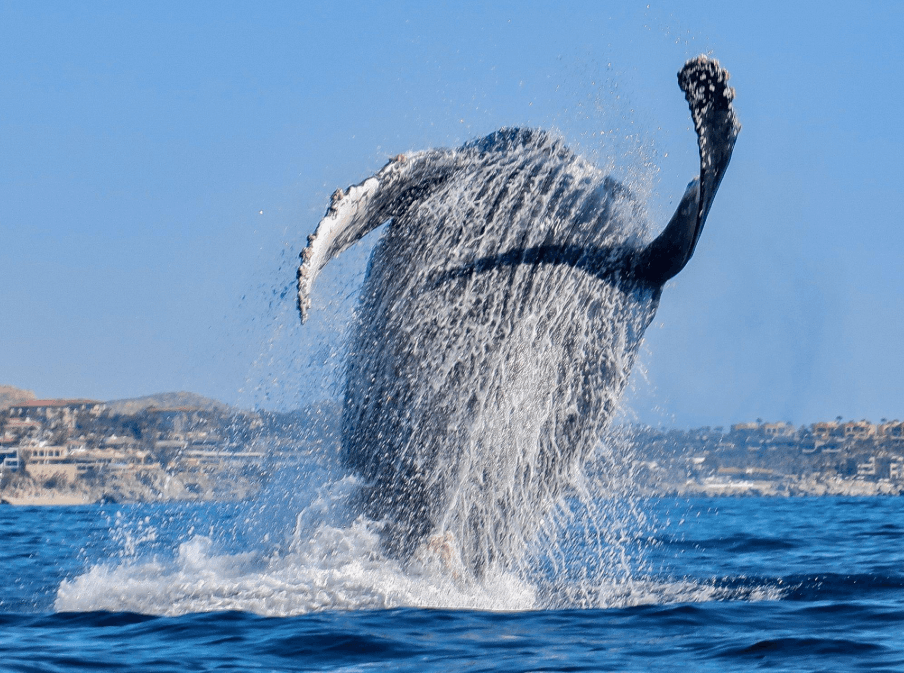
During a threatening encounter, a whale may move its tail forcefully or alter its swimming direction. Such actions can potentially help create distance from a threat or discourage an approaching animal.
A tail movement does not always indicate aggression or defense. Whales use their tails for ordinary swimming and other behaviors, too.
Observers should therefore avoid assuming that every tail slap or sudden movement is a response to a predator.
3. Long Pectoral Flippers Help With Maneuvering
Humpback whales are known for their unusually long pectoral flippers. These fins help them steer, control their position, and maneuver through the water.
During a challenging encounter, maneuverability may be valuable. A whale that can change direction and adjust its position has more options than an animal with limited control.
Humpback whales may also use their flippers during physical interactions. Nevertheless, researchers cannot always determine the purpose of a particular movement simply by watching it.
Their flippers are one part of a larger system involving the tail, body, and muscular control.
4. Mother Humpback Whales Protect Their Calves
A newborn humpback calf is much smaller than an adult and has less experience navigating the ocean. This makes maternal care especially important.
Mother humpback whales remain closely associated with their calves during the early stages of life. A calf depends on its mother for milk, support, and guidance while developing strength and coordination.
When a potential threat appears, the mother may change her position or movement in ways that keep the calf close. In some documented encounters involving orcas, humpback whales have approached or intervened around other animals under attack.
Such observations suggest that humpbacks may sometimes respond to threats affecting other whales, although the reasons for individual interventions can be difficult to establish.
Maternal behavior varies, and it is not accurate to assume that every mother will use the same defensive strategy in every encounter.
Why calves are especially vulnerable
Calves have several disadvantages compared with adults:
- They are smaller and physically less powerful.
- They have less experience responding to danger.
- They depend on their mothers for nourishment and support.
- They may be less capable of sustaining prolonged or demanding movement.
These factors help explain why the early months of a humpback whale's life are particularly important for survival.
5. Group Behavior May Influence Defense
Humpback whales are not permanently organized into large, stable social groups in the way some other animals are. Many travel alone or in temporary associations, and their social arrangements can change.
Even so, interactions between whales may influence how they respond to danger.
When several whales are present, their positions and movements can affect an encounter. Some humpbacks have been observed approaching or interacting with animals involved in attacks by orcas.
Scientists continue to investigate these behaviors. It is not yet possible to explain every intervention with a single theory, and researchers must distinguish direct observations from assumptions about an animal's motivation.
For that reason, it is better to say that humpbacks sometimes display behavior that may help another whale than to claim that they always form protective groups.
6. Their Movement Helps Them Avoid Some Threats
Humpback whales can move through the water using powerful tail strokes and controlled changes in direction. Depending on the situation, they may accelerate, dive, or move away from a potential threat.
However, escaping a predator is not simply a matter of swimming faster. The outcome of an encounter can depend on the predator's behavior, the whale's condition, the presence of a calf, and the surrounding environment.
A whale may be able to avoid a threat in one situation but remain vulnerable in another.
This is one reason scientists study actual encounters rather than relying only on assumptions about body size or swimming ability.
Do Humpback Whales Fight Orcas?
Humpback whales have been documented confronting or approaching orcas in certain circumstances. Some observations involve humpbacks responding to orca attacks on other marine mammals.
These encounters are sometimes described as mobbing or intervention behavior. Researchers have proposed several possible explanations, including responses to immediate danger and broader behavioral tendencies.
The exact motivation is not always known. An observer may see a humpback approaching an orca, but that does not necessarily reveal why the whale chose to intervene.
Humpbacks can use their size and strength during interactions, but encounters with orcas can still be dangerous. Not every whale survives, and not every intervention succeeds.
It is also important to remember that orcas are natural predators in marine ecosystems. Their hunting behavior is part of the ocean's food web, even when it is difficult for humans to watch.
Are Humpback Whales Afraid of Boats?
Boats are not natural predators, but vessels can disturb whales and create physical risks.
A whale may alter its direction or diving pattern when a vessel approaches. Such a response does not necessarily mean the animal is frightened; its behavior may have several possible explanations.
Boats can also pose a more direct danger through collisions, especially when whales are near the surface and difficult for operators to see.
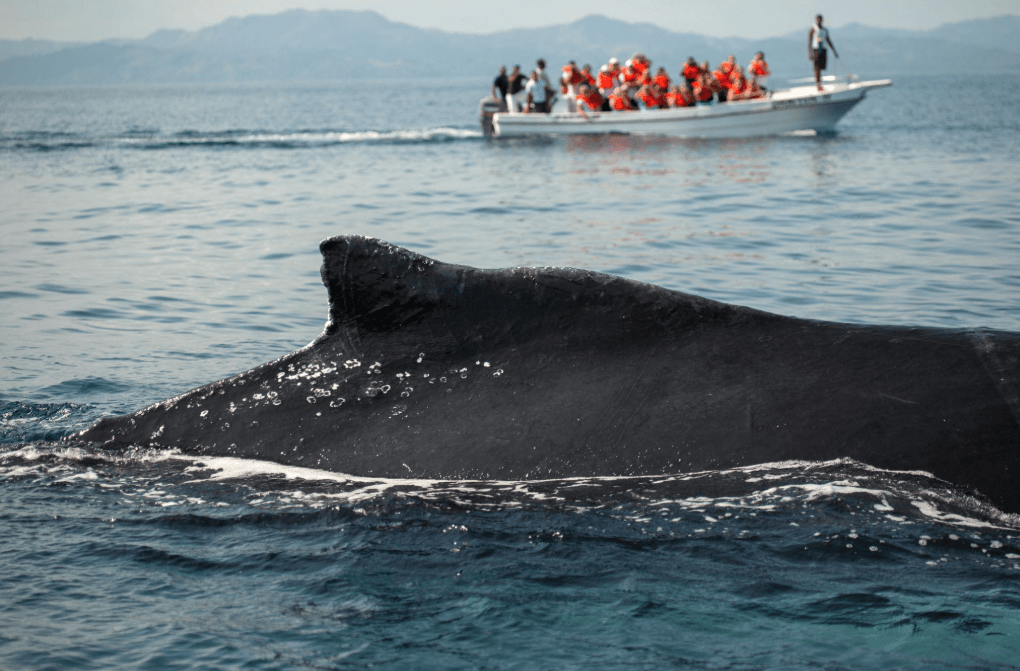
Responsible whale watching requires boat operators to follow applicable regulations, maintain appropriate distances, and avoid chasing or crowding whales.
Visitors should never ask a captain to approach a whale more closely simply to obtain a photograph. Giving an animal room to move freely is an important part of respectful wildlife observation.
What Threats Do Humpback Whales Face Besides Predators?
Natural predators are only one part of the survival picture. Human activities create additional risks for humpback whales.
Entanglement in fishing gear
Whales can become caught in ropes, lines, and nets. Entanglement may restrict movement, cause injuries, or interfere with feeding.
Severe entanglement can be life-threatening, and affected whales may require specialized rescue efforts where available.
Vessel strikes
Collisions with ships and smaller vessels can injure or kill whales. These risks are especially concerning in areas where whale habitat overlaps with vessel traffic.
Following speed restrictions and wildlife-viewing rules can help reduce risks.
Ocean noise
Underwater noise from vessels and other human activities can interfere with the acoustic environment whales rely on. The consequences depend on the source, intensity, duration, and location of the noise.
Environmental change
Changes in ocean conditions can affect the distribution of prey and the quality of feeding habitat. These effects may influence the energy available to whales during different parts of their life cycle.
Understanding these threats shows why protecting whales requires more than studying their natural predators.
Can You Observe Defensive Behavior in Samaná Bay?
Samaná Bay in the Dominican Republic is a well-known seasonal destination for observing North Atlantic humpback whales during their winter breeding season.
Visitors may see whales surfacing, diving, moving their tails, or interacting with other whales. However, a typical whale-watching excursion does not guarantee a sighting of defensive behavior, and encounters with predators are not something visitors should expect.
Most trips focus on observing whales in their natural environment without disturbing them.
If you are visiting Samaná Bay, pay attention to the guide's explanations and follow all instructions aboard the vessel. You can learn a great deal from ordinary whale movements without needing to witness a dramatic encounter.
Responsible observation protects whales
Choose an operator that respects local wildlife regulations and does not chase, surround, or deliberately provoke whales.
Keep noise to a reasonable level, follow safety instructions, and never attempt to touch or feed a wild whale.
If a whale moves away or dives, allow it to do so without trying to follow it aggressively. Responsible observation places the animal's welfare ahead of getting a closer view.
Frequently Asked Questions
What is the biggest predator of a humpback whale?
Orcas are among the most significant natural predators of humpback whales. Calves are generally more vulnerable than healthy adults, and the outcome of an encounter depends on the circumstances.
Can a humpback whale defend itself against an orca?
Humpbacks may use their size, strength, tail movements, and maneuverability when responding to threats. Some have also been observed intervening during attacks on other animals. However, no defense guarantees survival.
Do mother humpback whales protect their babies?
Mothers provide essential care to their calves and may respond to potential threats by adjusting their position or behavior. The precise response varies with the circumstances.
Do humpback whales protect other species?
There are documented observations of humpback whales approaching or interacting with orcas during attacks on other marine mammals. The reasons for these behaviors remain an active subject of scientific investigation.
Are adult humpback whales safe from predators?
Adult humpbacks are large and powerful, which makes them difficult prey, but they are not completely immune to predation or injury.
Can tourists see humpback whales defending themselves in Samaná Bay?
It is possible to observe a variety of natural whale behaviors, but defensive encounters are unpredictable and should never be expected or encouraged. Most responsible tours focus on undisturbed observation.
Final Thoughts
Humpback whales have several advantages that can help them respond to threats, including their large bodies, powerful tail flukes, maneuverable flippers, and maternal care. Some individuals have also been observed approaching or intervening in encounters involving orcas.
Nevertheless, these strategies do not make humpback whales invulnerable. Calves remain particularly vulnerable, and human-related dangers such as fishing-gear entanglement and vessel strikes are important conservation concerns.
For visitors to Samaná Bay, understanding these challenges adds meaning to a whale-watching experience. By choosing responsible tours and respecting the animals' space, visitors can enjoy observing humpback whales while supporting a culture of marine wildlife protection.

Local explorer & expert guide in Visita Haitises.