Why Do Humpback Whales Show Only Part of Their Back in Samaná Bay?
Whale watching in Samaná Bay, Dominican Republic, can offer unforgettable views of humpback whales rising through the water. Sometimes, however, visitors see only a small section of a whale’s back before it disappears beneath the surface again.
This brief appearance can leave travelers wondering whether the whale is diving, swimming close to the surface, or simply moving in a way that makes most of its body difficult to see.
The explanation is that a whale’s visible outline depends on its position, movement, the shape of its back, and the condition of the water. Because humpback whales spend much of their lives underwater, observers often see only a small part of the animal at any one moment.
Understanding this behavior can help visitors appreciate the details of a whale-watching trip in Samaná Bay without expecting every sighting to reveal the whale’s entire body.
Why Is Only Part of a Humpback Whale’s Back Visible?
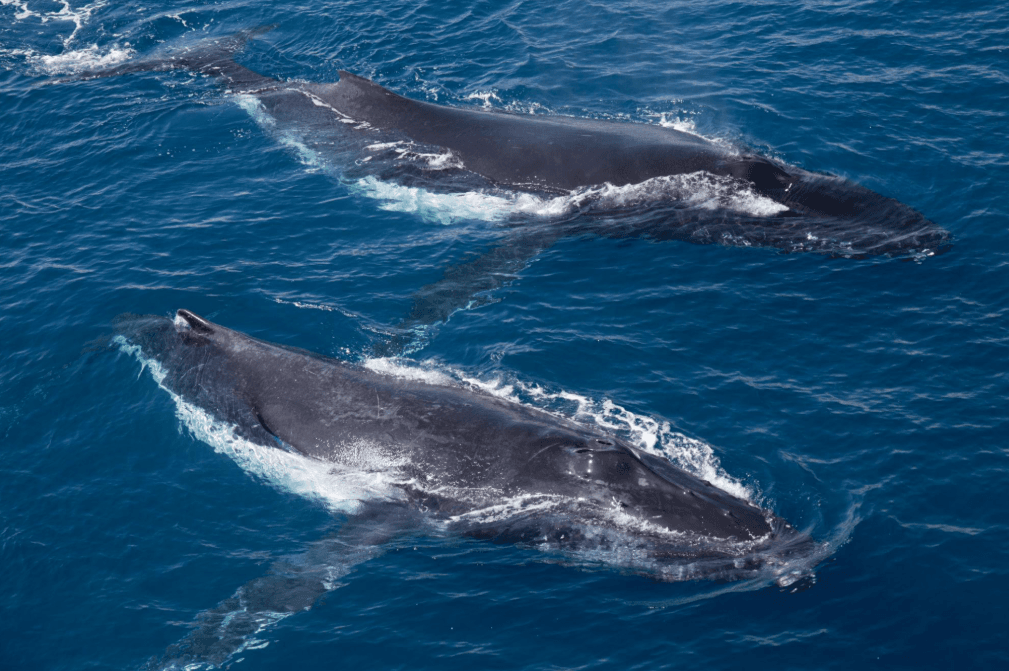
Humpback whales are large marine mammals, but their full bodies are rarely visible above the ocean surface. When a whale swims near the surface, only the uppermost part of its body may emerge from the water.
The visible section can change from one moment to the next. A whale might reveal a smooth curve of its back, followed by its dorsal fin, before the surrounding water closes over it again.
This is a normal consequence of observing a submerged animal from above the waterline. The whale does not need to perform a dramatic movement for a small portion of its back to become visible.
For visitors on a whale-watching boat, these brief appearances are useful opportunities to observe the whale’s shape and movement.
How Does the Whale’s Position Affect What You See?
A humpback whale’s position relative to the surface influences how much of its back can be seen.
When the whale is swimming just beneath the surface, the upper curve of its body may approach or break through the water while the rest remains submerged. Small changes in depth or body position can change the visible outline.
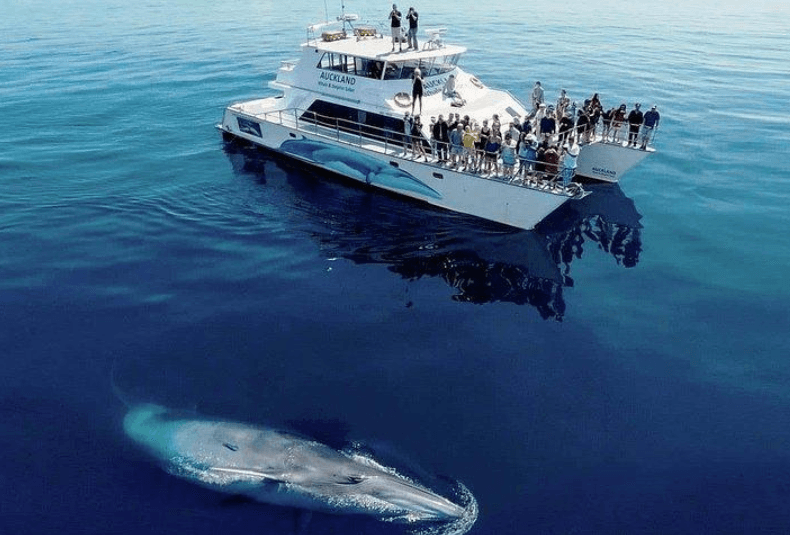
The viewing angle also matters. From a boat, observers see the whale from above and from the side at varying angles. Depending on the whale’s position and the boat’s viewpoint, the same animal may appear to show a broad section of its back or only a narrow curve.
This is one reason why two people standing at different points on a boat may describe the same sighting differently.
Does a Partial Appearance Mean the Whale Is Diving?
Not necessarily.
Seeing only part of a humpback whale’s back does not, by itself, prove that the animal is beginning a deep dive. It may be swimming near the surface, changing its position underwater, or moving through a small rise and fall in the water.
Observers should look for additional clues before interpreting the movement. For example, a whale may continue to appear at a similar depth, or its visible outline may gradually disappear as it moves farther underwater.
A sequence of observations is generally more informative than one brief glimpse. Even then, it may not be possible to determine the whale’s exact intention from the surface alone.
During a whale-watching trip in Samaná Bay, guides can help visitors distinguish what they can actually observe from what remains uncertain.
Can the Ocean Conditions Make the Whale Harder to See?
Yes. The sea surface can influence how clearly a whale’s back appears.
Waves, reflections, glare, and changing light can make the boundary between the whale and the surrounding water harder to distinguish. When the sea is choppy, a small section of the back may appear between waves and then become hidden again.
In calmer conditions, observers may have a clearer view of the whale’s outline. However, visibility also depends on lighting, viewing distance, and the animal’s position.
These conditions help explain why a whale that seems easy to follow one moment may become difficult to see the next. It does not necessarily mean the whale has traveled a great distance.
Why Is the Whale’s Back Such a Useful Feature to Observe?
The back provides several visible features that can help whale watchers follow a sighting.
Its curved outline may appear before other recognizable parts of the animal. The dorsal fin, located farther along the back, can also become visible as the whale moves through the surface.
Together, these features may help observers distinguish a whale’s position and direction of movement, although a single glimpse is rarely enough to identify every detail.
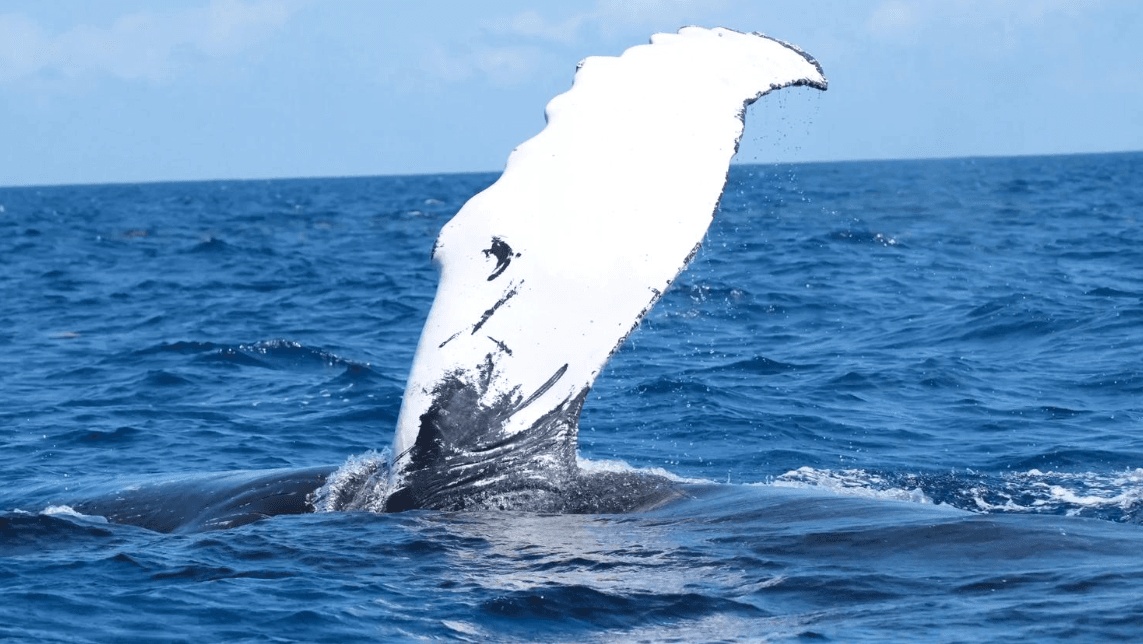
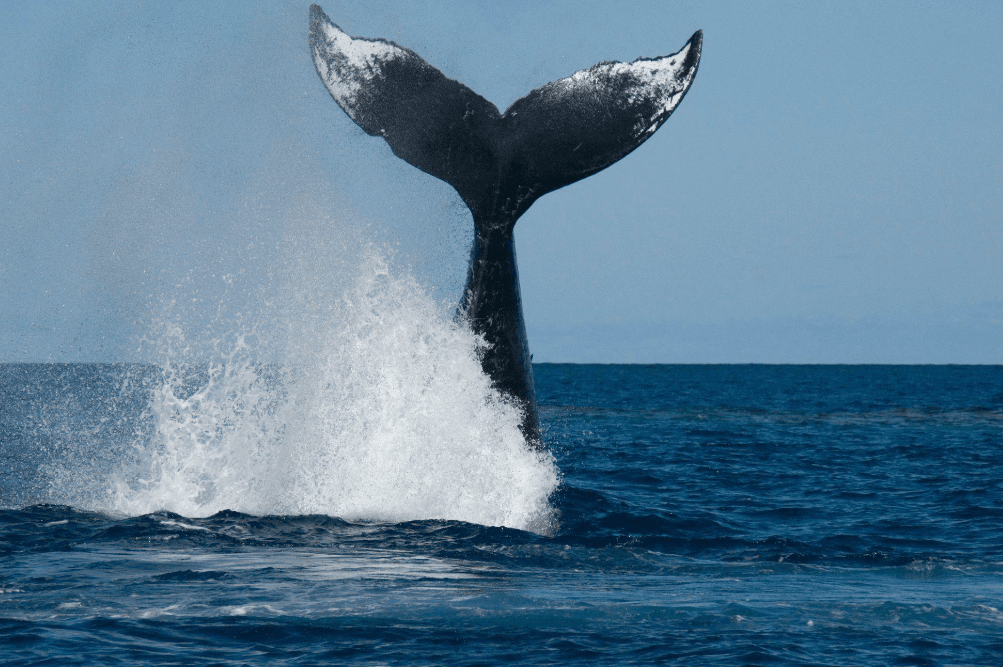
Humpback whales have distinctive body shapes, including long pectoral fins and a broad tail fluke. Nevertheless, these features are not all visible during every encounter.
For visitors, learning to notice smaller details can make a short sighting just as interesting as a dramatic breach.
What Should Whale Watchers Look for During a Brief Sighting?
When only part of a whale’s back appears, resist the temptation to look away immediately. The next few moments may provide additional information about the animal.
Consider these practical observation tips:
- Watch the outline: Notice whether the visible curve is broad, narrow, or changing.
- Look for the dorsal fin: It may help you follow the whale’s movement along the surface.
- Observe the surrounding water: Waves and glare can hide part of the animal.
- Look for repeated appearances: A whale may become visible again nearby, although its next position is not guaranteed.
- Listen to your guide: Experienced guides can explain visible movements while avoiding unsupported conclusions about the whale’s intentions.
- Keep a respectful distance: Follow the operator’s wildlife-viewing rules and avoid encouraging a boat to approach too closely.
Binoculars may help in some circumstances, but keep your eyes on the general sighting area too. A whale can disappear from view while you are adjusting your equipment.
Why Every Whale-Watching Encounter Looks Different
Humpback whales do not follow a predictable display schedule. One encounter may include a clear view of the back and dorsal fin, while another may consist of only a brief glimpse through the waves.
Differences in the whale’s position, swimming movement, distance from the boat, and surface conditions can all affect the experience.
Samaná Bay is known for seasonal humpback whale watching, particularly during the winter breeding and calving period in the North Atlantic population. During the season, visitors may encounter individual whales, mother-calf pairs, or groups of animals, but sightings vary from trip to trip.
A short or incomplete view is still a genuine wildlife encounter. Patience and careful observation often make the experience more rewarding than waiting only for spectacular displays.
Frequently Asked Questions
Why do I sometimes see only a humpback whale’s back?
The whale may be swimming close to the surface while most of its body remains underwater. Its position, movement, and the viewing angle determine how much of its back becomes visible.
Does a whale showing only its back mean it is about to dive?
Not always. A partial view alone is not enough to establish that a deep dive is beginning. Watch for a sequence of movements and listen to your guide’s explanation.
Can waves hide a humpback whale’s back?
Yes. Waves, glare, reflections, and changing light can obscure the whale’s outline, making it appear and disappear from view.
Is a partial whale sighting normal in Samaná Bay?
Yes. Humpback whales spend most of their time underwater, so visitors should not expect to see their entire bodies during every encounter.
How can I improve my chances of following a whale?
Watch the area where the whale was last seen, look for its back or dorsal fin, and pay attention to your guide’s directions. Keep your camera ready without letting it distract you from observing the animal directly.
Conclusion
Seeing only part of a humpback whale’s back is a normal part of observing a large marine mammal in its natural environment. The whale’s position beneath the surface, its movement, the viewing angle, and ocean conditions all influence what visitors can see.
During a whale-watching excursion in Samaná Bay, these brief appearances offer an opportunity to pay closer attention to the details of whale behavior. You may not see the entire animal, but observing its outline, dorsal fin, and movement can still make the encounter memorable.
The best approach is to remain patient, follow your guide’s instructions, and appreciate each sighting without assuming that every movement has a single obvious explanation.

Local explorer & expert guide in Visita Haitises.