Why Do Humpback Whales Sometimes Lift Their Heads Above the Water in Samaná Bay?
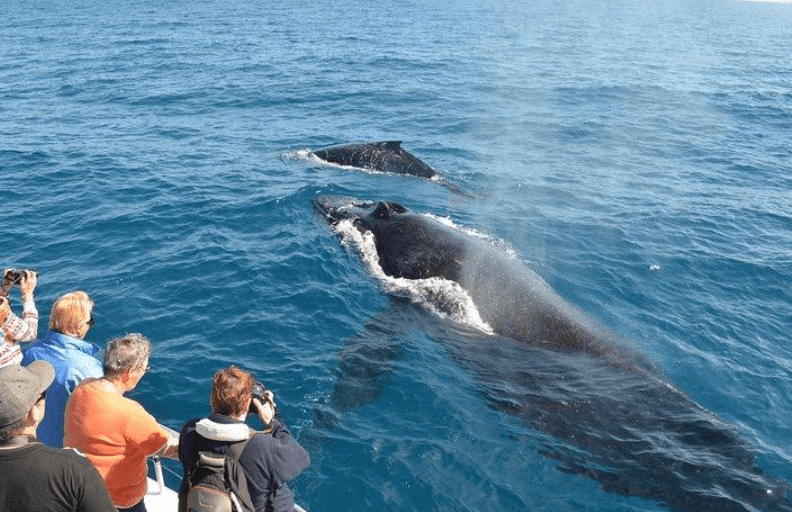
A humpback whale can create an unforgettable moment during a whale-watching trip in Samaná Bay, Dominican Republic, simply by raising part of its head above the ocean surface. Instead of seeing only the whale’s back or dorsal fin, visitors may briefly glimpse its head before it slips beneath the water again.
This behavior can look as though the whale is trying to get a better view of its surroundings. While that is one possible interpretation of certain head-raising behaviors, the reason for an individual whale’s movement cannot always be determined from a brief observation.
During the humpback whale season, understanding the difference between a simple head lift and a more upright behavior called spyhopping can help visitors describe what they see more accurately.
In this guide, discover what these movements look like, what scientists and guides may consider when interpreting them, and how to enjoy such an encounter responsibly.
What Does It Mean When a Humpback Whale Lifts Its Head?
When a humpback whale raises its head above the surface, observers may see part of its snout, mouth, or the front of its head. The amount visible can vary, and the animal may remain at the surface only briefly.
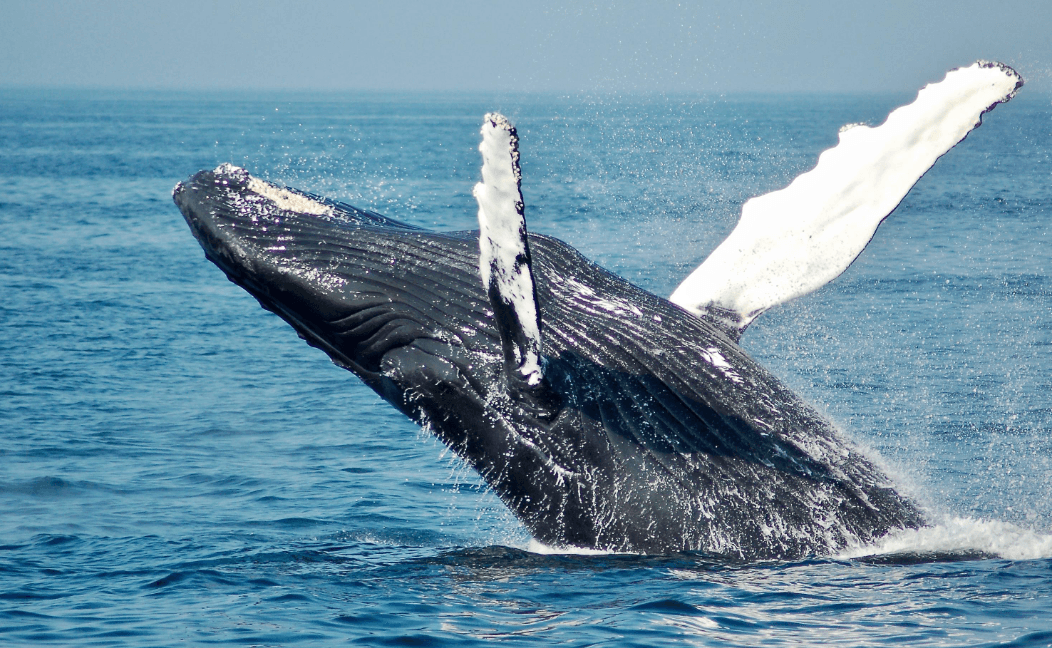
Not every head lift is the same behavior. A whale might raise its head while changing its body position, moving near the surface, or performing a more deliberate vertical movement.
One term that visitors may hear is spyhopping. This generally describes a whale rising into a relatively upright position in the water, with its head held above the surface. The whale may appear to pause before lowering itself again.
A brief glimpse of the head alone is not enough to confirm that the whale is spyhopping. The whale’s body position and the overall movement matter.
Why Might a Humpback Whale Raise Its Head?
There is no single confirmed explanation for every head-raising movement. Researchers and wildlife observers consider the surrounding circumstances before suggesting a possible function.
1. Looking Above the Water
A whale raising its head into the air may be able to see parts of its surroundings that are difficult to observe from beneath the surface.
However, seeing a whale lift its head does not prove that it is deliberately inspecting a boat, watching people, or searching for a particular object. Its exact motivation may remain unknown.
For visitors, the useful observation is the movement itself: how much of the head becomes visible, how long the whale remains in that position, and whether it repeats the behavior.
2. Changing Its Position Near the Surface
A humpback whale may move its body in several ways as it transitions between underwater movement and activity at the surface.
A raised head can occur as part of a larger change in posture. Without seeing the complete movement, it can be difficult to distinguish an intentional display from another kind of surface maneuver.
Pay attention to the sequence before and after the head lift. Does the whale remain upright for a moment, turn, or submerge These details help describe the event without assigning an unsupported explanation.
3. Responding to Nearby Activity
Humpback whales may encounter other whales, boats, and changing conditions while moving through Samaná Bay. Their behavior should be understood in context rather than interpreted from a single movement.
If a whale raises its head when another whale is nearby, the timing may be interesting, but it does not prove that the movement was a response to that animal.
Similarly, a whale lifting its head near a boat does not automatically mean it is curious about or reacting to the passengers. Additional observations would be needed to support such an interpretation.
4. Taking Part in a Broader Behavioral Sequence
A head lift may be one moment within a longer series of movements. The whale may surface, change posture, submerge, and appear again later.
Some whale behaviors are easy to recognize by their appearance, while their purpose remains uncertain. This distinction is important for responsible whale watching: visitors can accurately describe what happened without needing to identify a definite reason.
What Is Spyhopping, and How Is It Different From a Head Lift?
Spyhopping is a more specific type of surface behavior than simply showing the head above the water.
During a typical spyhop, a whale raises itself into a near-vertical position, exposing its head above the surface. It may hold this position briefly before sinking back down.
A simple head lift may be less vertical, shorter, or part of another movement. The two can look similar from a distance, especially when waves obscure the whale’s body.
Here are useful distinctions to watch for:
- Head lift: Part of the head appears above the water, but the overall body position may remain unclear.
- Spyhopping: The whale appears to rise into a more upright position, holding its head above the surface.
- Other surface movement: The head may become visible while the whale turns, rolls, or adjusts its position.
These are observational descriptions, not a guarantee that every sighting can be classified with certainty. If you are unsure, describing the movement as a head lift is more accurate than automatically calling it spyhopping.
Why Is This Behavior Exciting for Whale Watchers in Samaná Bay?
Humpback whales are large animals, but much of their lives takes place below the ocean surface. Visitors on a boat typically see only the portions of their behavior that become visible during a surfacing.
A raised head can provide a rare view of a whale’s features from a different angle. Instead of watching the curve of its back or the movement of its tail, visitors may see part of its head and mouth.
Such encounters also demonstrate why patience is important. A whale may show only a small part of its body, and a brief appearance can be over before everyone aboard has a clear view.
Rather than expecting a particular behavior, enjoy each sighting as it occurs. A whale that simply surfaces and disappears can be just as interesting to observe as one that performs a more unusual movement.
How Can You Observe a Head Lift During a Whale-Watching Tour?
You do not need specialized equipment to notice this behavior. Careful observation is often more useful than trying to capture every moment on camera.
Watch the whale’s whole body position
If conditions allow, observe how the whale is positioned in the water before and after its head becomes visible. This can help you distinguish a brief lift from a more upright movement.
Notice how long the movement lasts
A momentary appearance may be difficult to classify. If the whale repeats the movement, you may have a better opportunity to observe its posture.
Listen to your guide
A knowledgeable guide may help explain the behavior and distinguish it from other surface movements. Remember, however, that an explanation of what the whale may be doing is not necessarily proof of its motivation.
Keep your camera ready, but remain present
If you enjoy photography, use a suitable camera setting and keep your equipment secure. Avoid spending the entire encounter looking through a screen; the behavior may be brief, and watching directly can make the experience more rewarding.
Does Raising Its Head Mean a Whale Is Curious About People?
Not necessarily. It is tempting to interpret a head lift as curiosity, especially when the whale appears to face the boat. However, its orientation alone does not establish why it raised its head.
The whale might be moving in a particular direction, changing position, or displaying a behavior whose function is not clear to the observer.
It is best not to treat a head lift as an invitation to approach. Follow the crew’s instructions and local wildlife-viewing rules, and allow the whale to decide how it moves through the water.
Responsible whale watching means appreciating the encounter without trying to influence the animal’s behavior.
Can Weather and Sea Conditions Affect What You See?
Yes. Surface conditions can affect how clearly visitors see a whale’s head and body.
When waves are higher, the waterline may conceal part of the animal. Glare can make it difficult to distinguish details, while distance and viewing angle may change how a head lift appears.
These conditions can also make it harder to tell whether a whale is holding an upright position or simply raising its head briefly.
If you are unsure what you saw, ask your guide to describe the movement. It is better to acknowledge uncertainty than to identify a behavior based on an unclear view.
Frequently Asked Questions
Why do humpback whales lift their heads above the water?
The reason varies or may remain uncertain. A head lift can occur during surface movement, and a more upright movement may be described as spyhopping. The appearance alone does not establish the whale’s motivation.
Is every humpback whale head lift called spyhopping?
No. Spyhopping generally involves a whale rising into a relatively upright position with its head above the surface. A brief head lift may not meet that description.
Does a whale raise its head to look at tourists?
It is possible for a whale to see its surroundings when part of its head is above the water, but a sighting does not prove that it is looking at tourists or inspecting a boat.
How long does spyhopping last?
The duration can vary. A whale may hold an upright position briefly, but not every head-raising movement is a spyhop. There is no fixed duration that visitors should expect during a tour.
Can I photograph a humpback whale lifting its head in Samaná Bay?
Yes, if conditions and the operator’s guidance permit photography. Keep your camera ready, respect the whale’s space, and remember that brief behaviors can be difficult to capture.
What should I do if a whale raises its head near my boat?
Stay calm, follow the crew’s instructions, and do not encourage the operator to move closer for a photograph. Enjoy the observation while allowing the whale to move naturally.
Final Thoughts
Seeing a humpback whale lift its head above the water can be a memorable highlight of a whale-watching trip in Samaná Bay. The movement may offer a different view of the animal and an opportunity to learn about its varied surface behaviors.
The key is to distinguish what you observe from what you can confidently explain. A brief head lift is not automatically spyhopping, and neither behavior reveals the whale’s exact motivation by itself.
During your next whale-watching excursion, watch the whale’s posture, notice the sequence of movements, and listen to your guide. Patient, respectful observation helps turn a fleeting sighting into a more meaningful wildlife experience.

Local explorer & expert guide in Visita Haitises.