Why Do Humpback Whales Change Direction Without Fully Surfacing in Samaná Bay?
One of the intriguing moments during a whale-watching trip in Samaná Bay, Dominican Republic, is when a humpback whale disappears beneath the water and resurfaces somewhere unexpected. Visitors may see its back in one direction, lose sight of it for a short time, and then spot it several meters away at a different angle.
This can create the impression that the whale has suddenly turned without warning. In reality, it may have changed direction while underwater, where observers cannot see the movement taking place.
Humpback whales spend substantial periods below the surface, so a boat-based observer sees only part of their activity. Understanding this limitation helps visitors appreciate the encounter without making assumptions about what the whale is doing.
In this guide, we explain how underwater direction changes can affect whale watching, what you can observe from a boat, and why a whale’s next surfacing point may not be where you expect.
Can Humpback Whales Change Direction Underwater?
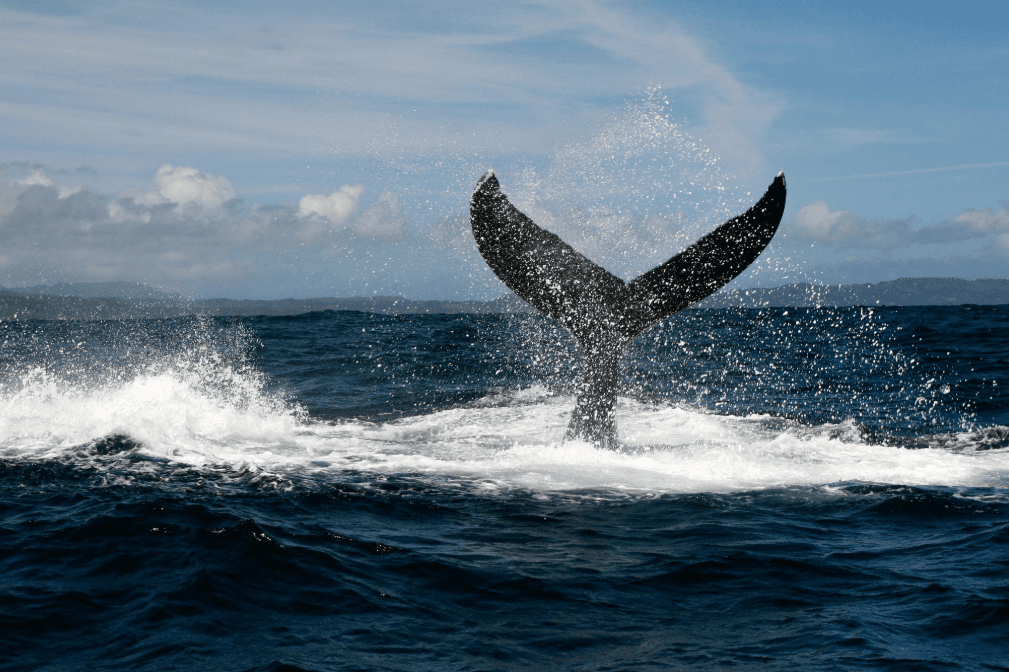
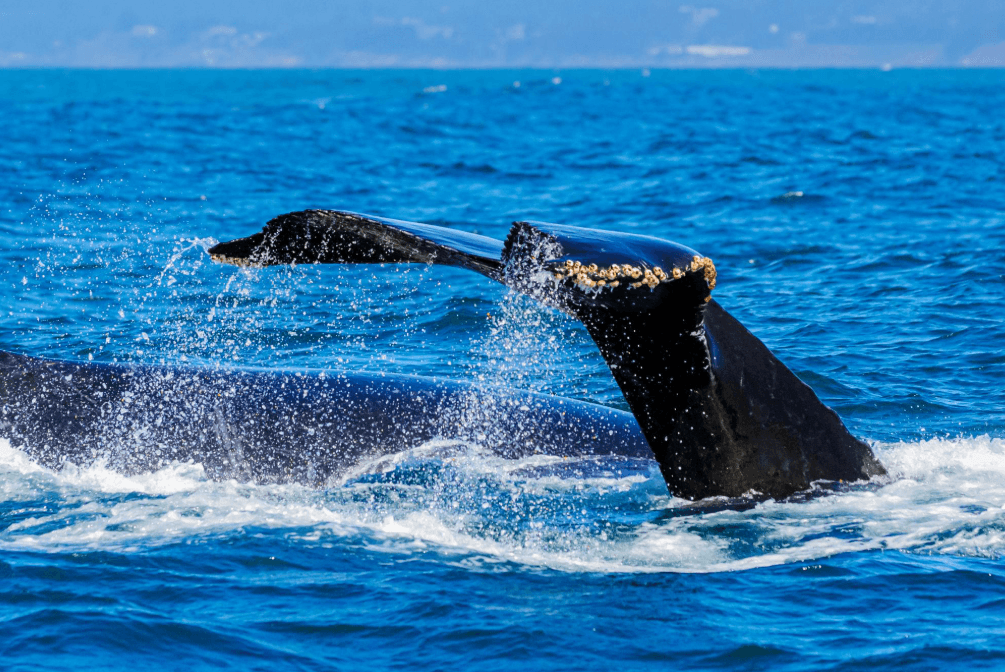
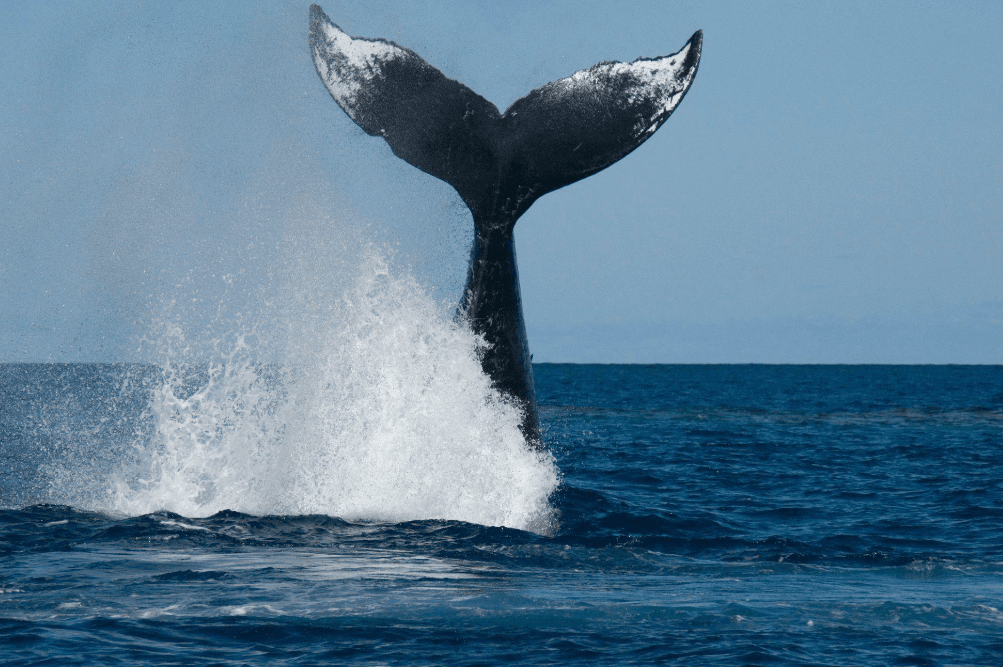
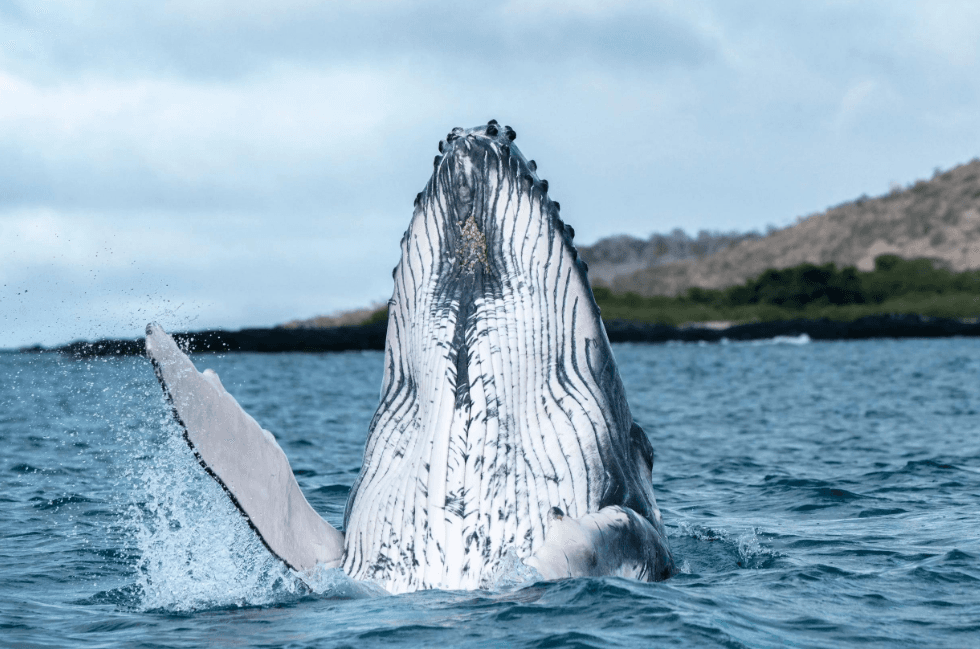
Yes. Humpback whales can maneuver beneath the surface without exposing their entire bodies above the water. Their powerful tails provide propulsion, while their long pectoral fins help with maneuvering and control.
A whale does not need to leap, roll, or make another dramatic surface movement to change its course. It may simply turn underwater and continue swimming in a different direction.
From a whale-watching boat, the turn itself may be invisible. Visitors might see the whale submerge at one point and later notice it surfacing somewhere else.
The important distinction is that the observer sees the beginning and end of a movement, not necessarily everything that happened between them.
Why Might a Whale Change Direction Beneath the Surface?
There is no single explanation for every underwater turn. A whale’s movement can depend on its immediate activity and surroundings, and its motivation may not be identifiable from a brief sighting.
1. Following Its Travel Route
A humpback whale may adjust its direction while traveling through the bay. Its route underwater does not have to follow a perfectly straight line.
A whale may gradually turn, alter its heading, or move along a curved path before surfacing again. Because the water conceals much of this movement, the change may seem sudden to people watching from above.
When observing a traveling whale, look at the direction of several consecutive sightings rather than relying on a single appearance.
2. Moving Around Other Whales
During the whale-watching season, visitors may encounter more than one humpback whale in the same general area. Their movements can make it difficult to follow an individual animal continuously.
A whale may alter its course while another whale is nearby. However, seeing two whales close together does not establish why either animal changed direction.
Try to track each whale separately when possible. Notice where each one surfaces and whether their apparent paths continue in the same direction or diverge.
3. Adjusting Its Body Position
Turning is a normal part of swimming. Humpback whales can use their body movements, tails, and pectoral fins to maneuver underwater.
A change in heading may occur without a dramatic surface display. The whale may simply emerge at a different angle on its next surfacing.
This is a useful reminder that not every interesting whale movement is visible from a boat. Some of the most important parts of the animal’s movement take place below the surface.
4. Responding to Its Immediate Surroundings
A whale’s surroundings may be relevant to its movement. Other animals, local conditions, and its current activity can all form part of the context.
Nevertheless, observers should not assign a specific cause to every turn. Without additional evidence, it is difficult to determine whether a whale changed direction because of another animal, its travel route, or some other factor.
Responsible wildlife observation separates what can be seen from what remains uncertain.
Why Does a Whale Sometimes Resurface in an Unexpected Place?
When a whale disappears underwater, it may continue swimming while the boat and surrounding water also move. By the time the animal surfaces again, its position can be noticeably different.
Several factors influence what visitors see:
- Underwater travel: The whale can continue moving while hidden from view.
- A change of direction: Its underwater course may differ from its previous heading.
- Boat movement: The vessel may drift or change position during the interval.
- Viewing angle: Waves, distance, and the position of other passengers can affect visibility.
- Time out of sight: The longer the whale remains submerged, the more opportunity there is for its position to change before the next sighting.
These factors can make a normal underwater turn appear like an unexpected change in location.
For this reason, the whale’s next surfacing point should not be used by itself to conclude that it was avoiding the boat or deliberately approaching another whale.
How Can You Tell If a Whale Has Changed Direction?
You may not be able to see the actual turn, but you can compare the whale’s position and heading across multiple sightings.
Watch the direction of its back and dorsal fin
When a whale surfaces, its body orientation may provide clues about its direction of travel. Look at the whale’s overall heading rather than relying on one small detail.
Compare consecutive surfacings
Try to remember where the whale appeared previously. If it surfaces at a different location, consider both its possible underwater movement and the boat’s movement.
Pay attention to the guide’s observations
Experienced guides may notice patterns that are difficult for first-time visitors to recognize. They can help distinguish an apparent change in direction from a change in viewing angle.
Still, even a knowledgeable guide may not know exactly what occurred underwater. A careful explanation should acknowledge this uncertainty.
Avoid assuming that a turn signals distress
A whale changing course is not automatically frightened, disturbed, or trying to escape. Direction changes are part of normal movement, and the reason for a particular turn may remain unknown.
Does an Underwater Turn Mean the Whale Is Avoiding the Boat?
Not necessarily. A humpback whale may change direction while traveling, maneuvering, or moving in an area where other whales are present.
Its movement alone is not enough to determine whether it is responding to a vessel. Establishing a connection would require more information about the encounter and the whale’s behavior.
The most responsible approach is to follow the crew’s instructions, maintain the appropriate distance, and avoid asking the boat operator to chase a whale that has moved away.
Whale watching is an opportunity to observe wildlife, not to control where an animal goes or how close it comes to the vessel.
What Makes This Behavior Interesting in Samaná Bay?
Samaná Bay is an important seasonal destination for observing humpback whales in the Dominican Republic. During whale-watching trips, visitors may see whales surfacing, diving, traveling, and moving through the water at different angles.
Because a whale’s underwater activity is largely hidden, every sighting provides only a partial view of its movement.
A whale that surfaces in an unexpected location offers a useful lesson in observation: what appears to be a sudden turn may have begun long before the animal became visible again.
Instead of focusing only on dramatic displays, visitors can learn a great deal by comparing surfacing locations, observing body orientation, and listening to explanations from their guide.
How to Observe Underwater Direction Changes Responsibly
You do not need special equipment to make your whale-watching experience more informative. A little patience and attention can help you notice patterns without disturbing the animals.
- Watch before taking a photograph. Spend a moment observing the whale’s position and direction before looking through your camera.
- Remember the last sighting location. This makes it easier to compare where the whale appears next.
- Consider the boat’s movement. Your own position may have changed while the whale was underwater.
- Ask questions without expecting certainty. A guide can explain possible interpretations, but some underwater behavior cannot be confirmed from the surface.
- Respect wildlife-viewing rules. Let the trained crew manage the encounter and avoid pursuing a whale simply because it has disappeared.
These habits make the trip more educational while supporting responsible wildlife viewing.
Frequently Asked Questions
Can humpback whales turn underwater without surfacing?
Yes. Humpback whales can maneuver beneath the surface, so they may change direction without making the turn visible to people on a boat.
Why did a whale surface somewhere different from where it disappeared?
It may have continued swimming underwater, changed its course, or moved relative to a boat that was also in motion. The exact explanation depends on the circumstances.
Can I know exactly which direction a whale is swimming?
You may be able to estimate its heading when its body is visible, but the view can be incomplete. Consecutive sightings provide more context than a single appearance.
Does changing direction mean a humpback whale is scared?
No. A direction change by itself does not establish fear or distress. More context would be needed to interpret the behavior.
Why is it difficult to follow one whale during a tour?
Whales can remain underwater between surfacings, while waves, distance, and boat movement affect visibility. If several whales are present, identifying the same individual across sightings may be even more difficult.
What should I do if a whale disappears during a whale-watching trip?
Stay attentive, follow the guide’s instructions, and allow the crew to manage the boat. The whale may surface again, but there is no guarantee of where or when it will appear.
Final Thoughts
Humpback whales can change direction underwater without making their movements obvious to people watching from a boat. This helps explain why a whale may disappear in one place and resurface somewhere unexpected in Samaná Bay.
The change may reflect ordinary swimming and maneuvering, but its exact cause is not always possible to identify. By observing several surfacings, considering the boat’s movement, and listening to your guide, you can better understand what you see without assuming too much.
During your next Samaná whale-watching trip, remember that the visible moment is only part of the story. The whale’s underwater journey continues even when it is out of sight.

Local explorer & expert guide in Visita Haitises.