Samaná Whale Watching 2027: The Complete Visitor Guide
Planning a trip to see humpback whales in the Dominican Republic Samaná whale watching in 2027 offers travelers the opportunity to observe migrating humpback whales in one of the Caribbean's best-known seasonal wildlife destinations. Every year, these marine mammals visit the waters around Samaná Bay during their breeding season, making the northeastern Dominican Republic an important destination for nature enthusiasts.
The main whale-watching season generally runs from January through March. The Dominican Republic's official tourism website identifies January 15 through March 30 as the typical season, although exact dates and operating arrangements should be reconfirmed for 2027.
Whether you are traveling from Punta Cana, staying in Samaná, or exploring the Dominican Republic independently, planning ahead will help you choose a suitable excursion, prepare for the boat trip, and understand how to observe whales responsibly.
In this guide, you will learn when to visit, what happens during a whale-watching tour, how to compare excursion options, what to bring, and what to consider before booking.
When Is Whale-Watching Season in Samaná in 2027?
The main whale-watching season in Samaná generally takes place from January through March. During this period, North Atlantic humpback whales migrate to warmer Caribbean waters, where they mate and give birth.
The Dominican Republic's official tourism website lists January 15 to March 30 as the typical viewing season. However, these dates should be treated as a general seasonal guide rather than a guarantee of whale activity on a particular day.
For your 2027 trip, consider the following planning overview:
MonthGeneral planning guidanceJanuaryThe main season begins, with whale-watching opportunities developing during the month.FebruaryA popular month to plan a whale-watching excursion during the established season.MarchWhale watching generally continues, although activity can vary as the season progresses.April–DecemberOutside the usual main season; regular whale-watching excursions should not be assumed to operate.
February is often a practical month to consider because it falls within the established seasonal window. Nevertheless, no month or departure date guarantees a particular sighting.
For more detailed planning, read our upcoming guide to the Samaná whale-watching season and compare the advantages of visiting in January, February, or March.
Why Is Samaná Bay Famous for Whale Watching?
Samaná Bay lies in the northeastern Dominican Republic and is associated with the country's Marine Mammal Sanctuary. Its seasonal concentration of humpback whales has made the area a well-known destination for marine wildlife observation.
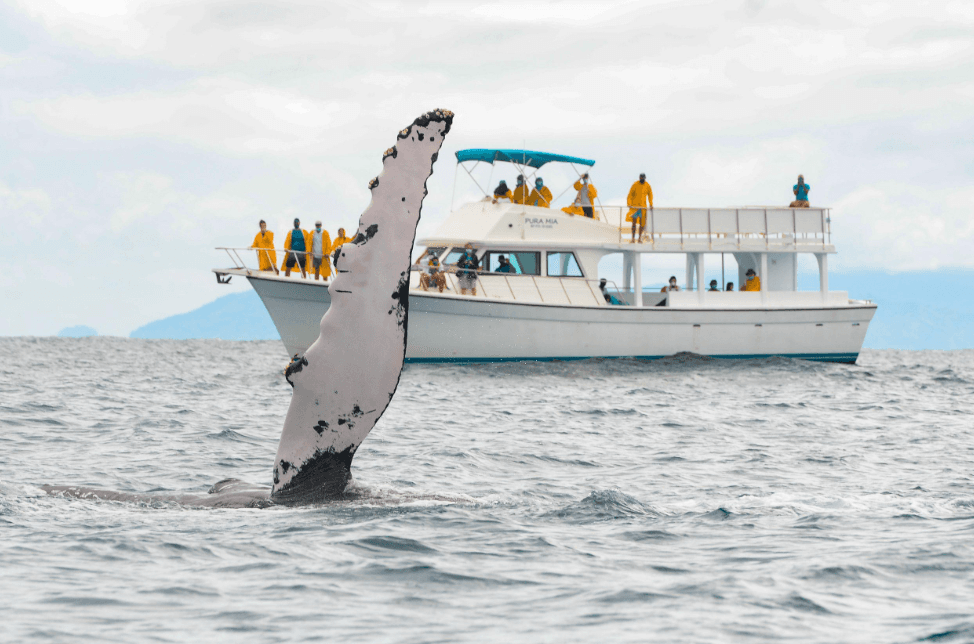
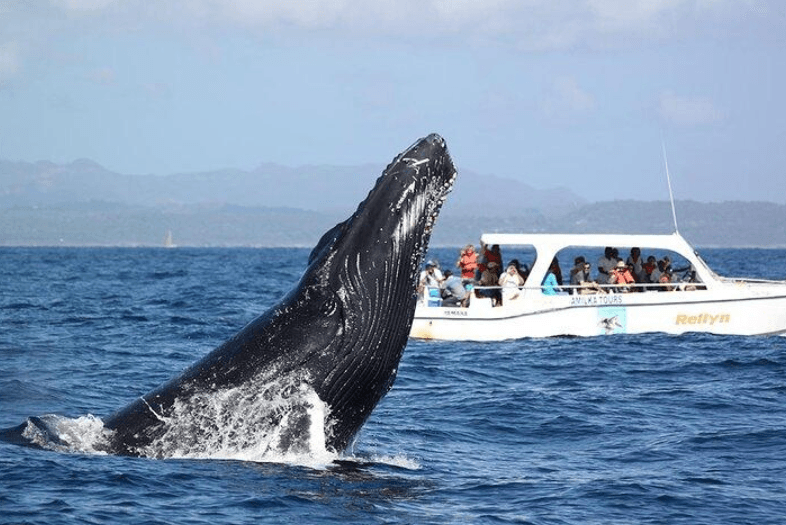
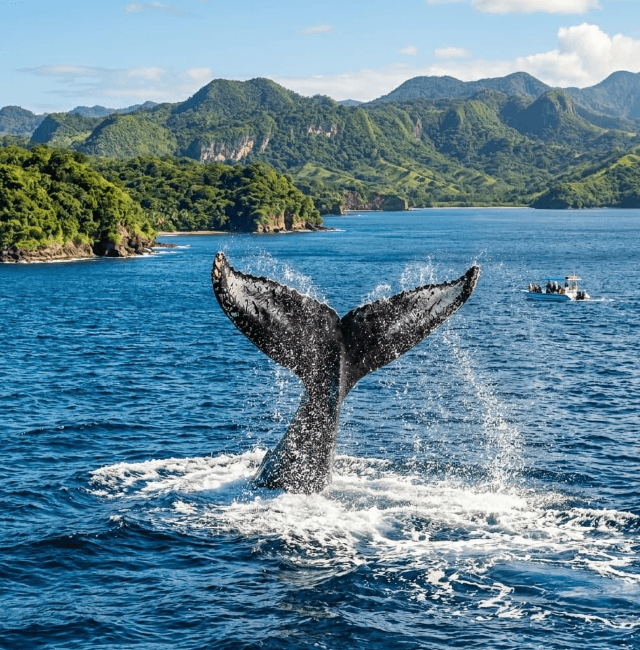
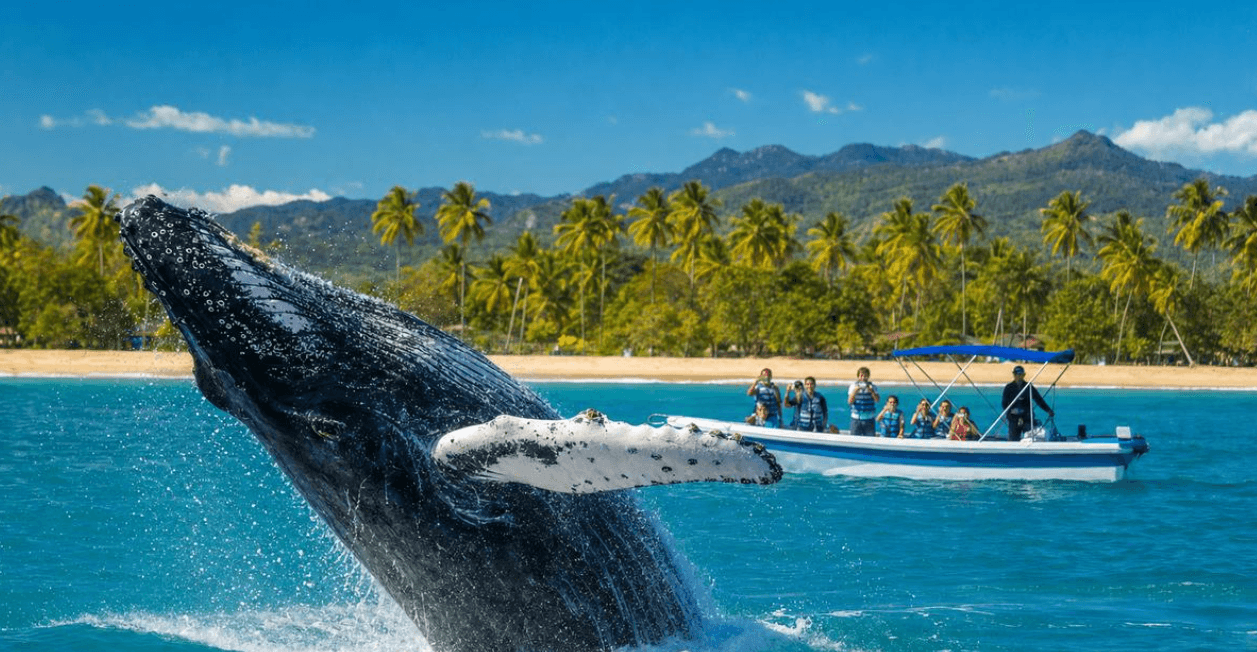
Humpback whales travel from northern feeding grounds to warmer breeding areas. During the Caribbean season, visitors may have opportunities to observe natural behaviors such as surfacing, tail flukes, breaching, and interactions between whales.
These behaviors are not guaranteed on every excursion. Whales move freely through the water, and sightings depend on their location, behavior, weather, and sea conditions.
Samaná is particularly appealing because visitors can combine a wildlife excursion with time exploring the region's coastal scenery, local communities, beaches, and other natural attractions.
For background on the sanctuary and its seasonal wildlife, consult the Dominican Republic's official tourism guide to the Marine Mammal Sanctuary.
What Happens on a Samaná Whale-Watching Tour?
A whale-watching excursion typically involves traveling by boat into the waters where humpback whales are seasonally present.
The exact experience depends on the operator, departure point, vessel, weather, and tour itinerary. Some trips focus primarily on whale observation, while others may combine the excursion with additional sightseeing.
1. Departure and safety briefing
Your excursion begins at the designated meeting or departure point. Before boarding, confirm the check-in instructions, departure time, expected duration, and any included transfers.
A responsible operator should explain the boat's safety procedures and the rules passengers must follow around marine wildlife.
2. Boat trip into whale-watching waters
Once the boat departs, the crew travels toward suitable observation areas. Your guide or captain may explain the seasonal migration and help passengers understand the behaviors they might see.
Bring patience: whales are wild animals, not performers following a schedule.
3. Observing humpback whales
When whales are located, passengers may see them surface, dive, raise their tails, or occasionally leap out of the water.
Keep your camera ready, but enjoy the experience without focusing entirely on photography. A whale may surface only briefly before diving again.
4. Return to the departure point
After the observation period, the boat returns according to its itinerary and prevailing conditions. If your excursion includes other activities, confirm those arrangements before booking.
Important: Tour duration, meals, transport, group size, and additional stops vary by operator. Check the actual booking description instead of assuming every excursion includes the same services.
Which Type of Whale-Watching Tour Should You Choose?
The best tour depends on your budget, preferred level of comfort, travel arrangements, and interest in learning about whales.
Tour considerationMay suit travelers whoShared group excursionWant to join a scheduled trip with other passengers.Private boat excursionPrefer a more private experience and have a suitable budget.Educational wildlife tourWant a stronger focus on whale behavior, ecology, and conservation.Combined sightseeing excursionWant whale watching alongside other activities, where offered.
These are general categories to help you compare options, not confirmation that every type is available on every date.
Before paying, ask the operator:
- Where does the tour depart?
- How long is the excursion?
- What is included in the price?
- Is transportation from my accommodation available?
- What safety equipment is provided?
- What happens if weather conditions prevent departure?
- Is there a refund or rescheduling policy if the trip is canceled?
- Is there a wildlife-sighting policy, and what does it actually promise?
A clear answer to these questions is more useful than an unsupported promise of a perfect whale encounter.
How Much Does Whale Watching in Samaná Cost?
There is no single price that applies to every Samaná whale-watching excursion. The cost depends on the operator, vessel, group size, departure location, included services, and whether transportation or other activities are part of the package.
When comparing prices, look beyond the advertised starting rate.
A lower-priced excursion may not include hotel transfers, meals, or other extras. A more expensive option may offer private transport or a smaller group, but you should verify those inclusions before deciding.
To compare tours fairly, ask for the total cost for your party and confirm:
- The price per person or per private group.
- Whether children have a different rate.
- Whether transportation is included.
- Whether meals, refreshments, or entrance fees are included.
- The cancellation and refund conditions.
- The payment method and booking confirmation process.
Do not rely on an old price published for a previous season. Request current 2027 rates directly from the operator before making a reservation.
How to Get to Samaná for Whale Watching
Your transportation plan depends on where you are staying in the Dominican Republic.
If you are staying in Samaná
Travelers already staying in or near Samaná may find it easier to arrange transport to the confirmed departure point. Verify the exact meeting location and allow enough time for check-in.
If you are traveling from Punta Cana
A trip from Punta Cana requires additional planning because the departure point for the whale excursion may be some distance from your accommodation.
Ask whether the tour includes round-trip transportation, where pickup takes place, how much time the journey requires, and how long the complete day will last.
Do not assume that every tour advertised as being from Punta Cana includes hotel pickup.
If you are staying in Santo Domingo or Las Terrenas
Confirm the route, departure point, and timing before booking. Depending on your itinerary, an overnight stay closer to Samaná may be more comfortable than attempting a long day trip.
For any departure location, compare the full journey rather than just the advertised boat-trip duration.
What Should You Bring on a Whale-Watching Trip?
Packing appropriately makes the excursion more comfortable.
Consider bringing:
- Sunscreen suitable for marine environments.
- A hat and sunglasses.
- Lightweight clothing appropriate for the weather.
- A light waterproof layer.
- Drinking water, subject to the operator's rules.
- A camera or phone with a secure strap.
- A waterproof bag for valuables.
- Any personal medication you normally need.
- Seasickness remedies if appropriate for you and used according to their instructions.
Follow the operator's advice about footwear, bags, food, and personal equipment. If you are concerned about motion sickness, ask about the expected sea conditions and suitable preparations before departure.
Is Samaná Whale Watching Suitable for Families?
A whale-watching excursion can be an educational wildlife experience for families, but suitability depends on the child's age, comfort on boats, the vessel's safety arrangements, and the length of the trip.
Before booking with children, ask about minimum age requirements, life jackets, onboard facilities, seating, shade, and the expected duration.
Explain to children that whales must be observed respectfully and that they may not perform dramatic behaviors during every trip.
Parents should also consider whether a long road transfer followed by a boat excursion is appropriate for their family.
If you are traveling with young children, choose an operator that answers safety questions clearly and provides accurate information about the vessel and itinerary.
Responsible Whale Watching: Protecting Samaná's Whales
Seeing humpback whales in their natural environment is a privilege. Responsible tourism helps protect the animals and the wider marine environment.
Whale watching in Samaná is subject to local management and regulations. The International Whaling Commission's Dominican Republic country profile describes measures including minimum approach distances, limits on the number of boats around a whale group, speed restrictions, and restrictions on swimming with whales.
Choose a properly authorized operator and follow all instructions from the captain and crew.
As a visitor, you can help by:
- Never asking the boat crew to chase or surround a whale.
- Respecting all required distances and observation limits.
- Never attempting to touch, feed, or swim with whales.
- Keeping rubbish and plastic out of the sea.
- Following crew instructions throughout the excursion.
- Choosing educational, conservation-conscious tour providers where possible.
Review the International Whaling Commission's Dominican Republic whale-watching guidance before your visit.
Responsible operators should prioritize safe navigation, appropriate viewing distances, and the welfare of the animals rather than promising close encounters.
Can You Guarantee Seeing Whales in Samaná?
No responsible wildlife tour can guarantee a particular whale sighting or behavior.
Humpback whales are free-ranging animals. Their movements and activities change, and sea conditions can affect where boats can safely travel.
Before booking, read the operator's actual policy concerning unsuccessful sightings, cancellations, and rescheduling. Some policies may differ according to the reason for a canceled or unsuccessful trip.
Do not assume that a refund, a second excursion, or another form of compensation is included unless the booking terms explicitly say so.
The best approach is to plan your trip during the usual season, choose a reputable operator, and treat the excursion as an opportunity to observe wildlife rather than a guaranteed performance.
Frequently Asked Questions About Samaná Whale Watching 2027
When does whale-watching season start in Samaná?
The usual season starts in January and continues through March. The Dominican Republic's tourism authority identifies January 15 to March 30 as the typical period. Check official announcements and local operators for the confirmed 2027 arrangements.
What is the best month for whale watching in Samaná?
February is a popular month to consider because it falls within the established season. January and March can also provide opportunities, but whale activity varies and cannot be guaranteed on a specific date.
How long does a whale-watching tour take?
Duration depends on the excursion and departure point. Confirm the boat-trip length, check-in requirements, transport time, and any additional stops with your chosen operator.
Can I go whale watching from Punta Cana?
You can investigate excursions marketed to travelers staying in Punta Cana, but verify whether transportation is included and where the actual boat trip departs. A road transfer and a boat excursion are separate parts of the itinerary.
What should I wear?
Wear comfortable clothing suited to the weather, sun protection, and a light layer for wind or spray. Follow the operator's instructions for footwear and other equipment.
Are whale sightings guaranteed?
No. Whales are wild animals, and their location and behavior change. Review the operator's written policy on sightings, cancellations, and rescheduling before booking.
Is whale watching safe?
Safety depends on the vessel, weather, operator, and passengers following instructions. Choose an authorized operator that explains its safety procedures and provides appropriate equipment.
Can I swim with humpback whales in Samaná Bay?
Swimming with whales is prohibited under the applicable Samaná Bay whale-watching rules. Observe whales from an authorized vessel and follow the crew's instructions.
Should I book in advance for 2027?
Booking ahead can help you organize your itinerary, especially if you have fixed travel dates or need transportation. Confirm that the operator is authorized for the relevant season and that your chosen date and tour details are available.
Plan Your Samaná Whale-Watching Trip for 2027
Samaná offers an opportunity to experience humpback whales during their seasonal visit to the Dominican Republic. With sensible planning, you can compare excursions, prepare for the boat trip, understand local wildlife rules, and make informed decisions about transportation and booking.
Start by choosing your travel dates, confirming the tour departure point, and comparing the full cost and conditions of available excursions. Prioritize operators that communicate clearly, follow local regulations, and respect the whales.
Ready to plan your excursion? Explore the available Samaná whale-watching tour options, verify the details for your travel dates, and ask the operator any remaining questions before reserving.
Your best trip begins with accurate information, realistic expectations, and respect for the wildlife that makes Samaná special.
Sources and further reading
- Dominican Republic Ministry of Tourism: Marine Mammal Sanctuary
- International Whaling Commission: Dominican Republic whale-watching guidance
- Dominican Republic Ministry of Environment and Natural Resources
Editorial note: Seasonal dates, operator authorizations, tour prices, availability, and booking policies should be checked again before publication or whenever the article is updated.

Local explorer & expert guide in Visita Haitises.